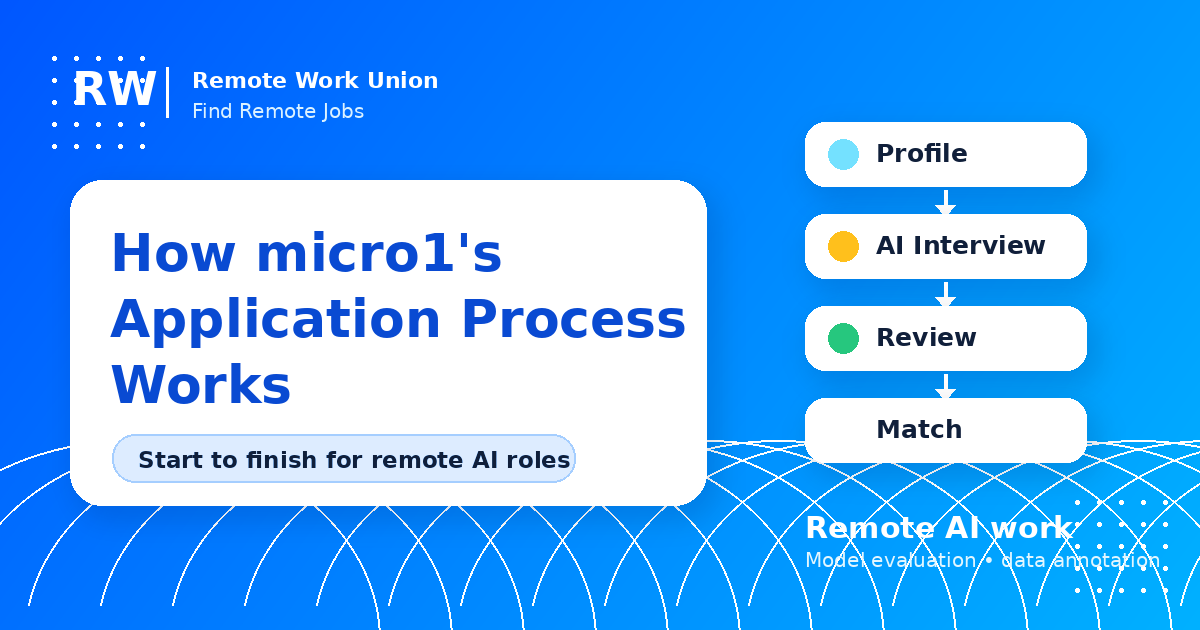
micro1 is one of the better-known platforms people search for when they want remote AI work, AI training jobs, data annotation projects, model evaluation tasks, and expert review roles. The application process is different from a normal job application because it can include an AI-powered interview, a talent dashboard, role-specific skill checks, and a later matching process. That can make the process feel confusing if you expect a traditional recruiter call after submitting a resume.
The basic path is simple: find a role, apply with a focused profile, complete the required AI interview, wait for review, watch your dashboard status, and follow onboarding instructions if selected. The details matter, though. A strong applicant treats the process like a real interview, not like a quick gig app. micro1 is trying to evaluate whether you can think clearly, communicate out loud, solve problems, and do the kind of remote AI work that companies need. That includes work connected to AI model evaluation, human data tasks, expert writing, research, coding, legal review, finance analysis, design review, and other specialist roles.
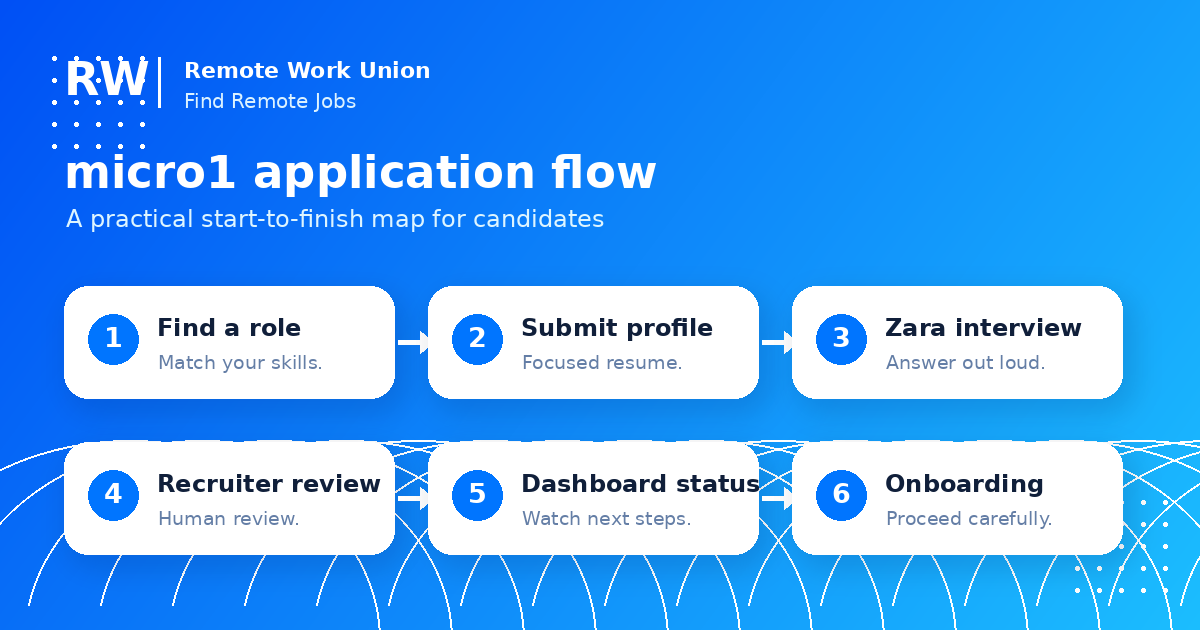
The short version: micro1 is not just a resume drop
A common mistake is applying to micro1 as if it were a standard remote job board. A traditional job board may let you submit a resume and wait. micro1's process is more structured. The platform can ask for your background, evaluate a skill area, run an AI interview through Zara, and then use your results to decide whether you qualify for a specific role or belong in a vetted talent pool for future matching.
That matters because remote AI jobs are not all the same. A beginner data annotation role is different from a legal reasoning role. A model evaluation project for general writing is different from an expert role that requires accounting, medicine, software engineering, biology, finance, or law. Some AI labs and AI companies need people who can rate answers, catch mistakes, compare model outputs, write prompts, review factual accuracy, or explain domain-specific reasoning. The same person may be excellent for one role and not qualified for another. The application process is built around that difference.
Step 1: Find the right opportunity
Start by looking for a role that actually matches your strongest skill. Do not apply to everything just because the job is remote. If your background is writing, editing, research, customer support, sales, recruiting, accounting, legal support, coding, math, design, or operations, choose the role where your experience is easiest to prove.
micro1's own candidate materials describe an opportunities portal where candidates can apply to open roles, with each role having predefined skill requirements. Once a candidate applies, Zara's questions can be tailored to the skills required for that role. That means the role you choose influences the interview you receive. A writing role should not be approached the same way as a software engineering role, a legal specialist role, or a human data exercise for annotation work.
For remote workers, the best strategy is to pick roles where your experience creates a clear story. If you have written for clients, edited content, reviewed documents, managed spreadsheets, trained teams, handled customers, analyzed financial information, built websites, or checked details for accuracy, lead with that. The strongest application is not the one with the most buzzwords. It is the one that makes your relevant skill obvious.
Step 2: Build a focused profile and resume
Your profile should make it easy for the platform and recruiters to understand what kind of work you can do. For remote AI training work, that usually means showing judgment, writing clarity, subject knowledge, research ability, attention to detail, and comfort working independently.
Use a resume that is specific rather than broad. Instead of saying you are hardworking, show the work. Mention tools, industries, projects, outcomes, and tasks. Good signals include writing samples, research projects, QA work, customer communication, spreadsheet analysis, coding projects, legal drafting, tutoring, editing, operations work, or anything that proves you can evaluate information carefully.
For AI model evaluation roles, your profile should also show that you can compare two outputs, follow instructions, identify hallucinations, explain why an answer is weak, and make consistent decisions. For data annotation roles, emphasize accuracy, patience, consistency, and ability to follow task guidelines. For expert roles, emphasize your actual domain: software engineering, finance, healthcare, law, education, science, marketing, design, or another field. You do not need to be a coder for every remote AI role, but you do need to be clear about the skill you are selling.
Step 3: Complete the AI interview with Zara
Zara is micro1's AI recruiter. micro1 describes the interview as a structured, real-time conversation where candidates answer open-ended questions out loud. The interview is designed to assess real-world skills, communication, problem-solving, and role fit. Depending on the role, candidates may see open-ended technical questions, scenario-based questions, a coding challenge for technical roles, or a human data exercise for annotator roles.
This is where many candidates underperform because they treat the AI interview as casual. Do not do that. Treat it like a real interview. Speak clearly. Answer the question directly. Explain your reasoning. Give examples. Avoid rambling. Do not pretend to know something you do not know. If the question is difficult, show how you would approach it. For AI training work, the ability to reason clearly can matter as much as the final answer.
A good interview answer usually has four parts: direct answer, context, reasoning, and example. For example, if asked how you would evaluate an AI response for accuracy, you could say you would first identify the user's intent, check whether the answer directly addresses it, verify factual claims against reliable sources when required, look for unsupported assumptions, and then explain the rating using clear evidence. That kind of response shows judgment, not just confidence.
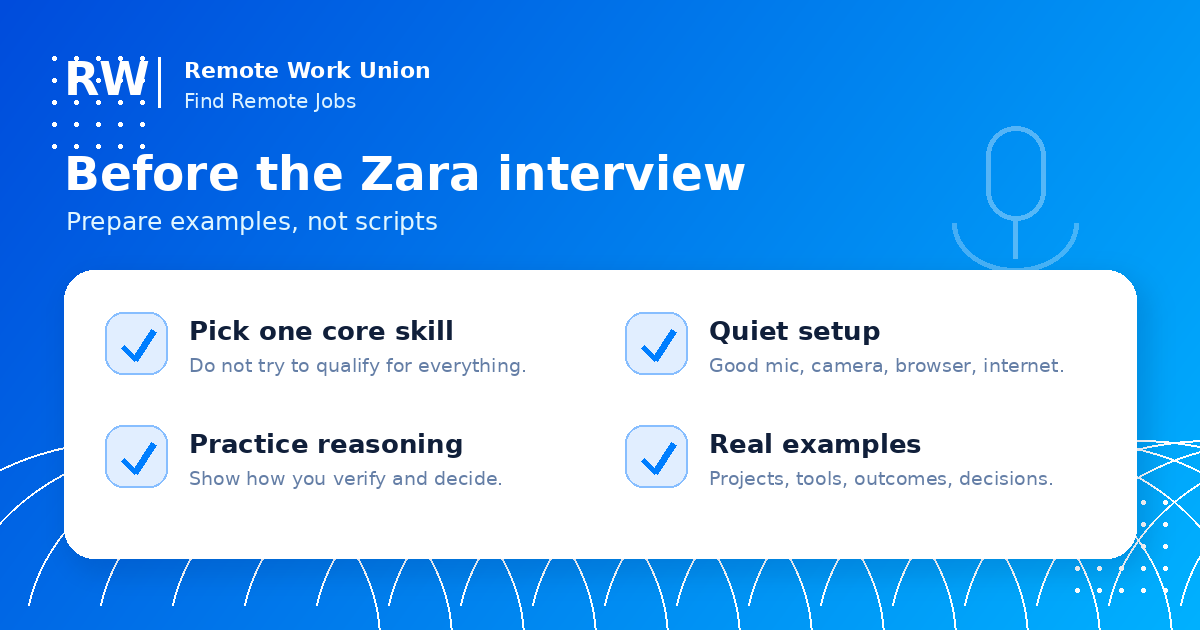
Step 4: Use practice interviews before the real one
micro1 has promoted an interview prep tool that lets candidates practice AI-powered interviews by role. Use practice time to get comfortable speaking out loud, not to memorize a script. Scripted answers can sound unnatural and may fail when the interview asks a follow-up question.
Practice is especially useful if you have not done an AI interview before. Many people are used to typing applications, not talking to an AI recruiter. Speaking to a computer can feel awkward. The goal is to make the format feel normal before you are being evaluated. Practice answering questions like: What is your strongest skill? How do you handle unclear instructions? How would you fact-check a claim? How would you compare two AI-generated answers? What makes a response useful to a user?
If you are applying for expert-tier remote AI work, practice explaining your expertise in plain language. A strong finance candidate should be able to explain a financial concept clearly. A strong legal candidate should be able to reason through a legal-style scenario carefully without overclaiming. A strong writer should be able to discuss tone, structure, accuracy, and audience. A strong software candidate should be ready for technical reasoning or coding-related evaluation.
Interested in micro1 and other AI training platforms? Find vetted remote AI training roles and opportunities hiring now.
Find Roles Hiring Now →Step 5: Wait for review and check the dashboard
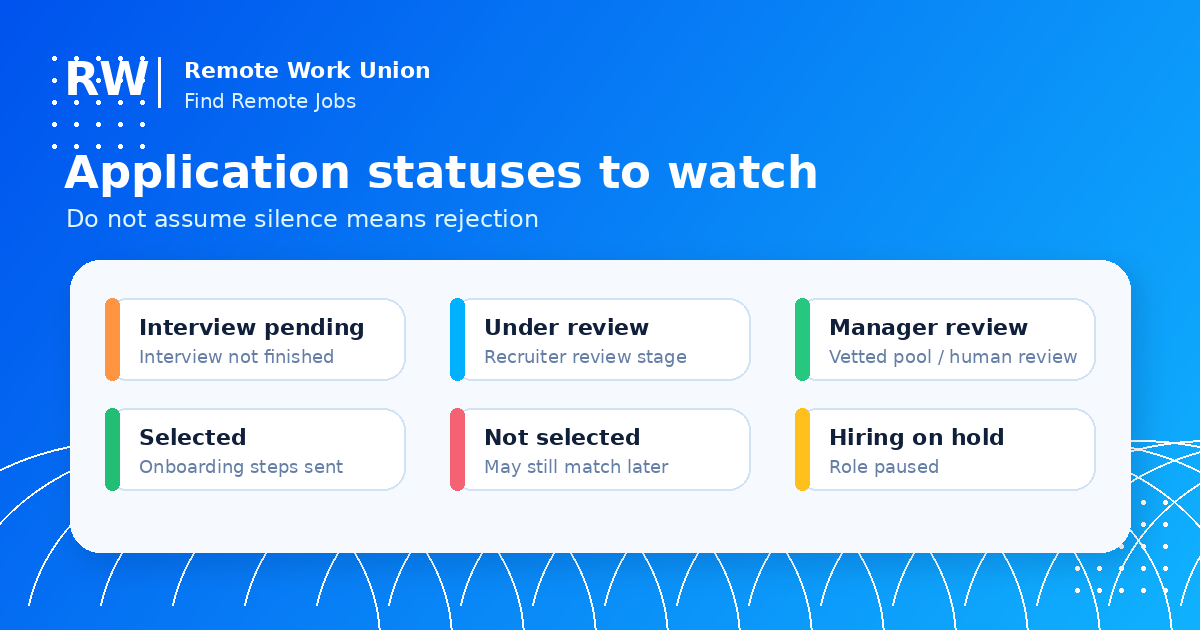
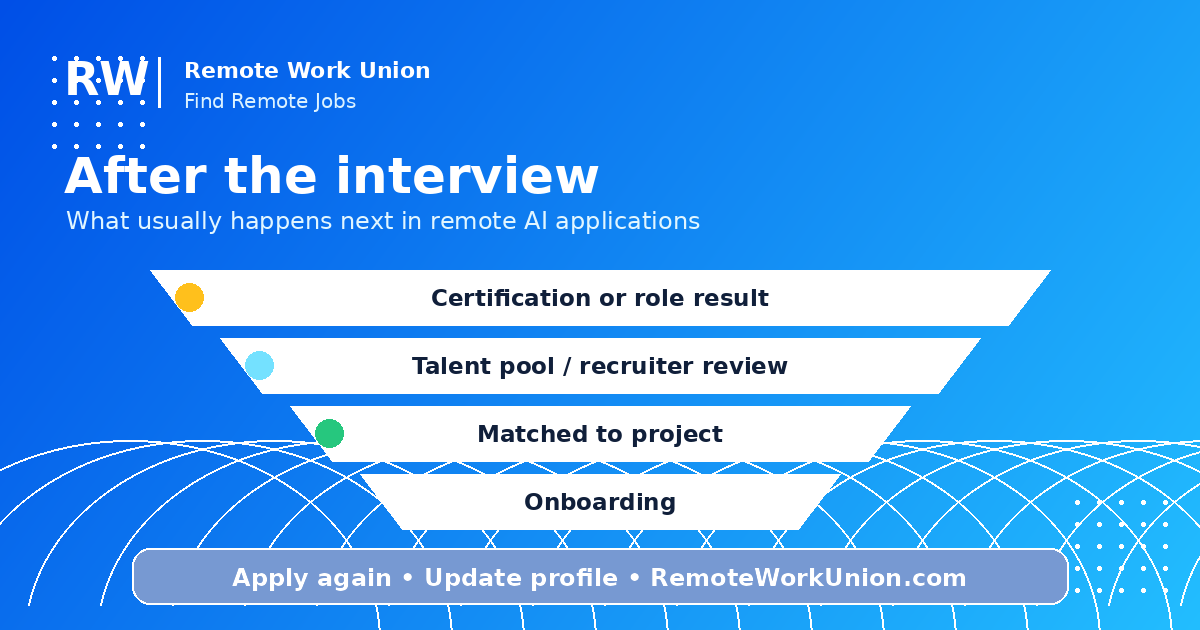
After the interview, do not assume the process is over. The result may move into review, matching, or a talent pool. micro1's public candidate materials and community updates describe several statuses candidates may see, including interview pending, under review, hiring manager reviewing, selected, not selected, hiring on hold, did not qualify, awaiting next steps, and application incomplete.
These statuses are important because they do not all mean the same thing. Interview pending usually means the interview is not complete. Under review means the interview is being reviewed. Hiring manager reviewing can mean the profile has performed well enough to enter a vetted review stage, but it does not guarantee a project. Selected means onboarding steps should be sent. Not selected means you were not selected for that role, but you may still be considered for other opportunities. Hiring on hold means the role is paused.
This is where patience matters. Remote AI platforms often hire in batches because client needs change. Projects open, pause, fill, reopen, or shift to different skill needs. A delayed status does not always mean rejection. It can mean the role is paused, the recruiter review is not complete, or the platform is waiting on client demand.
Step 6: Understand certification, talent pools, and matching
Passing an interview or doing well in an evaluation can make you more eligible, but it does not always mean immediate paid work. That distinction is important. micro1's community guidance has described certification and vetted talent pools as part of the process, with recruiters matching candidates to roles based on fit and project needs.
Think of the process in layers. First, micro1 needs to know whether you can perform the relevant skill. Second, recruiters or hiring managers need to decide whether you match a live role. Third, the client or project needs to have room to onboard more workers. You can clear one layer and still wait on another.
For applicants, this means you should keep applying to roles that match your skills, keep your profile updated, and consider validating additional skills if you truly have them. Do not try to fake expertise. AI companies that work on model evaluation, data annotation, and expert review need reliable human judgment. Inconsistent or exaggerated claims can hurt you.
Step 7: Follow onboarding instructions if selected
If you are selected, follow the instructions carefully. Remote AI work often requires identity verification, contractor paperwork, platform setup, communication channel access, payment setup, and task-specific guidelines. Read every email. Check spam and promotions folders. Save important login links. Complete onboarding steps quickly, because some project opportunities move fast.
Once you start, treat the first few assignments as a quality test. Remote AI training jobs are usually not just about speed. Quality, consistency, instruction-following, and clear reasoning matter. If you are doing model evaluation, write explanations that a reviewer can understand. If you are doing annotation, follow the rubric. If you are doing expert review, be precise and avoid guessing. The same habits that help you pass the application process help you keep getting work.
What to do if you do not hear back
No response after applying is common across remote work platforms. It does not always mean your application was bad. It may mean the role is full, paused, still under review, or not aligned with your profile. The best next move is not to panic or submit random duplicate applications.
First, check whether your interview is complete. Second, check your dashboard status. Third, review whether the role truly matches your background. Fourth, update your profile if your resume is too generic. Fifth, apply to other roles that fit your strongest skill. If you did not qualify for one role, that does not mean you cannot qualify for another. A beginner generalist may not qualify for an expert legal role, and a strong lawyer may not qualify for a coding task. Fit matters.
Also remember that remote AI work is broader than micro1 alone. People looking for work-from-home AI jobs often compare platforms such as micro1, Mercor, Handshake AI, Outlier, data annotation platforms, AI research projects, and other remote reviewer opportunities. The long-term strategy is to build a profile that can work across multiple platforms, not to depend on one application.
Common mistakes that hurt micro1 applicants
The first mistake is applying to roles without reading the skill requirements. The second is using a vague resume that does not prove any specific ability. The third is treating Zara's interview like a chatbot instead of a professional assessment. The fourth is giving answers that sound confident but do not show reasoning. The fifth is applying only once and then waiting forever.
A better approach is to choose carefully, prepare examples, speak clearly, and keep applying to roles where you are a real fit. Remote AI jobs reward people who can think, write, evaluate, research, explain, and follow instructions. That is true whether the end client is building AI systems for search, coding, customer support, education, legal workflows, finance, healthcare, or general AI assistants. Companies like OpenAI, Anthropic, Google, Meta, xAI/Grok, and other AI teams all depend on high-quality human feedback in some form, even when the exact hiring platforms and project structures differ.
Final takeaway
micro1's application process is best understood as a skills-first remote work funnel. You are not only submitting a resume. You are proving that you can communicate, reason, and complete the type of work a role requires. The strongest applicants choose focused roles, prepare for Zara's AI interview, explain their thinking clearly, monitor their dashboard, and keep applying to matching opportunities.
The process can feel slower than a normal gig app, but that is because remote AI work depends on matching the right people to the right tasks. If you want work involving AI training, model evaluation, data annotation, expert review, writing, research, or remote AI projects, build a profile that shows exactly where your judgment is valuable.
Frequently Asked Questions
What is Zara on micro1?
Zara is micro1's AI recruiter that conducts structured real-time interviews. Candidates answer open-ended questions out loud. The interview is tailored to the skills required for the specific role you applied to.
How long does the micro1 application process take?
It varies. After submitting the AI interview, your application moves into review. Status updates like "under review," "hiring manager reviewing," or "hiring on hold" can each take days to weeks depending on project demand and role volume.
What does "hiring manager reviewing" mean on micro1?
It typically means your interview was strong enough to pass initial screening and is now being evaluated by a recruiter or hiring manager for a specific role or project. It does not guarantee selection but is a positive signal.
Do I need coding skills to apply to micro1?
Not for every role. micro1 has roles for writers, researchers, legal professionals, finance experts, customer support specialists, and generalists. Coding experience helps for technical roles but is not required for many AI training and evaluation tasks.
What should I do if micro1 says "not selected"?
Check whether other roles that better match your skills are open, update your profile to more clearly show your strongest skills, and consider applying to other platforms like Mercor, Handshake AI, and Outlier while you wait.