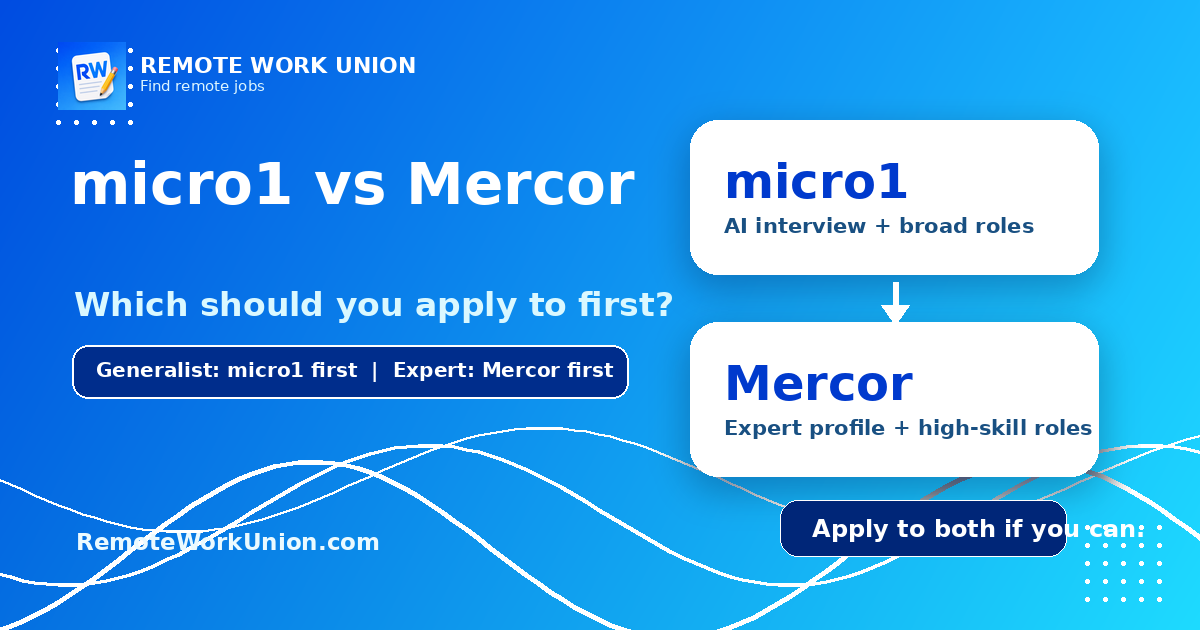
If you are searching for remote AI training work, two platforms come up frequently: micro1 and Mercor. Both are legitimate AI talent marketplaces. Both use AI-based assessments. Both offer project-based remote work that can pay $50–$200/hr at the higher end. But they serve different applicant profiles, and the right starting point depends on your background.
The short answer: micro1 is better first for generalists, beginners, and broad professionals. Mercor is better first for specialists and experts with clearly marketable credentials. The best strategy for most people is to apply to both. But if you can only start with one, choose correctly — a strong first application leads to faster onboarding and earlier paid work.
Quick Verdict
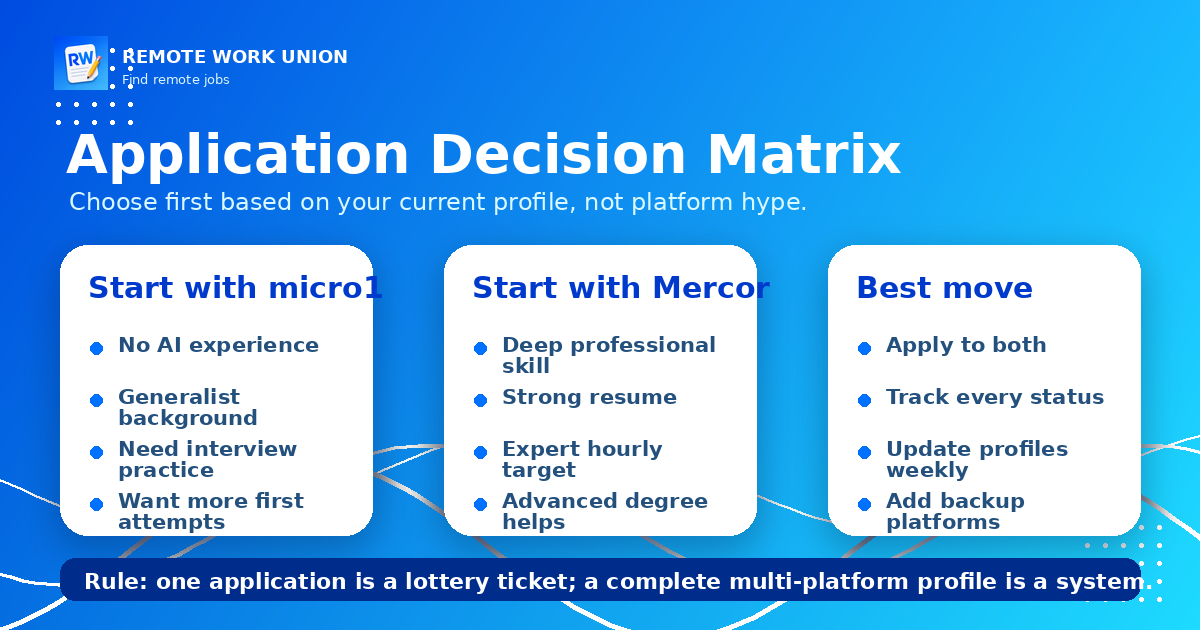
Apply to micro1 first if you are a generalist or newer to remote AI work. micro1's AI interview-based matching through Zara is more accessible for people who can communicate clearly regardless of technical background. Teachers, recruiters, project managers, marketers, paralegals, accountants, customer success professionals, sales specialists, and HR professionals all have backgrounds that can translate well into micro1's evaluation work.
Apply to Mercor first if you have a strong expert profile. Mercor's expert marketplace rewards specificity and professional credentials. Lawyers, engineers, doctors, financial analysts, data scientists, software engineers, and consultants with clearly defined specialties tend to match faster to higher-paying projects on Mercor because the platform is built to connect expert talent to AI companies that need domain-specific judgment.
Apply to both if at all possible. Both platforms are project-based, which means work availability fluctuates. Having active profiles on both creates stability and more options.
What micro1 and Mercor Have in Common
Before comparing the differences, it helps to understand what these platforms share. Both are remote AI training talent marketplaces. Both use AI assessments to evaluate applicants. Both offer project-based work rather than guaranteed employment. Neither platform requires you to pay to apply or access basic work. Both can connect remote workers to AI training, model evaluation, expert review, data annotation, and similar work categories. Both have the potential to pay $20+/hr for general work and $50–$200/hr for expert-tier projects.
Both platforms also carry some uncertainty. Project availability changes. Work may be plentiful one month and slower the next. Neither platform is a salary. Both are best treated as contract work pipelines rather than permanent positions.
These shared realities mean that neither platform is a guaranteed path to consistent income on its own. That is why using both together is the strongest approach.
What micro1 Is Best For
micro1 is designed to match a broad range of professionals to AI training and evaluation work through an AI interview process. The AI interviewer — called Zara — engages applicants in a conversation to assess communication, reasoning, and background without a traditional resume review first.
This makes micro1's process more accessible for people who have real professional experience but may not have a highly polished expert profile. You do not need a specific degree or credential to present a compelling case in a micro1 interview. If you can explain your background clearly, give examples of your judgment and expertise, and communicate well, micro1 can match you to relevant work.
micro1 works well for backgrounds like:
- Teachers, tutors, and education professionals
- Recruiters and HR professionals
- Project managers and operations coordinators
- Marketers and content specialists
- Paralegals and legal assistants
- Bookkeepers and accountants
- Customer success and customer support professionals
- Sales representatives and business development specialists
- Writers, editors, and journalists
- Researchers and analysts with broad domain knowledge
- Students and recent graduates with strong writing and reasoning skills
micro1 also works well for people who are new to remote AI work and want a platform with an accessible entry point. The AI interview format means you get a chance to present yourself in your own words rather than competing purely on credentials.
What Mercor Is Best For
Mercor is an expert talent marketplace. It matches applicants to AI companies looking for domain-specific expertise. The platform uses an AI interview process, but the matching engine is built around professional credentials, specialty, and the ability to handle expert-level AI evaluation work.
Mercor is particularly strong for:
- Attorneys and law school graduates
- Medical doctors, nurses, and healthcare professionals
- Software engineers and technical specialists
- Financial analysts, investment professionals, and CPAs
- Data scientists and quantitative researchers
- Management consultants and MBA-level business professionals
- PhD researchers and academic specialists
- Domain experts in highly specific fields (biotech, aerospace, taxation, regulatory, etc.)
The higher-paying expert projects on Mercor often require reviewers who can judge professional-level AI outputs. An AI-generated legal brief, medical explanation, financial model, or engineering solution needs to be evaluated by someone who knows what professional quality actually looks like in that field. That is where Mercor's expert matching creates real value — for both the company and the applicant.
Remote Work Union connects you to legitimate remote AI platforms including micro1, Mercor, Handshake AI, and Outlier AI. Apply for free.
Find Roles Hiring Now →Side-by-Side Comparison
| Factor | micro1 | Mercor |
|---|---|---|
| Best first applicant | Generalists, broad professionals, beginners to remote AI work | Specialists, domain experts, strong professional credentials |
| Typical work fit | General AI evaluation, writing review, annotation, communication quality | Expert-level AI review, legal/medical/finance/engineering evaluation |
| Application feel | Conversational AI interview (Zara) — accessible for most backgrounds | Expert AI interview — rewards specific credentials and specialty depth |
| Best resume strategy | Emphasize communication, judgment, diverse experience, and reliability | Emphasize professional credentials, domain depth, and expert outcomes |
| Biggest risk | Project availability varies; generalist work can be competitive | Weak expert profile leads to poor matching; overstating credentials backfires |
| Best use case | Breaking into remote AI work, building initial contract experience | Monetizing deep professional expertise in high-value AI review projects |
When to Apply to micro1 First
Apply to micro1 first if you are newer to remote AI work, if your professional background is broad rather than deeply specialized, or if you are not sure which platform fits you better.
micro1's AI interview through Zara creates an accessible entry point. You can explain your background in your own words. A teacher can talk about grading rubrics and content quality. A recruiter can discuss candidate evaluation. A project manager can explain process documentation. A marketer can highlight content review and audience judgment. These translate directly into AI evaluation skills, even if you have never worked on an AI platform before.
Also consider micro1 first if you are currently balancing other work and want to build initial AI training experience before committing to an intensive expert platform process. micro1's matching tends to be faster for generalists than Mercor's expert pipeline.
Tip: During the micro1 Zara interview, be specific about your strengths. "I can evaluate AI responses for business writing quality, customer communication tone, and instruction following" is stronger than "I am good at communication."
When to Apply to Mercor First
Apply to Mercor first if you have a strong, clearly marketable expert profile that matches the types of work AI companies need evaluated. If you can honestly say you are an attorney, a medical professional, a software engineer with deep technical knowledge, or a finance expert, Mercor's expert matching is designed for you.
Mercor's platform is built around the idea that the best reviewers of expert AI content are people with real professional expertise in that area. An AI-generated contract clause is best evaluated by a lawyer. An AI-generated differential diagnosis is best evaluated by a clinician. An AI-generated financial model is best evaluated by an analyst who has built real financial models.
If that description fits you, Mercor is worth prioritizing because the match quality will be better from the start. You are more likely to be matched to higher-paying projects that actually use your expertise, rather than general annotation tasks that pay less and feel misaligned.
Learn more about Mercor's application process in the complete Mercor application guide.
Best Strategy: Apply to Both
For most remote workers, the best approach is to apply to both micro1 and Mercor, sequence your applications correctly based on your background, and keep both profiles active.
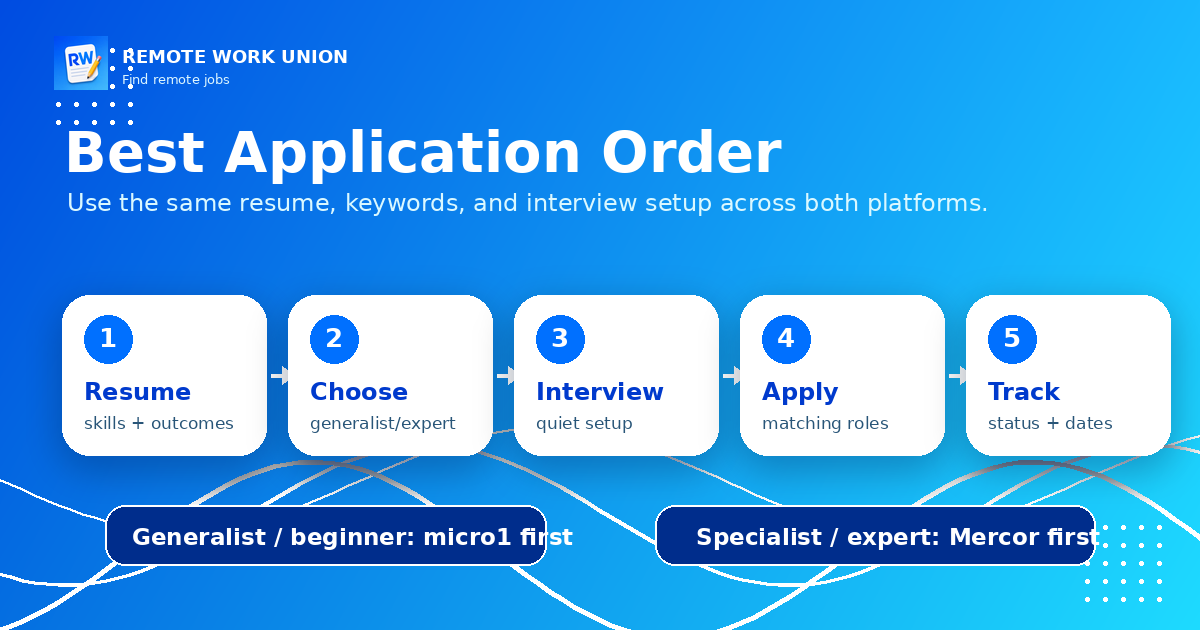
Here is a practical sequencing plan:
- Generalists and beginners: Apply to micro1 first. Complete the Zara interview. While waiting for micro1 results, build your Mercor expert profile and complete the Mercor AI interview.
- Specialists and experts: Apply to Mercor first. Build a strong expert profile. While waiting for Mercor results, complete the micro1 Zara interview as a backup and additional income stream.
- Everyone: Once active on both platforms, check dashboards regularly. Project availability changes frequently. Being active on both doubles your chances of having work available at any given time.
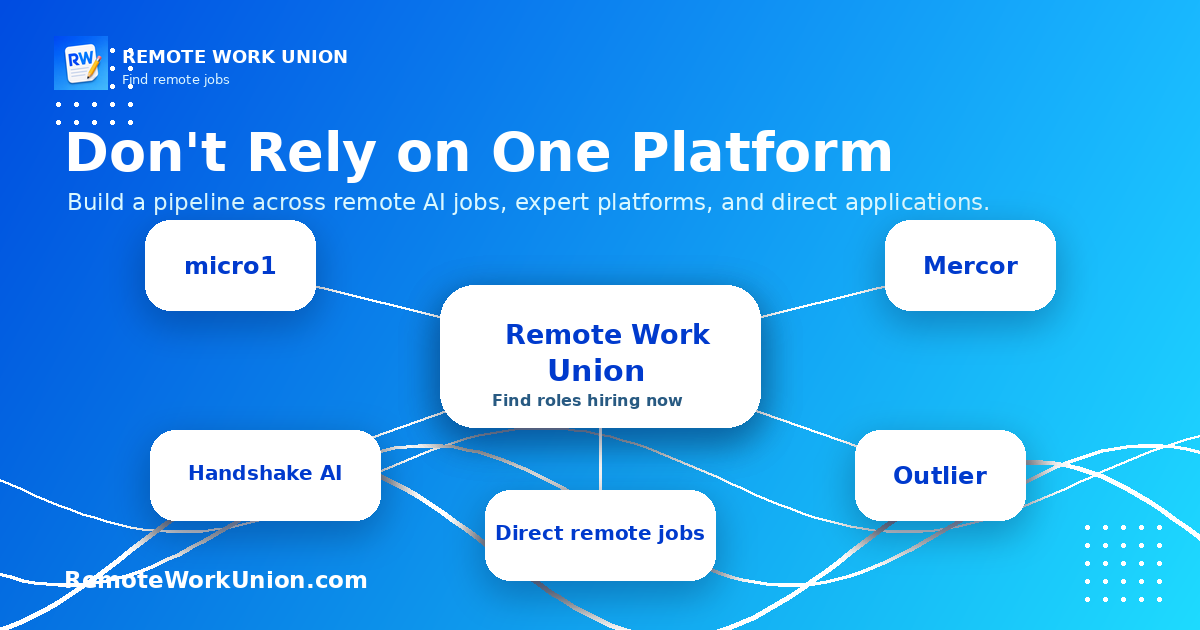
Also consider adding Handshake AI and Outlier AI to your application list. Handshake AI offers AI fellowships and referral-based opportunities. Outlier AI has a broad range of evaluation tasks for writers, researchers, and specialists. A multi-platform approach is always more stable than depending on one source of remote AI work.
How to Prepare One Profile for Both Platforms
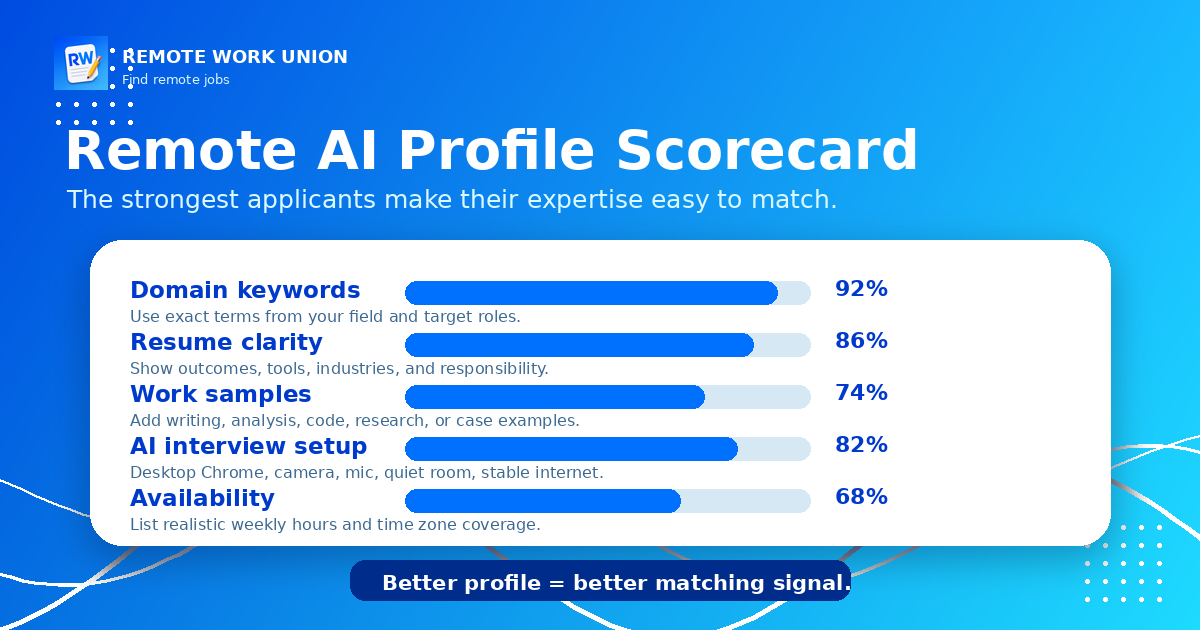
Building one master profile that you adapt for each platform saves time and creates consistency. Your master profile should include:
- A clear headline: Who you are and what type of AI evaluation you are qualified to do. Be specific. "Financial analyst for AI model evaluation, spreadsheet reasoning review, and investment explanation quality" is stronger than "experienced professional."
- A short professional summary: Three to five sentences covering your domain, writing ability, and availability for remote contract work.
- A curated skills list: Five to eight tags that match AI evaluation work. Include both your domain (law, finance, medicine, marketing, education) and your process skills (fact-checking, rubric review, instruction-following, content rating).
- A short interview bank: Prepare five concrete examples of professional judgment you have exercised. Use these as answers during both AI interviews.
- A clean setup: Desktop or laptop, working microphone, camera, and a quiet environment for AI interview sessions.
The same core profile can work for both platforms. Adapt emphasis slightly: lean toward breadth and communication for micro1, lean toward depth and credentials for Mercor.
For more on building a strong remote AI profile, see the guide on building a remote work profile that gets matched with better AI jobs.
Common Mistakes When Applying to micro1 and Mercor
Applying with a generic resume. Both platforms reward specificity. "Experienced professional with strong communication skills" is not useful. "Finance analyst with 5 years of investment research who can evaluate AI-generated financial explanations for accuracy, reasoning, and client suitability" is much stronger.
Applying to only one platform. Project availability on any single platform can dry up unexpectedly. Qualified applicants who are active on multiple platforms earn more consistently than those who rely on one source.
Chasing the highest advertised pay without matching the requirements. $200/hr expert projects are real, but they require professional credentials and demonstrated judgment. Applying for expert roles with a generalist profile typically leads to rejection or poor matching. Start where you actually fit, then build toward better-paying projects.
Paying to start. Neither micro1 nor Mercor charges applicants a fee to access work. If any platform asks you to pay upfront before beginning paid work, that is a red flag.
Final Recommendation
For beginners and generalists, micro1 is the better first application. The Zara AI interview is accessible, the platform is designed for a broad range of backgrounds, and the matching process can get you into your first paid AI project faster than a specialist-focused platform would.
For specialists and experts, Mercor is the better first application. If you have professional credentials in law, medicine, finance, engineering, data science, or consulting, Mercor's expert marketplace is built to connect your expertise to the companies that need it most.
For anyone serious about remote AI income, apply to both. Sequence your applications correctly, build one strong master profile, complete both AI interviews honestly, and keep your platforms active. The remote AI work market is real and growing — but the workers who earn the most consistently are the ones who treat it like a professional pipeline, not a passive income source.
Frequently Asked Questions
Should I apply to micro1 or Mercor first?
It depends on your background. Beginners, generalists, and broad professionals — including teachers, recruiters, project managers, marketers, paralegals, accountants, and customer success specialists — should apply to micro1 first. Specialists and experts with clearly marketable credentials — lawyers, engineers, doctors, finance professionals, and consultants — should apply to Mercor first. The best strategy is to apply to both.
What is the difference between micro1 and Mercor?
Both are remote AI talent marketplaces that use AI assessments, offer project-based work, and do not guarantee income. The key difference is their applicant fit. micro1 is best for generalists and broad professionals who can pass an AI interview based on communication clarity and general reasoning. Mercor is best for specialists and experts with strong domain credentials who can attract higher-skill expert review projects.
How does micro1's application process work?
micro1 uses an AI interviewer called Zara to screen applicants. The interview assesses your background, communication ability, and reasoning without requiring a traditional resume review first. This makes the process more accessible for professionals who have real skills but may not have a polished expert resume. After the interview, micro1 matches you to available AI training and evaluation projects based on your profile and performance.
How does Mercor's application process work?
Mercor is an expert talent marketplace. You create a profile, Mercor's AI interviews you, and then you are matched to projects based on your professional credentials, domain expertise, and interview performance. Mercor rewards specific expertise — lawyers, engineers, doctors, financial analysts, and consultants tend to do well because there are expert projects that specifically need professional-level judgment.
Can I apply to both micro1 and Mercor at the same time?
Yes, and it is recommended. Both platforms are project-based, which means work availability can fluctuate. Having an active profile on multiple platforms creates stability. Apply to both, complete both AI assessments, and keep your profiles updated. Maintain one master resume focused on judgment, domain expertise, writing clarity, and availability that you can adapt for each platform.
What mistakes should I avoid when applying to micro1 and Mercor?
Common mistakes include applying with a generic resume that does not highlight your specific domain expertise, applying to only one platform instead of both, expecting immediate guaranteed income, chasing the highest advertised pay rate without matching the requirements, and paying any fee to get started — both platforms are free to apply to.