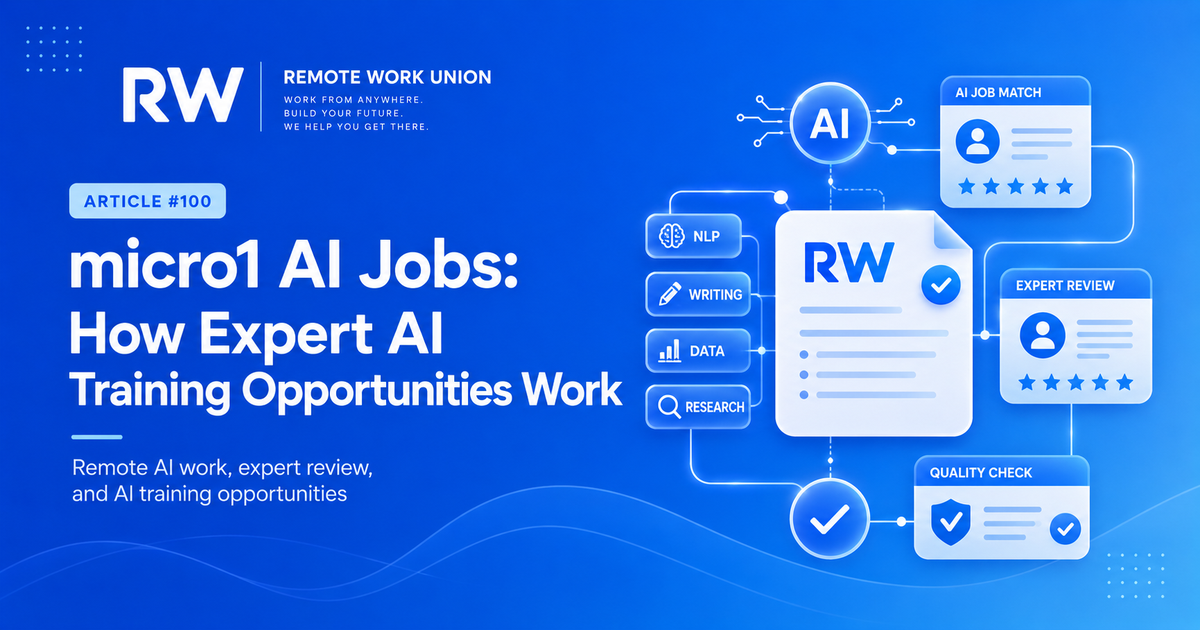
micro1 AI jobs sit in the broader category of remote AI training, AI model evaluation, human feedback work, and expert review. The core idea is simple: modern AI systems need structured human judgment. A platform can use human reviewers to write prompts, evaluate answers, rank model responses, identify mistakes, check facts, explain why an output is good or bad, and create examples that help AI systems perform better in real-world tasks.
For job seekers, this matters because the work is not limited to traditional coding. Some projects may require software engineering, data science, machine learning, math, or technical experience. Others may reward strong writing, research, legal reasoning, finance knowledge, healthcare knowledge, education experience, bilingual fluency, or the ability to judge whether an answer is accurate and useful. That is why searches such as micro1 AI jobs, remote AI training jobs, AI model evaluation jobs, RLHF jobs, AI rater jobs, prompt evaluation jobs, and expert AI training jobs all point toward the same growing labor category.
What micro1 AI Jobs Are
micro1 AI jobs connect professionals with AI companies that need human expertise for tasks connected to model training, evaluation, quality review, and feedback. The best way to understand this type of work is to think of it as a bridge between expert human knowledge and AI model improvement. The worker is not usually building the AI system from scratch. Instead, the worker is helping define what high-quality output looks like.
Tasks can include response ranking — comparing two or more AI-generated answers and choosing the strongest one based on accuracy, helpfulness, completeness, and instruction-following. They can include error identification — marking where a model made a factual mistake, skipped a requirement, hallucinated a claim, or used weak reasoning. They can include prompt writing, writing gold-standard answers, reviewing another reviewer's work, annotating data, grading model outputs, checking citations, testing code, labeling content, or documenting why one response is better than another.
Major AI companies and AI ecosystems such as OpenAI, Anthropic, Google, Meta, Microsoft, xAI, and other frontier labs have created the demand that platforms like micro1 serve. The more capable AI systems become, the more specialized the human feedback needs to be — which is why domain expertise continues to hold real market value in this space.
Why Expert Feedback Matters for AI Companies
AI models can produce confident answers that still miss context, make unsupported claims, misunderstand instructions, or fail when a task requires judgment. Human feedback helps model builders identify those weaknesses. This is especially important in areas where the right answer depends on domain knowledge: finance, law, medicine, education, engineering, code, science, operations, business analysis, and multilingual communication.
Internet data alone is not enough. A model needs examples of good reasoning, careful correction, domain-specific nuance, and practical task completion. A lawyer can notice a legal reasoning problem that a general reviewer might miss. A nurse or medical writer can catch vague clinical wording. A finance analyst can test whether a model understands accounting logic. A bilingual reviewer can judge translation quality and cultural context. A coder can evaluate whether a solution actually runs. That depth is what expert AI training platforms pay for.
What the Work Can Look Like
The exact task depends on the project, but most expert AI training opportunities fall into recognizable patterns. Response ranking: you compare two or more AI-generated answers and choose the strongest one based on defined quality criteria. Error identification: you mark where a model made a factual mistake, hallucinated a detail, or failed to follow an instruction. Prompt writing: you create realistic tasks that a user might give an AI assistant. Gold standard answers: you write an ideal response to demonstrate what a correct, high-quality answer looks like. Source checking: you verify whether citations support the claims an AI made.
For technical workers, micro1-style projects may include coding evaluation, software debugging, data science review, math verification, machine learning explanation, or technical prompt engineering. For non-technical workers, projects may focus on writing quality, research accuracy, language fluency, business judgment, educational content, or professional domain knowledge.
Remote Work Union connects you to expert AI training roles across platforms. Find work that matches your expertise.
Find Roles Hiring Now →Who Fits Best
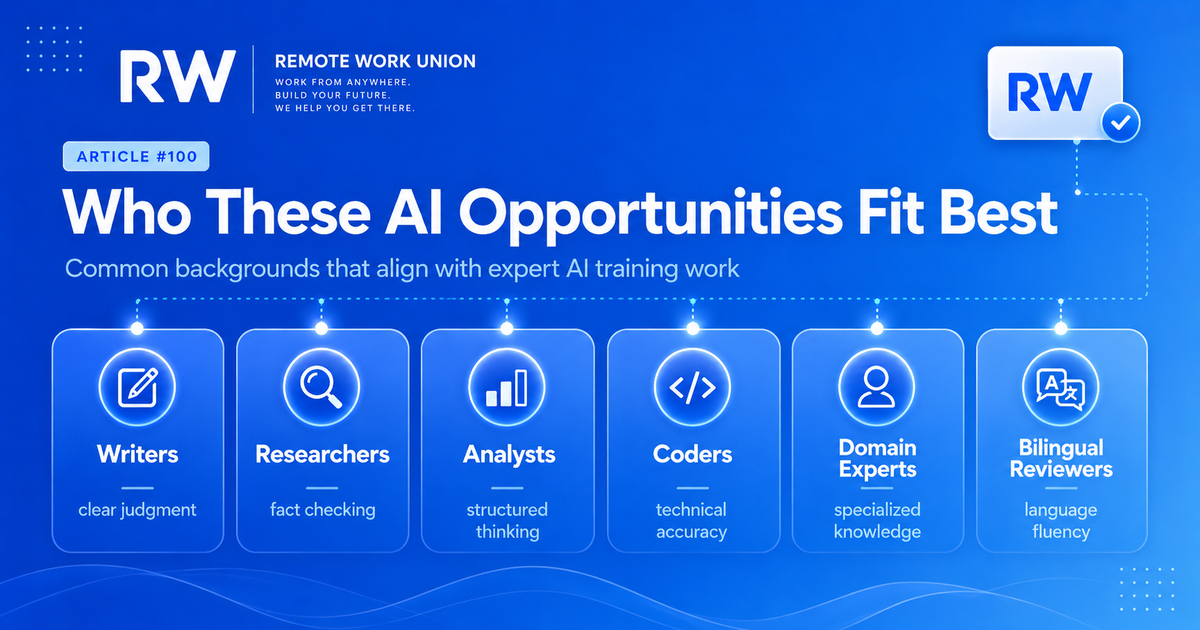
micro1-style AI training opportunities are a strong fit for people who have domain expertise they can apply consistently, write clearly and explain their reasoning, are comfortable with structured remote work, and can maintain quality across repetitive tasks without losing attention to detail.
Strong fit backgrounds include software engineers and data scientists; lawyers and legal researchers; finance analysts, accountants, and economists; doctors, nurses, and medical writers; teachers, tutors, and curriculum developers; scientists, engineers, and researchers; editors, journalists, and technical writers; bilingual speakers with strong writing in both languages; and operational and business professionals with specialized process knowledge.
Weaker fits include people who want passive income with minimal effort, people who find it difficult to follow complex guidelines consistently, and people who are not comfortable with structured feedback on their work quality. AI training platforms track reviewer performance — strong reviewers get more work, and weaker reviewers may be removed from projects.
The Expert AI Training Workflow
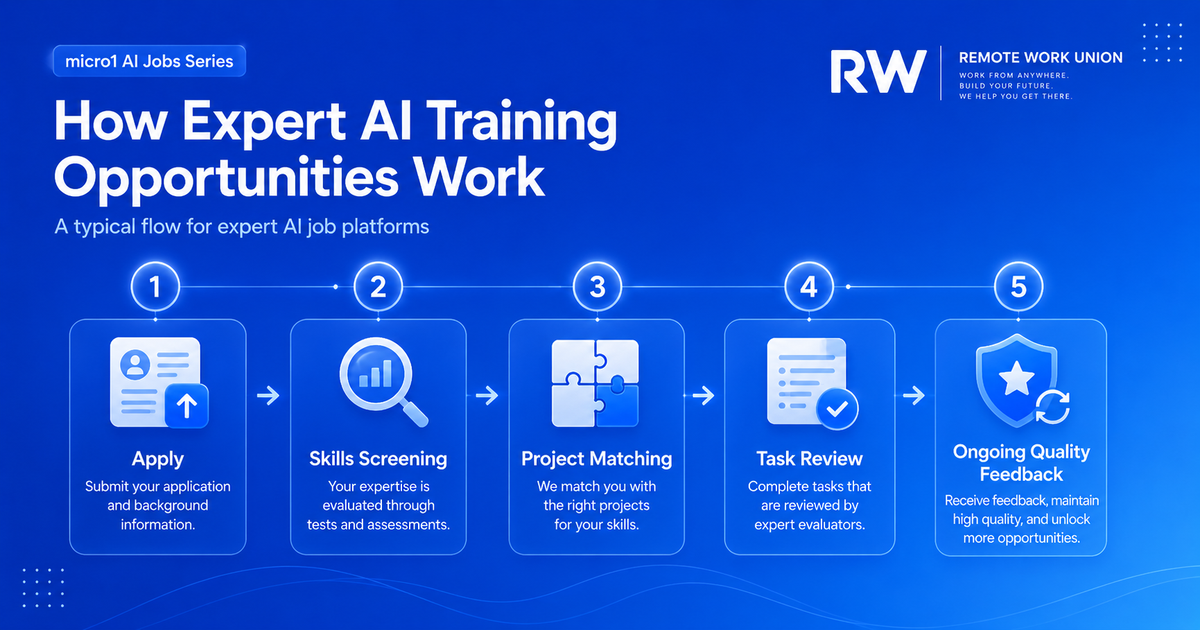
A typical expert AI training workflow moves through five stages. First, application: you submit your profile, expertise area, writing samples, and availability. Second, screening: the platform asks you to complete a qualification task that mirrors the actual work. Your performance on this task is the primary admission criterion. Third, project matching: if you qualify, the platform matches you to projects where your skills fit the client's requirements. Fourth, task review: you complete assigned tasks within the platform's interface, following project-specific guidelines. Fifth, quality feedback: the platform assesses your work quality, and your access to projects adjusts accordingly over time.
Each stage requires a different type of attention. The application stage requires accurate self-representation — neither underselling nor exaggerating your expertise. The screening stage requires genuine effort — treat it like paid work. The task review stage requires consistency — your goal is repeatable quality, not occasional brilliance.
Application Readiness Checklist
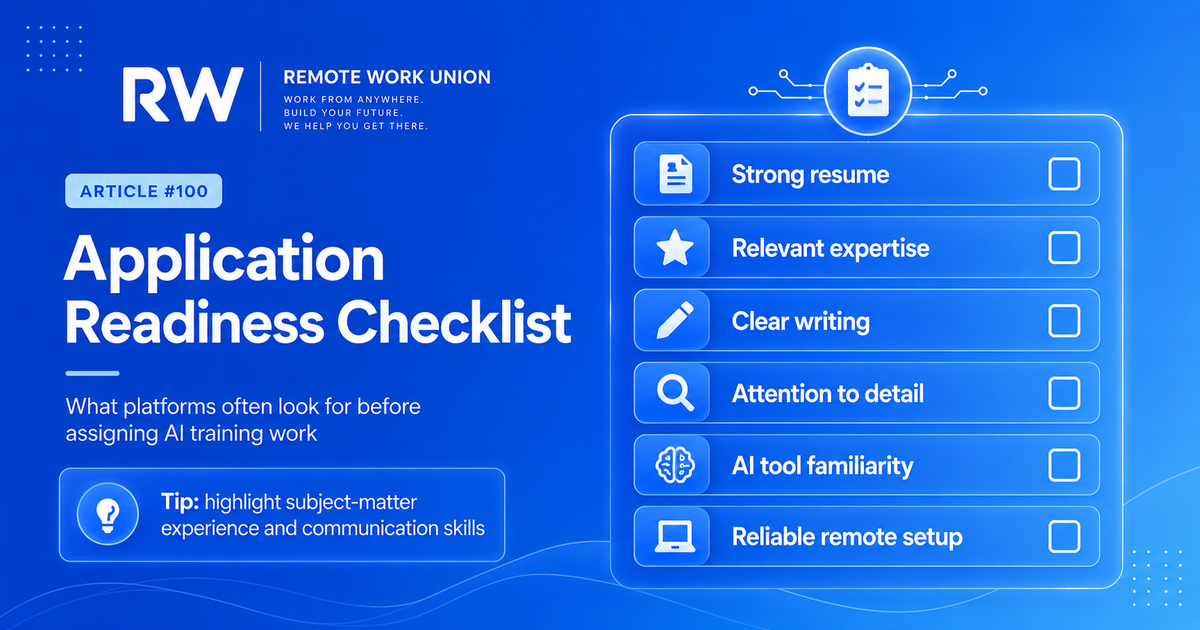
Before applying to micro1 or similar expert AI training platforms, confirm your readiness on each dimension. Resume: does it clearly state your professional domain and specific expertise? Writing: is your application text clear, specific, and free of vague claims? Expertise: can you describe in one sentence what types of AI content you are qualified to evaluate? Attention to detail: can you give an example of a time you caught an error or inconsistency that others missed? AI tools: are you familiar enough with ChatGPT, Claude, Gemini, or similar tools to recognize their typical failure modes? Remote setup: do you have a reliable internet connection and a quiet environment for focused task work?
The most common mistake: Applying with generic claims of "attention to detail" and "interest in AI" without connecting your actual professional background to the type of evaluation work the project requires. Make your domain expertise visible and specific.
How to Search for Similar Opportunities
Because expert AI training work appears under many labels, effective search requires multiple terms. Start with platform-specific searches: micro1 AI jobs, micro1 expert opportunities, micro1 AI training. Then search the broader category: remote AI training jobs, AI model evaluation jobs, expert AI review jobs, domain expert AI evaluator, RLHF jobs, human feedback jobs, AI rater jobs, and prompt evaluation jobs.
Add your professional domain to the search: legal AI evaluator, finance AI reviewer, medical AI training, coding AI evaluator, education AI reviewer, bilingual AI evaluator. This helps surface projects where your background is explicitly required rather than merely appreciated.
RemoteWorkUnion.com tracks remote AI work across multiple platforms and updates regularly. It can serve as a central starting point for your search rather than requiring you to check every platform independently.
Frequently Asked Questions
What are micro1 AI jobs?
micro1 AI jobs are remote contract opportunities in expert AI training, model evaluation, human feedback, and AI quality review. They connect professionals with AI companies that need human expertise to evaluate model outputs, write training examples, and provide structured feedback for improving AI systems.
Who is a good fit for micro1 AI training work?
Strong candidates include writers, researchers, coders, lawyers, doctors, finance professionals, teachers, scientists, and bilingual experts who can apply domain knowledge to evaluating AI-generated content. micro1-style platforms often prioritize depth of expertise over general availability.
How do I prepare a strong application for micro1 AI jobs?
Make your expertise the headline of your application. Describe specifically what types of AI content you can evaluate in your field. Show writing quality through your application text itself. Complete the screening task carefully — it is the primary signal the platform uses to assess your fit for projects.