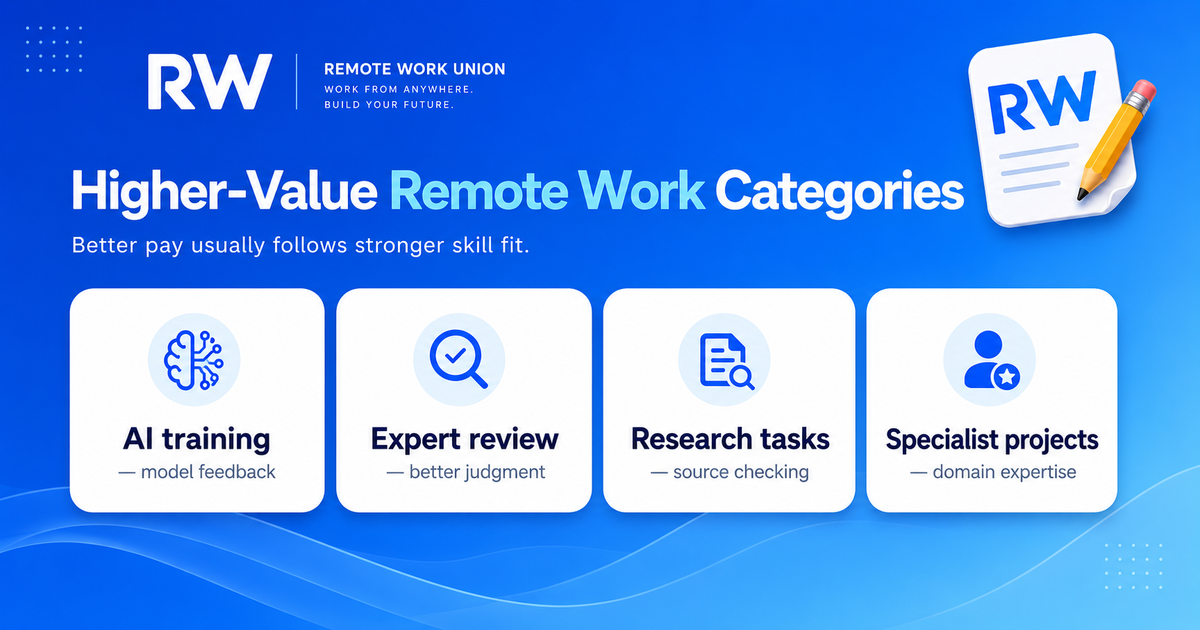
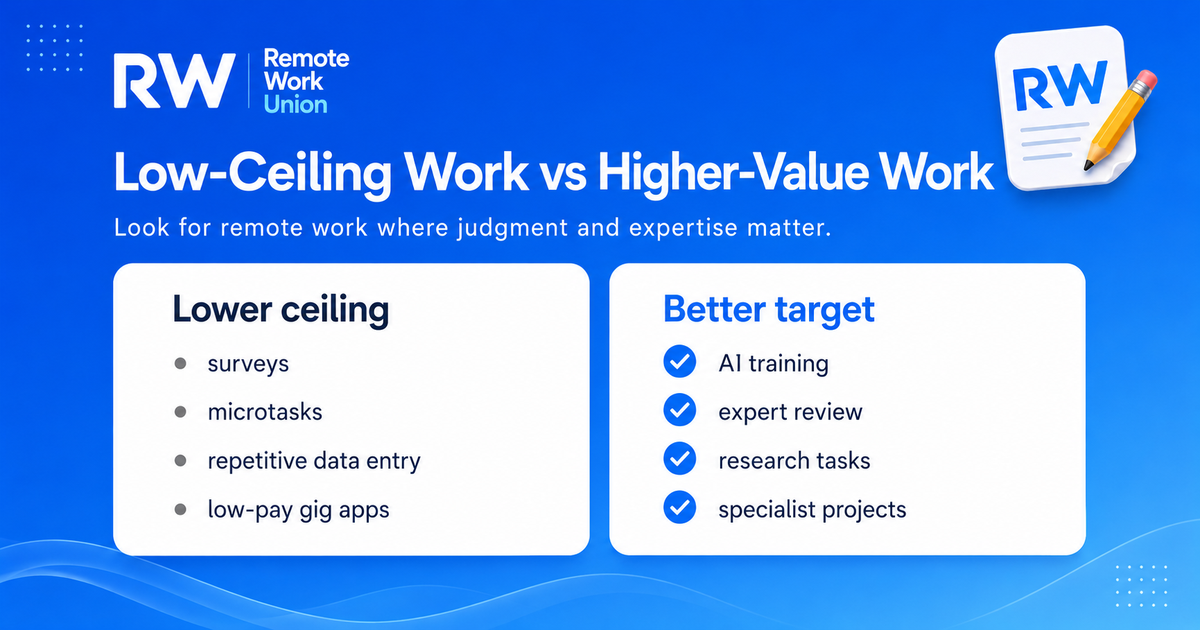
A lot of people start their online job search in the wrong place. They look at surveys, generic data entry, low-paying microtasks, or gig apps because those options are highly visible and easy to join. The problem is that easy entry usually comes with a low ceiling. These categories often reward speed and availability more than skill, which is why the pay tends to stay limited.
If your goal is real remote work, it makes more sense to focus on jobs that use judgment, communication, analysis, and subject knowledge. Those are the kinds of online jobs from home that can create better income and better long-term positioning. The strongest remote work is not just about being online. It is about being useful.
Why Low-Ceiling Online Work Stays Low-Ceiling
Surveys, repetitive data entry, and many gig-style apps are built around scale. The system works because large numbers of people can do the same task with minimal screening. That keeps the barrier to entry low, but it also keeps the pay compressed. If almost anyone can replace you quickly, the platform has little reason to raise rates.
This does not mean those options never make sense. They can be a short-term way to earn something. But they are rarely the best target if you want strong remote work from home opportunities. The main issue is leverage. These categories do not usually reward deeper thinking, better writing, stronger judgment, or professional expertise.
What Higher-Value Remote Work Looks Like
Higher-value remote work usually has four traits. First, the pay range is clearer or stronger. Second, the work uses real skill rather than pure repetition. Third, there is some screening or assessment, which helps keep quality higher. Fourth, the tasks contribute to something more substantial than raw traffic or filler work.
That is why categories like AI training jobs, expert review, research support, specialized writing, technical evaluation, and domain-based analysis have become more attractive. They use human judgment, and judgment is harder to commoditize than clicks. The better your judgment, the more valuable you become.
Strong Alternatives to Low-Pay Platforms
One of the strongest alternatives is remote AI work. AI training jobs and AI evaluation work allow writers, marketers, lawyers, finance professionals, educators, and engineers to turn expertise into paid online work. Instead of filling out endless surveys, you might compare model answers, improve written outputs, rank responses, fact-check claims, or review domain-specific reasoning.
Other strong alternatives include specialized freelance writing, remote research support, editing, virtual project-based consulting, operations support with clear skill requirements, and expert marketplaces that match professionals to targeted work. The pattern is the same across all of them: the pay improves when the work requires more than basic availability.
What Skills Still Create Pricing Power
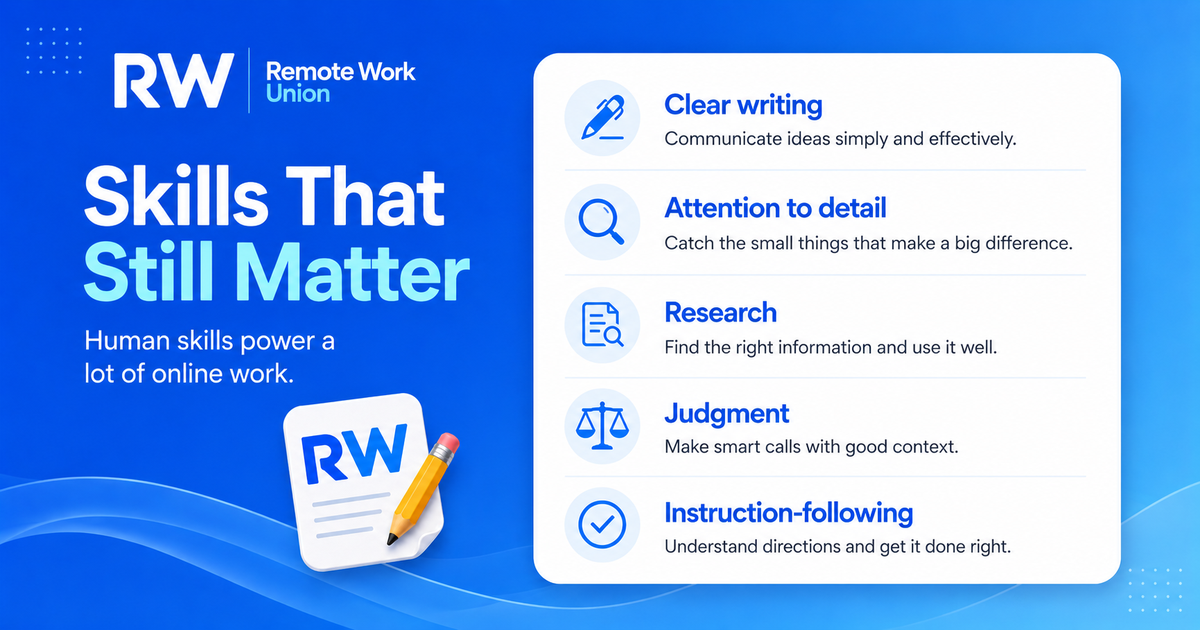
The online economy still rewards certain skills especially well. Clear writing matters. Analytical reasoning matters. Subject-matter knowledge matters. Careful review matters. Communication skill matters. Technical fluency matters. If you have one or more of these, you should not default to the lowest-ceiling opportunities.
This is an important mindset shift. Many remote workers underestimate the market value of skills they already use in everyday work. The internet is full of low-level opportunity, but it is also full of businesses, platforms, and AI teams that need capable people to review, improve, and evaluate information.
How to Filter for Better Opportunities
A useful filter is to ask five questions before applying. Is the pay range visible? Does the role require real skill? Does the company or platform look legitimate? Is the screening process reasonable? Are the remote work terms clear? The more "yes" answers you get, the better the opportunity probably is.
This filter helps you avoid wasting time on vague listings or low-quality platforms. It also keeps your attention on skill-based remote jobs instead of getting pulled back into junk listings that only look easy.
Why Better Filtering Beats More Applications
A common mistake is applying everywhere without filtering. That creates activity, but not always progress. Better filtering gives you higher-quality targets. If you are chasing higher-paying online jobs, the goal is not to maximize the number of clicks. The goal is to spend your time where your skill has room to matter.
That is another reason remote AI jobs have become popular. They are not perfect, but they usually offer a clearer connection between expertise and pay than the classic low-end online work categories.
How to Move Up from Low-Ceiling Work
If you are currently doing surveys, microtasks, or basic gig work, the best next step is not necessarily to quit immediately. The smarter move is to begin redirecting your search toward higher-value lanes while identifying which of your skills are strongest. Improve your resume, collect proof of work, build better application answers, and start targeting roles where you can be screened for quality instead of ignored as a generic user.
The internet always has low-friction work. That does not mean you have to stay there.
Key insight: Remote work is competitive because it is accessible. The way to stand out is not to apply more — it is to apply better, to the right places. Pick roles where your specific background creates a real advantage.
Conclusion
Remote work jobs that pay more than surveys, data entry, and gig apps do exist, but they usually require a better search strategy. Instead of optimizing for the easiest signup, optimize for roles where judgment, communication, and expertise are rewarded. That is how you move from low-ceiling online work toward stronger remote opportunities.