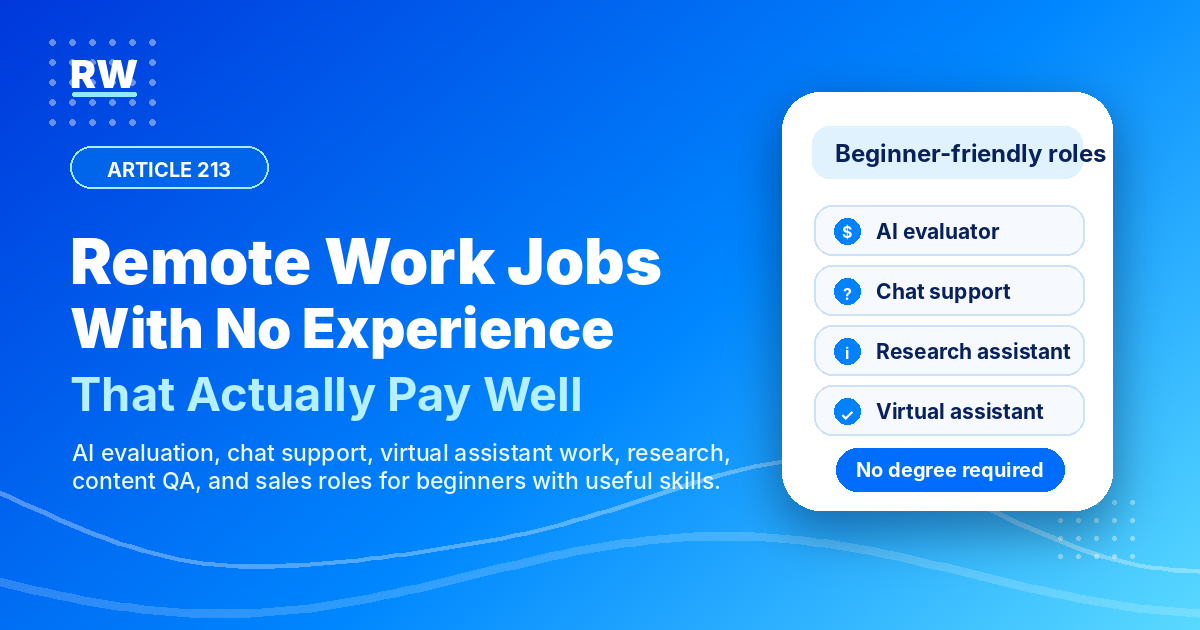
A lot of people search for remote work jobs with no experience because they want a real way to earn from home without going back to school, paying for a course, or pretending they already have a perfect resume. The problem is that many beginner remote jobs are either extremely competitive, too low-paying, or not real jobs at all.
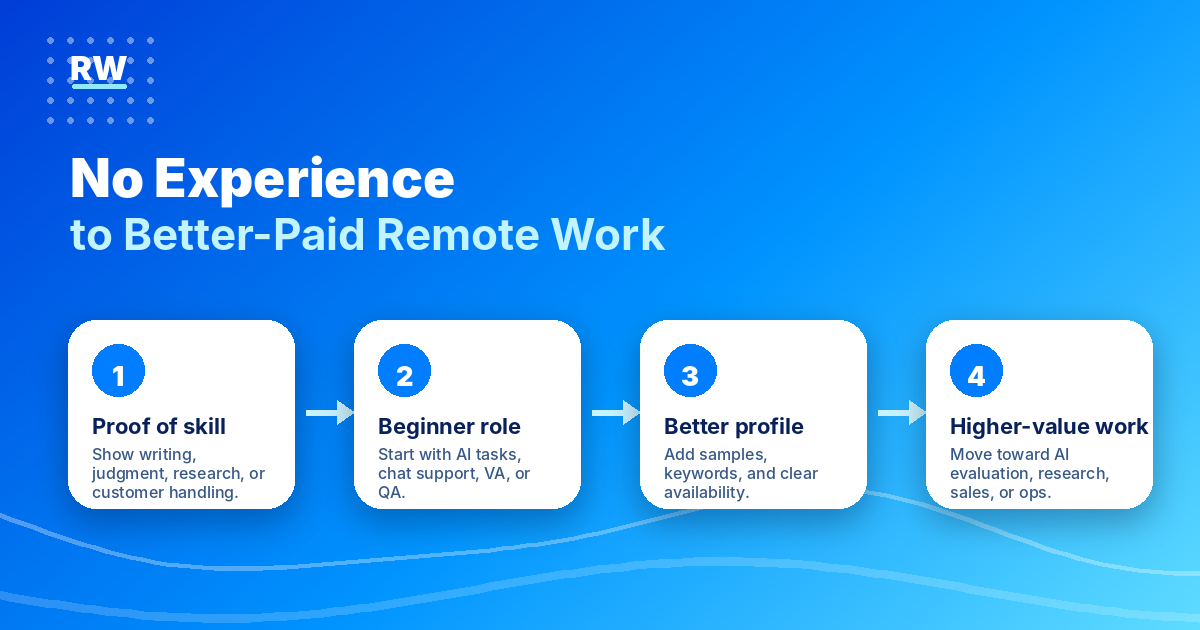
The better approach is to understand what "no experience" actually means. It does not mean no skills. It does not mean no effort. It means you may not have direct remote work experience yet, but you can still prove that you are reliable, accurate, organized, responsive, and able to learn quickly.
This guide breaks down remote work jobs with no experience that can actually pay well, what skills make them valuable, how to apply, and how to avoid wasting time on fake or low-quality opportunities.
No Experience Does Not Mean No Value
The biggest mistake beginners make is applying to every listing that says "no experience required" without asking why the job would pay well.
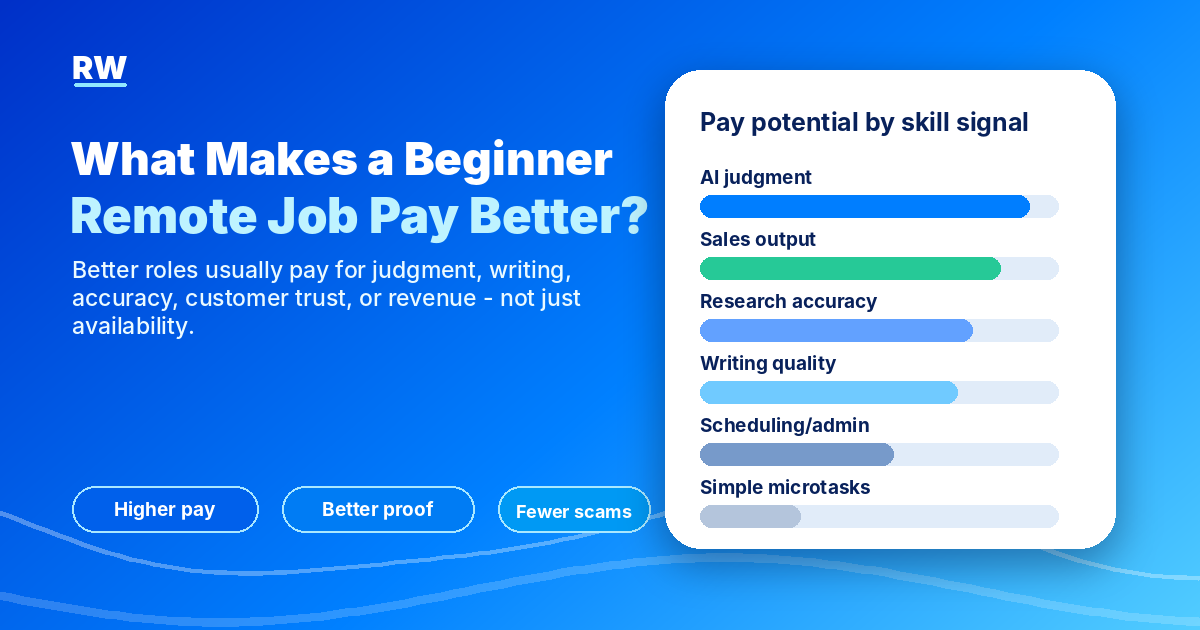
A company pays more when the work protects revenue, improves a product, supports customers, creates trust, checks quality, or requires judgment. A company pays less when the work is simple, repetitive, easy to automate, or available to anyone instantly.
That is why the best beginner remote jobs usually involve at least one of these skills: clear writing, careful reading, basic research, fast learning, customer communication, organization, accuracy, judgment, sales ability, comfort using online tools, and attention to detail. You do not need a degree for all of these skills. You do not always need previous remote work experience. But you do need to show that you can do more than click buttons.
1. Remote AI Evaluator or AI Response Reviewer
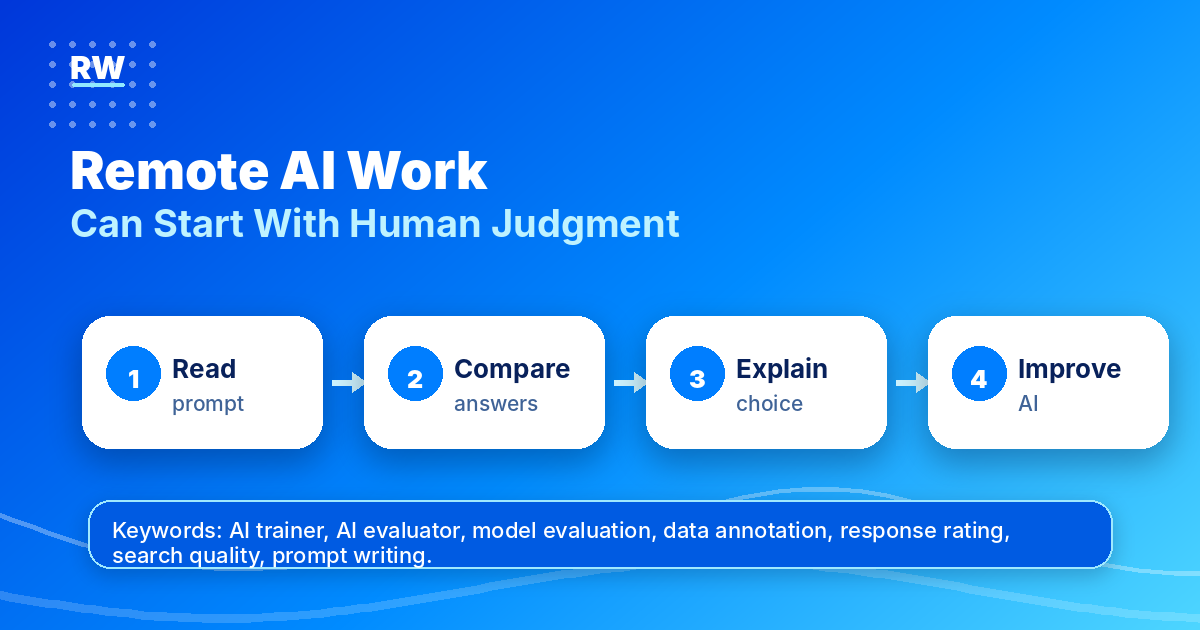
Remote AI evaluation is one of the most important newer categories for people looking for online jobs that pay well without traditional experience. AI companies and AI training platforms need humans to review model responses, compare answers, rate quality, check instructions, flag errors, and explain which response is better.
This work may appear under many names: AI evaluator, AI trainer, AI response reviewer, model evaluator, AI data annotator, prompt evaluator, search quality evaluator, AI content reviewer, or human feedback specialist.
The reason this category can pay better than many beginner jobs is that it uses human judgment. Major AI companies and AI labs, including OpenAI, Anthropic, Google, Meta, xAI/Grok, and many smaller AI companies, rely on human feedback to improve AI systems. Not every beginner will work directly with those companies, but the broader market has created more demand for people who can read carefully, compare outputs, and explain their reasoning.
This can be a strong fit if you are good at writing, editing, research, logic, grammar, creativity, math, coding, finance, law, science, medicine, education, or any specialized subject. Some AI evaluation projects are general. Others are expert-level and pay more because they require domain knowledge. For beginners, the most realistic path is to start with general AI evaluation, writing review, data annotation, or search rating work, then move toward higher-paying projects as your profile becomes stronger.
2. AI Data Annotation and Labeling
AI data annotation is another beginner-friendly remote work category. The basic version can include labeling images, categorizing text, tagging search results, reviewing short answers, or identifying whether content follows instructions.
Some data annotation work is simple and does not pay much. The better-paying version usually requires more thought. For example, you may need to decide whether an answer is factual, whether an image matches a prompt, whether a response is safe, or whether a model followed detailed instructions.
Good applicants usually have patience, accuracy, strong reading comprehension, consistent attention to detail, ability to follow written guidelines, and ability to explain decisions clearly. This is a good entry point for people who do not have a remote resume yet, because the platform often cares more about assessment quality than previous job titles.
3. Search Quality Rater
Search quality rating is remote work where you evaluate search results, ads, maps, AI answers, or content relevance. The job is not just about knowing how to use Google. It is about judging whether a result is useful, trustworthy, relevant, local, clear, and aligned with the user's intent.
This category can be a good no-experience remote job because many projects train workers on a detailed rating guide. If you are a careful reader and can follow rules, you may be able to pass the assessment even without a long resume.
Search quality work often appeals to people who like fact-checking, research, comparing web pages, evaluating content quality, spotting misleading information, and understanding what a user is really asking. It is also a useful bridge into AI evaluator jobs because both categories reward accuracy, judgment, and explanation.
4. Remote Chat Support or Customer Support
Remote customer support is one of the most common work from home jobs with no experience. Phone support is not ideal for everyone, but chat support and email support can be better fits for people who write clearly and stay calm under pressure.
These jobs can pay well when the support role is connected to a valuable product, software company, financial service, healthcare company, marketplace, or business tool. Generic support roles may pay less, but specialized support can become a real career path.
A beginner can make their application stronger by emphasizing clear written communication, fast response time, conflict resolution, patience, experience helping customers or clients in any context, and familiarity with tools like Gmail, Google Docs, Slack, Notion, Zendesk, Intercom, HubSpot, or Shopify. Even if you have never worked remotely, you may already have customer-facing experience from retail, restaurants, hospitality, events, tutoring, sales, reception, or office work. That experience can transfer.
Remote Work Union connects beginners and experienced professionals to legitimate remote work opportunities including AI training, support, and operations roles. Apply for free.
Find Roles Hiring Now →5. Virtual Assistant or Remote Administrative Assistant
Virtual assistant jobs are often listed as no-experience remote jobs, but the best-paying ones are not just basic scheduling. Better VA work involves organizing projects, managing inboxes, updating systems, coordinating people, handling documents, preparing simple reports, and keeping a business moving.
This is a strong option for beginners who are organized, responsive, and comfortable with online tools. It can also lead into operations coordinator, executive assistant, project coordinator, or customer success roles.
Useful skills include calendar management, email organization, data entry with accuracy, Google Workspace or Microsoft Office, Canva, ChatGPT or AI tools, spreadsheet basics, scheduling, research, and simple documentation. The key is to avoid presenting yourself as "I have no experience." Present yourself as someone who can make a busy person's work easier.
6. Online Research Assistant
Online research assistant work can be a strong remote job for beginners because it values curiosity, speed, and accuracy. The job might involve finding leads, researching companies, comparing products, summarizing articles, checking facts, building spreadsheets, or preparing short briefs.
This role can overlap with AI training jobs because both involve reading, judgment, and fact-checking. It can also support marketing, sales, recruiting, operations, journalism, consulting, and business development teams.
The best beginner research applicants can show that they know how to search effectively, compare sources, avoid unreliable information, summarize clearly, organize findings, build clean spreadsheets, and explain what they found and why it matters. A simple work sample can help — for example, a one-page research brief comparing three companies or summarizing a market trend.
7. Content QA, Editorial Assistant, or Proofreading Work
If you are good at spotting mistakes, content QA can be a realistic remote job with no formal experience. This can include checking blog posts, product descriptions, AI-generated content, support docs, social posts, newsletters, transcripts, or training materials.
This is not always the same as being a full-time writer. Many companies need people who can review content for clarity, grammar, formatting, accuracy, tone, duplication, broken links, and consistency. Content QA is especially relevant now because more companies are using AI tools to generate drafts. Human reviewers are needed to make sure the final output is accurate, readable, and safe to publish.
This role can be a good fit if you have strong grammar, careful reading habits, good taste in writing, basic SEO understanding, familiarity with Google Docs or content management systems, and ability to give concise feedback. For applications, include a short sample — a before-and-after edit, a corrected paragraph, or a content checklist can be enough to show the skill.
8. Sales Development Representative
Sales development representative roles, often called SDR or BDR jobs, are not for everyone. But they can pay well compared with many entry-level remote jobs because they are tied directly to revenue.
In a remote SDR role, you may research potential customers, send outreach emails, qualify leads, book meetings, update a CRM, and follow up with prospects. Some roles include phone calls. Others are more email, LinkedIn, or chat-based.
This work can be a fit for beginners who are persistent, comfortable with rejection, organized, and willing to learn a script. It can also be a strong option for people coming from retail, hospitality, event promotion, real estate, or any environment where they had to talk to people and make things happen. The upside is that sales roles can include base pay, commission, bonuses, and advancement.
9. Community Support or Social Media Assistant
Community support and social media assistant jobs can be entry-level remote roles for people who understand online communities, comments, DMs, creator platforms, Discord, Reddit, TikTok, Instagram, X, YouTube, or newsletters.
Better roles involve responding to community questions, organizing content, flagging issues, tracking feedback, scheduling posts, summarizing audience reactions, and helping a brand stay consistent. These roles can be valuable if you can show clear writing, judgment, brand awareness, fast response time, and understanding of online platforms. If you have built your own page, helped a friend with content, moderated a group, or created posts that performed well, that can count as relevant proof.
10. Remote Recruiting Coordinator
Recruiting coordinator jobs can be overlooked by beginners, but they can be a good remote work path. The work may include scheduling interviews, messaging candidates, updating applicant tracking systems, coordinating hiring managers, and keeping the process organized. This is not the same as being a senior recruiter. It is more operational, which makes it more realistic for someone with strong organization skills but limited direct experience.
Recruiting coordinator work can fit people who have experience with scheduling, customer service, administrative work, event coordination, college clubs, office management, hospitality, or communication-heavy jobs. It can also lead into recruiting, HR operations, people operations, or talent acquisition roles over time.
What Remote Jobs Should Beginners Avoid?
Not every no-experience remote job is worth applying for. Some are real but too low-paying. Some are scams. Some are so competitive that beginners waste weeks applying with no response.
Be careful with listings that include: upfront fees, paid training before you can work, check deposit instructions, crypto payment requirements, vague company names, unrealistic pay for simple work, no interview process at all, pressure to move to Telegram or WhatsApp immediately, requests for sensitive personal information too early, or generic "data entry" posts with no clear company or duties.
How to Make a No-Experience Resume Look Stronger
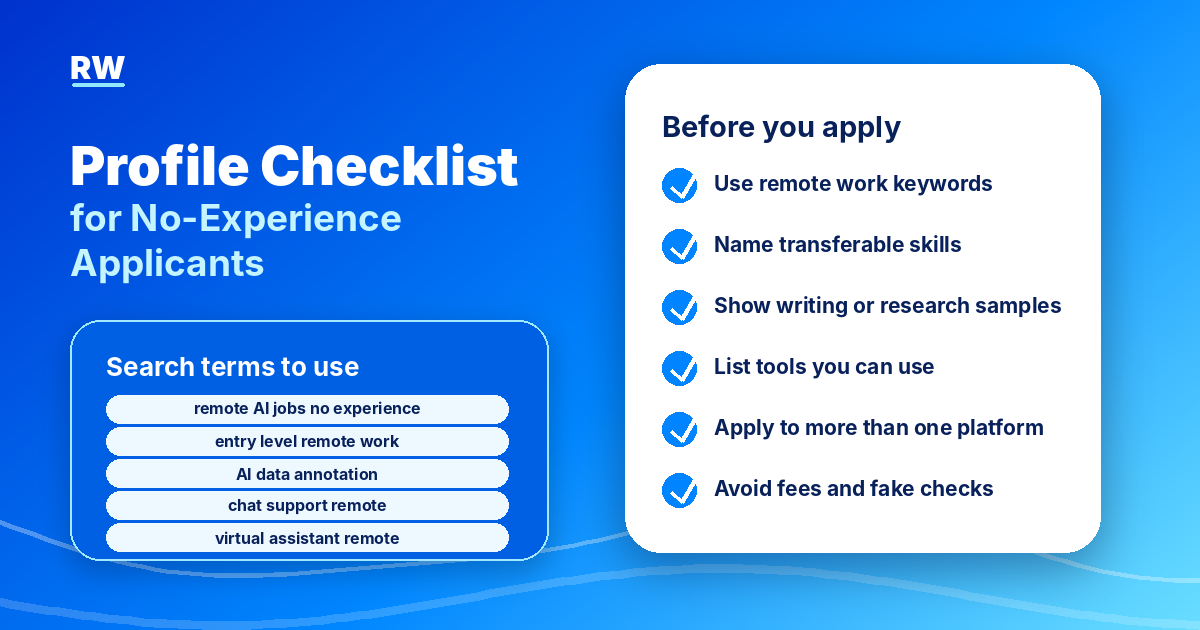
You do not need to lie. You need to translate your experience into remote-work language. Instead of saying "I have no remote experience," focus on proof:
- I can write clearly
- I can follow detailed instructions
- I can review content for accuracy
- I can communicate with customers
- I can manage tasks without constant supervision
- I can use spreadsheets, documents, email, chat tools, and AI tools
- I can research and summarize information
Your resume should include a skills section with keywords that match the roles you want. For beginner remote jobs, useful keywords may include remote work, work from home, customer support, chat support, email support, data annotation, AI training, AI evaluator, model evaluation, quality assurance, content review, proofreading, research, Google Workspace, Microsoft Office, Canva, Notion, Slack, CRM, spreadsheets, ChatGPT, prompt writing, and attention to detail.
A weak application says: "I do not have experience, but I am willing to learn." A stronger application says: "I am a careful reader and clear writer with experience handling customer questions, researching information, following detailed instructions, and using online tools. I am interested in remote roles where accuracy, communication, and reliability matter."
A Simple First-Week Plan for Beginners
If you are starting from zero, do not spend all week browsing random job boards. Build a basic system.
Day one: Choose three target categories. For example: AI evaluator, chat support, and virtual assistant.
Day two: Update your resume for those categories. Add relevant tools and transferable skills.
Day three: Create one simple work sample — a writing sample, research brief, edited paragraph, spreadsheet, or support response example.
Day four: Apply to remote work platforms and companies that match your categories.
Day five: Track everything in a spreadsheet: company, role, date applied, status, login link, follow-up date, and notes.
Day six: Improve your weakest application answers.
Day seven: Apply again, but better. Use what you learned from assessments and rejections.
Tip: The goal is not to find one magic listing. The goal is to build a repeatable application process. People who get remote work without experience usually apply more than five times, use real work samples, and improve after each rejection.
Final Thoughts
Remote work jobs with no experience do exist, but the best ones usually do not pay you simply for being available. They pay you for judgment, communication, accuracy, research, organization, or revenue impact.
Start with beginner-friendly categories like AI evaluation, data annotation, search quality rating, chat support, virtual assistant work, online research, content QA, recruiting coordination, community support, or sales development. Avoid jobs that ask for money upfront. Apply to multiple platforms. Track your results. Keep improving your profile. The best beginner remote job is the one you can prove you are ready for — not the one with the most promising headline.
Frequently Asked Questions
What remote work jobs with no experience actually pay well?
The best-paying remote jobs with no prior remote work experience include AI evaluation and AI training, sales development representative roles, specialized chat or email support, virtual assistant work for high-value businesses, and online research roles. AI evaluation can pay $20+/hr for general work and $50–$200/hr for expert-tier projects. The key is to focus on roles that pay for judgment, communication, or revenue impact rather than simple repetitive tasks.
Do I need a degree to get remote work with no experience?
Most remote work jobs that accept beginners do not require a specific degree. AI evaluation, data annotation, search quality rating, virtual assistant work, and content QA roles typically care more about your ability to read carefully, write clearly, follow instructions, and work reliably than about formal credentials. Specialized AI review projects may value domain expertise, but that expertise can come from professional experience rather than a degree.
How do I make my resume look good for remote work with no experience?
Focus on transferable skills rather than job titles. Emphasize that you can write clearly, follow detailed instructions, review content for accuracy, communicate with customers, manage tasks independently, and use online tools. Add a skills section with keywords like remote work, AI training, AI evaluator, data annotation, content review, Google Workspace, Slack, and attention to detail. A simple work sample can be more effective than a resume alone.
How can I avoid scam remote jobs when I have no experience?
Be cautious of any listing that requires upfront fees, asks for crypto payments, involves check deposits, uses vague company names, promises unrealistic pay for simple work, skips any interview process, or pressures you to move to Telegram or WhatsApp immediately. Real remote work platforms may require an assessment, background check, or identity verification, but they do not charge you to access basic work.
Is AI training a good remote job for beginners with no experience?
Yes, AI evaluation and AI training are among the most practical remote entry points for beginners with no remote work history. Platforms often care more about your performance on a qualification assessment than your previous job titles. If you can read carefully, compare outputs, explain your reasoning, and follow a rubric, you can qualify for AI evaluation work. Starting with general annotation and working toward expert review tasks is a realistic path to increasing pay over time.