Searches for Stellar AI jobs usually come from a specific kind of job seeker: someone who has heard that people are getting paid to train, test, rate, or review artificial intelligence systems from home, but who does not want to waste time on weak platforms, copycat job posts, or vague work-from-home promises.
That is the right instinct. Remote AI work can be real, but the category is uneven. Some platforms offer legitimate project-based work in AI data annotation, AI model evaluation, prompt writing, expert review, language assessment, coding evaluation, research, and RLHF-style human feedback. Other listings use the same keywords — AI trainer, online rater, evaluator, remote annotation, work from home AI jobs — while providing little detail about pay, onboarding, task volume, or who is actually hiring.
This guide is written for people evaluating Stellar AI jobs or any newer AI work platform before applying. The goal is not to hype one platform or dismiss it blindly. The goal is to help you decide whether a platform is worth your time, which roles fit your background, and what warning signs should make you slow down before sharing personal information or committing hours to assessments.
What People Mean When They Search for Stellar AI Jobs
The phrase "Stellar AI jobs" can mean a few different things. Some people are looking for a specific platform called Stellar. Others are using the phrase generically while searching for high-quality AI jobs, remote AI training work, or flexible projects that feel more serious than basic data entry. Either way, the search intent is usually the same: find legitimate online work connected to artificial intelligence.
In the remote AI work market, common role names include AI trainer, AI evaluator, AI rater, AI response reviewer, prompt evaluator, data annotator, research evaluator, coding evaluator, language evaluator, search quality rater, safety reviewer, and subject-matter expert reviewer. These titles often overlap. A platform may call a role "AI trainer" even if the actual task is ranking chatbot answers. Another may call it "data annotation" even if you are writing prompts, checking citations, grading math reasoning, or deciding whether an AI answer followed instructions.
This is why job seekers should evaluate the work behind the title, not just the title itself. A real AI work opportunity should explain what you will do, what skills it tests, how you will be paid, what tools you will use, what the onboarding process looks like, and whether work volume is expected to be steady or project-dependent.
Why New AI Work Platforms Require Extra Scrutiny
AI training platforms are often project-driven. They may recruit large pools of contractors before every applicant receives steady assignments. This does not automatically make a platform bad. It does mean applicants should understand the difference between being accepted into a worker pool and being actively staffed on paid projects.
A platform can be legitimate and still have uneven work volume. It can pay real contractors but still take weeks to review applications. It can offer strong hourly rates for specialized projects but limited availability for generalist applicants. It can advertise remote flexibility while still requiring strict task guidelines, quality reviews, deadlines, or periodic assessments.
The practical question is not just "Is Stellar AI legit?" A better question is: "Does this platform have enough transparency, role fit, pay clarity, and application quality to justify my time compared with other remote AI training platforms?" That framework gives you a stronger decision than reading one Reddit comment, one testimonial, or one social media screenshot.
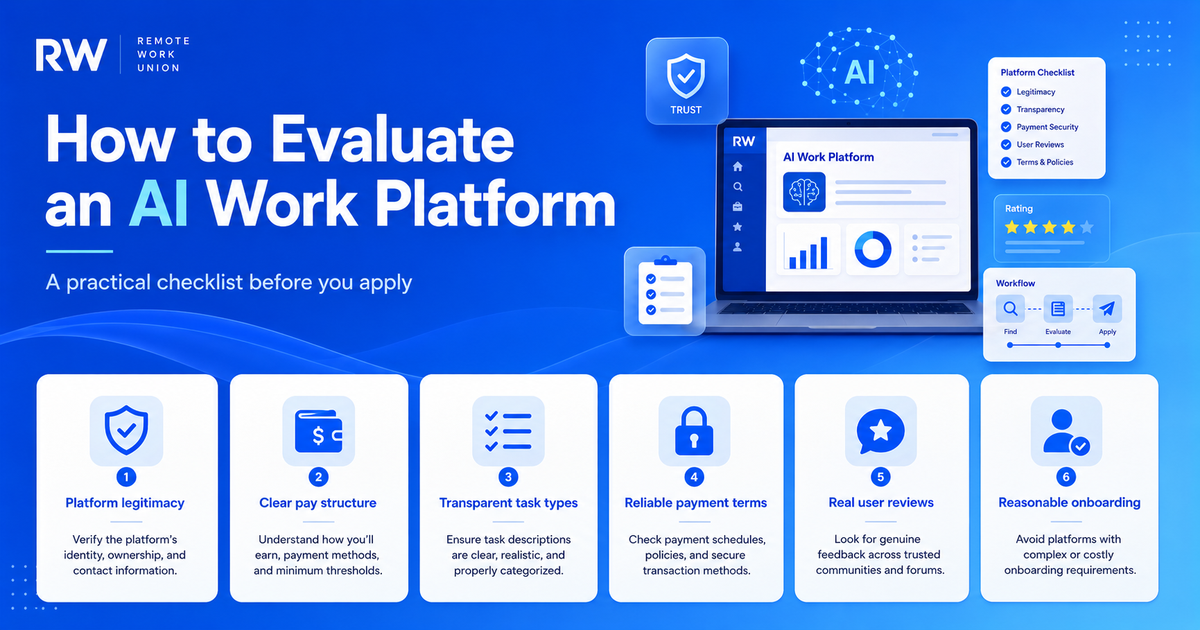
The Six-Part Platform Evaluation Checklist
Use the checklist below before applying to Stellar AI jobs, AI evaluator roles, AI data annotation jobs, or any remote AI training platform.
- Platform legitimacy. Check whether the platform has an official website, a clear company identity, basic contact information, professional terms, and consistent branding across its application pages. Be cautious with copycat domains, shortened links, random messaging-app recruiters, or posts that impersonate known companies.
- Clear pay structure. A serious platform should explain how pay works. Look for hourly rates, project rates, task rates, payment schedules, minimum thresholds, payment method, contractor status, and any country restrictions. A role that claims unusually high pay but refuses to describe the work deserves skepticism.
- Transparent task types. Look for examples of tasks. Does the platform mention prompt writing, response ranking, factuality checks, coding review, medical review, legal review, math reasoning, translation, language evaluation, safety policy review, or data labeling? Clear task descriptions make it easier to know whether your skills match.
- Reliable payment terms. Before doing extensive unpaid assessments, understand when paid work begins and how earnings are tracked. You should not need to pay money to access work, unlock tasks, receive a paycheck, or verify an account for job access.
- Real user reviews. Reviews should be read carefully. A platform may have both positive and negative feedback because project-based remote work is inconsistent by nature. Look for patterns, not isolated comments. Repeated complaints about nonpayment, surprise fees, identity issues, or fake recruiters are more serious than complaints about slow application review.
- Reasonable onboarding. AI work often requires assessments. That is normal. But onboarding should be proportional to the potential job. Long unpaid tests, unclear instructions, requests for excessive personal information too early, or pressure to act immediately should make you pause.
How Stellar AI Jobs May Compare With Other Remote AI Work
Job seekers often compare Stellar AI with platforms such as Mercor, Outlier, micro1, Surge AI, DataAnnotation-style work, Handshake AI, Appen-style evaluator roles, Telus-style rater work, and freelance AI opportunities on broader job boards. The right comparison depends on your skill level.
Generalist AI training work usually values writing clarity, reading comprehension, attention to detail, web research, and the ability to follow instructions. Specialist projects may require law, medicine, finance, accounting, education, coding, mathematics, biology, chemistry, engineering, design, translation, or advanced writing experience. Coding AI jobs may require debugging, unit tests, code explanation, model response grading, or prompt engineering for developer tasks.
Large AI companies and ecosystems — including OpenAI, Anthropic, Google, Meta, Microsoft, Apple, Amazon, NVIDIA, xAI, and other frontier or enterprise AI organizations — have increased public interest in human feedback, AI safety, model evaluation, prompt quality, and domain expert review. However, job seekers should avoid assuming that every AI training platform is directly connected to those companies. Use those names as search keywords when researching the market, but verify the actual employer, client, contract, and application source before applying.
The Scorecard: Decide Whether a Platform Is Worth Your Time
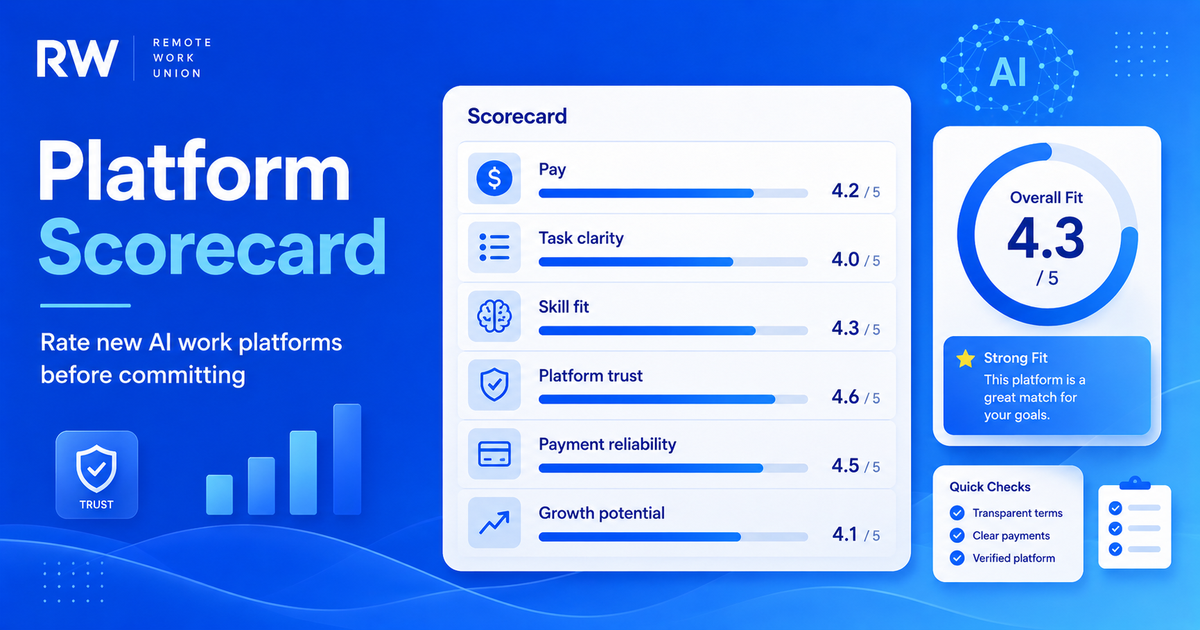
A simple scorecard can keep you from applying emotionally. Rate each category from 1 to 5 before committing serious time.
- Pay: Is compensation clear, realistic, and worth the assessment process?
- Task clarity: Do you understand what the work involves?
- Skill fit: Do your background and writing ability match the role?
- Platform trust: Does the company look real, consistent, and transparent?
- Payment reliability: Are the payment method and schedule clear?
- Growth potential: Could this platform lead to repeat work, better projects, or useful experience?
A platform does not need a perfect score to be worth trying. Remote AI work is often experimental. But a low score on payment reliability, legitimacy, or task clarity is a bigger issue than a low score on projected work volume. You can tolerate uneven task availability. You should not tolerate unclear compensation, pressure to pay, or fake recruiter behavior.
Green Flags to Look for Before Applying
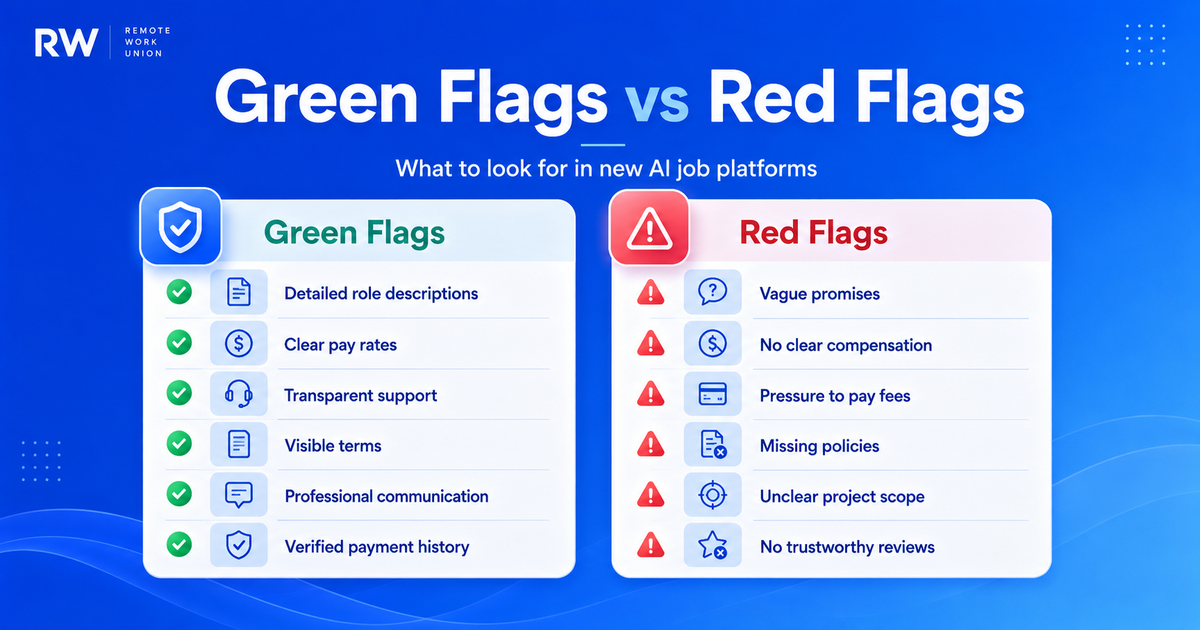
Strong AI work platforms tend to share a few characteristics. They explain the role in plain language. They describe the task category. They provide a believable pay range or clear payment model. They use professional application forms. They do not ask you to buy access. They have terms, policies, or contractor information available. They communicate through normal business channels rather than pushing you into private messaging apps.
Another green flag is role specificity. "AI evaluator for legal reasoning" is more useful than "make $500 a day from your phone." "Bilingual Spanish AI response reviewer" is more useful than "remote online work no experience instant hire." "Math reasoning evaluator" is more useful than "AI job available now." The more specific the task and skill requirement, the easier it is to judge whether the opportunity is legitimate and whether you are a fit.
Quality expectations are also a positive signal. Good platforms care about accuracy, grammar, factuality, safety, policy adherence, and consistency. If a company explains that your work will be reviewed for quality, that is not a bad sign. It usually means the work is connected to real model improvement rather than empty engagement tasks.
Red Flags That Should Slow You Down
Be careful with any listing that sounds like a remote AI job but avoids explaining the work. Common red flags include guaranteed high earnings, immediate hiring with no assessment, pressure to respond quickly, requests to pay for training, requests for credit card information to access jobs, fake check arrangements, cryptocurrency payment requirements, vague task claims such as "optimize products" or "boost ratings," and recruiters who only communicate through WhatsApp, Telegram, or random text messages.
Also be careful with job posts that use famous company names without proof. A post can mention OpenAI, Anthropic, Google, Meta, Microsoft, Claude, Gemini, or ChatGPT to attract attention without being affiliated with any of those companies. If a role says you will train a major AI model, look for a legitimate application path, clear employer identity, and a professional contract process.
A subtle red flag is excessive optimism. Real AI training work can pay well, but it is still work. It requires careful reading, consistent judgment, written explanations, and the ability to follow detailed guidelines. If a post makes the job sound effortless, instant, and guaranteed, it may be selling hope instead of offering a real role.
Remote Work Union connects you to legitimate remote AI training and evaluation roles across multiple platforms. Apply for free.
Find Roles Hiring Now →How to Prepare a Stronger Application
For Stellar AI jobs and similar platforms, your application should make your skill fit obvious. Do not rely on a generic resume that lists every job you have ever had. Instead, highlight evidence that you can evaluate information clearly.
Strong application signals include writing samples, research experience, editing experience, tutoring or teaching experience, subject-matter expertise, coding projects, data analysis, legal writing, medical writing, finance work, academic work, language fluency, technical documentation, quality assurance, fact-checking, and experience using tools like ChatGPT, Claude, Gemini, Grok, Perplexity, Google Workspace, Microsoft Office, spreadsheets, or content management systems.
If the platform asks why you are a good fit, answer in the language of AI work. Mention that you can follow detailed instructions, compare answers objectively, identify factual errors, explain judgment calls, write clearly, and maintain consistency across repetitive tasks. For expert roles, state your domain and the kinds of outputs you can review. For generalist roles, emphasize clarity, reliability, research discipline, and attention to detail.
How to Evaluate Reviews Without Getting Misled
Reviews can help, but remote AI work reviews are noisy. Someone who was accepted and received a high-paying project may describe a platform as excellent. Someone who passed onboarding but never received steady work may describe the same platform as a waste of time. Both experiences can be true.
Read reviews by separating issues into categories. Application delay is different from nonpayment. Limited work volume is different from a scam. Difficult guidelines are different from dishonest terms. A strict assessment is different from an unpaid labor scheme. Slow support is different from identity theft risk.
Look for repeated, specific patterns. If many people mention the same payment method, onboarding steps, task category, or communication style, that information is more useful. If comments are vague, emotional, or based on hearsay, treat them as weak signals. Your goal is not to find a perfect platform. Your goal is to avoid wasting time on platforms with avoidable risks.
A Smart Application Workflow
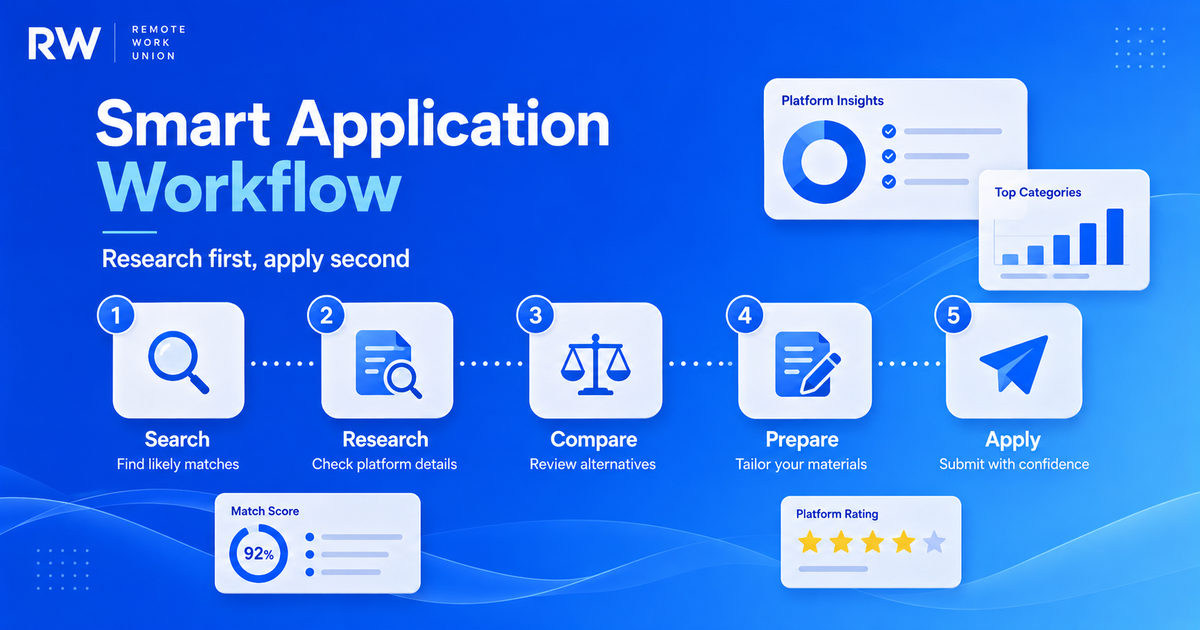
The best way to apply for remote AI jobs is to work in batches, not panic-search one platform at a time. Start with a search list of relevant platforms and job boards. Research each platform before applying. Compare pay, task fit, and application effort. Prepare one strong AI-work resume and one short application note. Then apply to the best matches first.
Use search terms such as Stellar AI jobs, AI training jobs, remote AI evaluator jobs, AI model trainer jobs, AI data annotation jobs, AI rater jobs, AI response reviewer jobs, prompt evaluator jobs, RLHF jobs, human feedback AI jobs, coding AI evaluator jobs, legal AI reviewer jobs, finance AI evaluator jobs, medical AI writing jobs, bilingual AI evaluator jobs, and work from home AI jobs no phone.
Keep a simple tracker with columns for platform, official URL, role title, pay range, application date, assessment status, documents submitted, payment method, and follow-up notes. This keeps you organized and helps you avoid applying twice through questionable links.
Who Should Apply to Stellar AI Jobs or Similar Platforms?
These roles can be a fit for strong writers, researchers, editors, teachers, tutors, students, recent graduates, coders, lawyers, paralegals, medical writers, nurses, finance professionals, accountants, bilingual workers, technical writers, analysts, and people who are good at noticing mistakes quickly.
They are usually not a good fit for someone who wants guaranteed full-time income immediately, hates reading instructions, struggles with written explanations, or needs a fixed schedule with predictable hours. Remote AI training work can be flexible, but flexibility often comes with uncertainty. Treat it as a high-upside remote work category, not a guaranteed replacement for stable employment until you have consistent projects.
Frequently Asked Questions
Are Stellar AI jobs the same as data annotation jobs?
They may overlap. Data annotation can include labeling, ranking, classifying, editing, or evaluating information. AI training jobs often include similar work, plus prompt writing, model response review, domain expert evaluation, or feedback on AI outputs.
Do you need coding experience for Stellar AI jobs?
Not always. Some AI evaluator roles are generalist writing and research jobs. Others require coding, math, science, law, medicine, finance, or bilingual skills. Apply to roles that match your actual background.
Should you complete unpaid assessments for AI work platforms?
Sometimes, yes. Assessments are common in AI work. The key is proportionality. A short skill test can be reasonable. A long, unclear, unpaid workload with no defined application process deserves caution.
Can remote AI jobs become steady income?
They can, but many are project-based. Some workers receive consistent assignments while others see gaps. Apply broadly and track multiple platforms instead of relying on one source.
What is the most important red flag when evaluating an AI work platform?
Any requirement to pay money to get paid, unlock work, access tasks, or complete hiring should make you stop and verify before continuing. Also watch for platforms that make unrealistic earning guarantees, communicate only through WhatsApp or Telegram, or impersonate well-known AI companies without proof of affiliation.
Final Takeaway
Stellar AI jobs may be worth researching if you are looking for flexible remote AI training work, but the smartest approach is to evaluate the platform before investing serious time. Look for clear task descriptions, transparent pay, professional onboarding, real user feedback, reliable payment terms, and a role that matches your skills.
The remote AI work category is growing because human judgment still matters. AI systems need people who can write clearly, check facts, evaluate reasoning, identify unsafe or low-quality answers, review domain-specific responses, and explain why one output is better than another. That creates real opportunities for remote workers, but it also attracts low-quality listings and scam-like promises.
Use the checklist, scorecard, and workflow in this article before applying. Research first. Apply second. Track everything. Protect your information. Prioritize platforms that value clear judgment, not vague hype.