Graphic and visual designers are well positioned for remote work because most of the work already happens inside digital tools. A designer can receive a brief, review brand guidelines, build assets, submit revisions, and hand off final files without being in the same office as the client or team. That makes design one of the more natural categories for work-from-home jobs.
The key is not just being creative. Remote companies hire designers who can communicate clearly, organize files, follow brand systems, explain design decisions, and deliver assets on schedule. A strong visual eye matters, but the best remote design workers also understand marketing, user experience, copy, layout, and business goals.
This guide breaks down the best remote work jobs for graphic and visual designers, how to position your portfolio, and how design skills can also translate into AI training, image review, model evaluation, and creative quality assurance work.
Why Graphic Design Fits Remote Work
Remote design work is practical because the output is digital. Logos, landing page graphics, social posts, pitch decks, email headers, ads, thumbnails, product screens, and brand templates can all be created, reviewed, and delivered online. The designer does not need to sit beside the marketing manager to do good work.
The best remote designers make collaboration easier. They label files clearly, write short notes explaining their choices, ask focused questions before starting, and keep version history organized. That is why remote design roles often reward reliability as much as raw talent.
For applicants, this creates an advantage. You can prove your ability through a portfolio before anyone hires you. A remote employer does not have to guess whether you can design. They can see your taste, your range, your layout skills, and your ability to solve visual problems.
1. Remote Graphic Designer
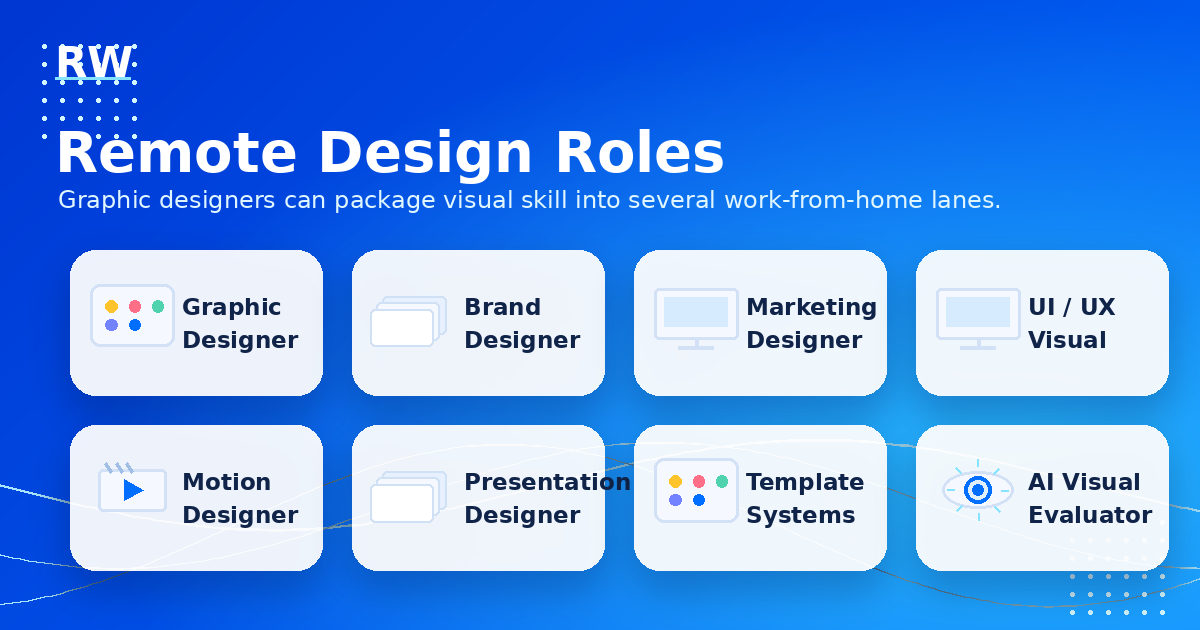
This is the broadest role. Remote graphic designers create social media graphics, digital ads, email images, flyers, one-sheets, blog graphics, banners, thumbnails, and marketing assets. It is a good fit for designers who can work quickly across multiple formats while staying on brand.
2. Brand Designer
Brand designers work on logos, color systems, typography, visual identity, style guides, and reusable brand assets. This role is more strategic than basic asset production. A good brand designer helps a company look consistent everywhere: website, ads, email, social, pitch decks, and product screenshots.
3. Marketing Designer
Marketing designers support campaigns. They create paid ad creatives, landing page sections, lead magnets, webinar graphics, promotional images, and conversion-focused visuals. This is one of the strongest remote lanes for designers who understand performance marketing and can make assets that are both attractive and useful.
4. Social Media Designer
Social media designers build graphics for Instagram, TikTok covers, LinkedIn carousels, YouTube thumbnails, X posts, short-form templates, and creator content. This is a strong option for designers who understand hooks, visual hierarchy, mobile layouts, and fast production cycles.
5. Presentation Designer
Many remote companies need pitch decks, sales decks, investor decks, internal training decks, webinar slides, and proposal templates. Presentation designers are valuable because they turn messy information into clear visual narratives. This role is especially good for designers who can simplify complex ideas.
6. Web and Landing Page Designer
Web designers create homepages, service pages, blog layouts, landing pages, and conversion pages in tools like Figma, Webflow, Framer, WordPress, or Squarespace. You do not always need to be a developer, but basic knowledge of responsive layouts, sections, spacing, and web constraints helps.
7. UI Visual Designer
UI visual designers work on product screens, dashboards, app layouts, buttons, cards, forms, and component systems. This is different from full UX research, but it overlaps with product design. It can be a strong remote path for graphic designers who want to move closer to software and SaaS work.
8. UX Designer or Product Designer
UX and product design roles involve user flows, wireframes, prototypes, interface decisions, research interpretation, and product collaboration. Graphic designers can move into this category by learning Figma, design systems, usability basics, and how to explain user-centered decisions.
9. Motion Graphics Designer
Motion designers create animated ads, short videos, logo animations, app explainers, lyric visuals, product clips, and social-first video assets. This is a strong remote lane because companies need more video content, but not every team has in-house motion skills.
10. Illustrator or Icon Designer
Product companies, agencies, newsletters, education platforms, and SaaS brands often need icons, spot illustrations, infographics, onboarding visuals, and custom art systems. This is a fit for designers with a distinct style and the ability to create consistent visual sets.
11. Template Systems Designer
Template designers create reusable Canva templates, Figma templates, social kits, email layouts, slide systems, and content libraries. This is useful for companies that need non-designers to produce assets without breaking the brand.
12. Creative AI Evaluator or Visual Model Reviewer
AI companies and AI training platforms may need people who can judge image quality, compare outputs, evaluate whether a visual matches a prompt, identify design mistakes, review brand safety, or explain why one image is better than another. Designers can be strong candidates because they already understand composition, typography, color, layout, and visual intent.
How AI Is Changing Remote Design Work
AI tools are not simply replacing designers. They are changing what clients expect designers to do. Basic image generation, background removal, layout drafts, and concept exploration can happen faster now. That means the designer's value increasingly comes from taste, judgment, direction, editing, and final quality control.
A remote designer who knows how to work with AI can become more useful. You can generate concept directions, refine rough drafts, create mood boards, compare variations, build faster mockups, and then apply human judgment to make the final asset usable. The value is not pressing a button. The value is knowing what is good, what is off-brand, what will confuse the audience, and what needs to be changed.
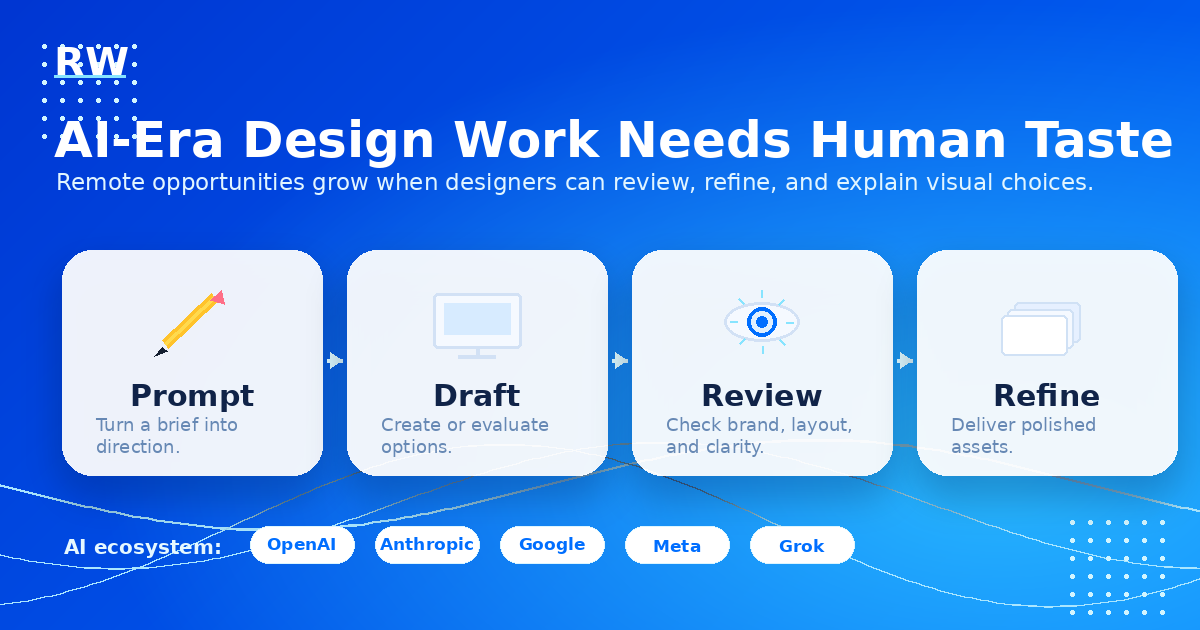
This is also why design skills can translate into AI training and AI evaluation work. Major AI companies and the broader AI ecosystem — including companies associated with OpenAI, Anthropic, Google, Meta, and Grok-related products — depend on high-quality human feedback. Some projects need people who can evaluate text. Others need people who can evaluate visuals, layouts, images, creative prompts, and multimodal outputs.
For graphic designers, that means your eye for detail can become a remote work advantage. If you can explain why one design is clearer than another, why a layout fails, why a generated image looks unrealistic, or why a visual does not match a brand direction, you may qualify for remote AI reviewer work in addition to standard design jobs.
Skills That Help Designers Get Remote Jobs
A remote design application should make your skills obvious quickly. Employers and platforms are usually scanning for proof. They want to know what you can design, what tools you use, and whether you can work without constant supervision.
Useful technical skills include Figma, Adobe Photoshop, Illustrator, InDesign, Canva, After Effects, Premiere Pro, Webflow, Framer, WordPress, basic HTML and CSS, design systems, responsive layout, typography, color, image editing, file handoff, and brand guideline creation. You do not need every tool. You need a clear lane.
Useful remote skills include written communication, async collaboration, revision tracking, naming files properly, meeting deadlines, asking focused questions, reading briefs carefully, and explaining why you made a design choice.
Useful AI-era skills include prompt writing for visuals, image comparison, brand safety review, design QA, model output evaluation, multimodal review, and the ability to critique AI-generated assets clearly.
Ready to find remote design and AI training roles? Remote Work Union connects you with legitimate work-from-home opportunities.
Find Roles Hiring Now →How to Build a Portfolio That Gets Remote Attention
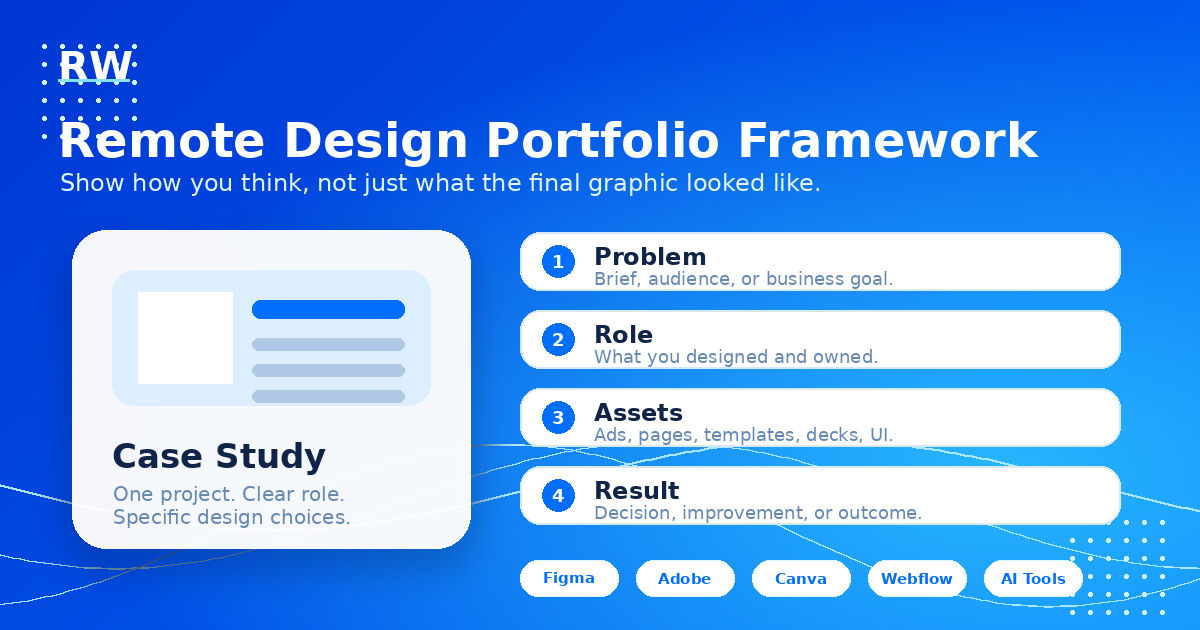
A remote design portfolio should not be a random gallery. It should act like evidence. Each project should show what problem you solved, what role you played, what assets you created, what constraints you worked under, and what changed because of the design.
For each case study, include the brief, the target audience, the design goal, your specific contribution, the tools used, 3 to 8 strong visuals, and a short explanation of the final direction. Before-and-after examples are especially useful because they show judgment, not just style.
If you are early in your career, create realistic sample projects. Redesign a landing page for a fictional remote-work app. Build a social campaign for a SaaS tool. Create a brand kit for a local service business. Design a presentation deck for a made-up startup. The goal is to show the kind of work you want to be hired for.
Keep the portfolio easy to scan. Remote hiring teams may review dozens or hundreds of applicants. Put your strongest work first, use clear project titles, avoid long explanations, and make the call-to-action obvious: hire you, contact you, or view more work.
How Graphic Designers Can Move Into Higher-Value Remote Work
The simplest way to increase your value is to move from making isolated graphics to owning a system. Instead of only designing one Instagram post, design the template system behind every post. Instead of only making one ad, design a testing framework for multiple ad concepts. Instead of only making one page, design the landing page system that can be reused across campaigns.
Higher-value remote design work usually connects design to a business outcome. Marketing design connects to leads and sales. UX design connects to usability and conversion. Brand design connects to recognition and trust. Presentation design connects to fundraising, sales, and internal communication. AI evaluation connects to model quality and product improvement.
Designers who can connect visuals to outcomes are easier to hire remotely because they do not sound like decorators. They sound like problem solvers.
Where to Look for Remote Design Jobs
Remote graphic designers can apply through remote job boards, freelance marketplaces, agency career pages, SaaS company career pages, startup job boards, creative staffing firms, and direct outreach. Designers can also find contract projects through founders, creators, newsletters, e-commerce brands, local businesses, and online communities.
For AI-related remote work, look for terms like AI trainer, AI evaluator, image evaluator, visual quality analyst, creative reviewer, multimodal evaluator, prompt evaluator, design reviewer, content quality analyst, and model evaluation contractor.
Do not limit yourself to jobs with the exact title graphic designer. Search for adjacent terms: visual designer, marketing designer, brand designer, content designer, presentation designer, web designer, UI designer, creative producer, design QA, design reviewer, and AI creative evaluator.
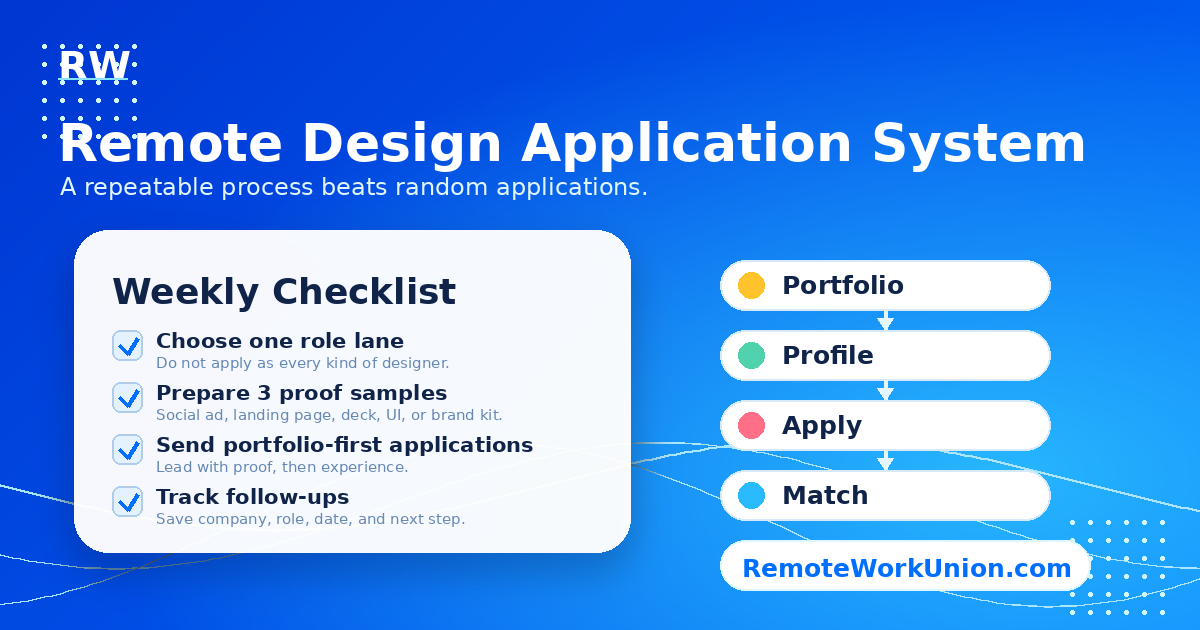
A simple weekly application plan: Pick one lane for the week, adjust the first section of your portfolio to match that lane, apply to a focused batch of roles, and track every application in a spreadsheet with company, role, date, link, portfolio version, and follow-up date.
Frequently Asked Questions
What is the best remote job for a graphic designer with no experience?
Social media design, Canva template creation, and basic marketing graphics are the most accessible starting points. Build three clean samples in one narrow category first. A simple portfolio showing one type of output clearly is more useful than a generic portfolio showing everything at once.
Can graphic designers do AI training or model evaluation work?
Yes. AI companies and platforms sometimes need reviewers who can judge image quality, compare visual outputs, evaluate whether a generated image matches a prompt, identify design errors, or explain why one visual is better than another. Graphic designers are strong candidates because they already understand composition, color, typography, layout, and visual intent.
What tools do remote graphic designers need?
Figma is the most widely used tool for remote product and web design. Adobe Photoshop, Illustrator, and InDesign are standard for print and marketing. Canva is common for social and template work. After Effects is used for motion design. Webflow and Framer are used for no-code web design. Focus on the tools your target lane actually uses.
How should a graphic designer build a portfolio for remote work?
Treat each portfolio piece as a case study, not just a gallery. Show the brief, your role, the tools you used, and the design decisions you made. Before-and-after examples are especially useful. If you are early in your career, create realistic sample projects — redesign a landing page, build a social campaign for a fictional brand, or create a pitch deck for a made-up startup.
What are the highest-paying remote design jobs?
UX and product design roles, motion graphics, senior brand design, and design system work tend to command higher rates because they require specialized knowledge and fewer applicants can do them well. AI visual evaluation roles through platforms like micro1, Mercor, and Handshake AI can also pay $50–$200/hr depending on the project and required expertise.