Office managers and operations managers are better positioned for remote work than many people realize. A lot of office work used to happen around a physical space: calendars, supply orders, vendors, meetings, onboarding, documents, deadlines, billing questions, staff questions, and last-minute problems. But the core skill was never the building. The core skill was keeping the organization from falling apart.
That skill translates well to remote work. Remote companies still need people who can organize workflows, follow up with teams, clean up messy systems, document processes, manage vendors, coordinate projects, build reports, support hiring, and make sure work actually gets completed.
Why Operations and Office Management Experience Works Remotely
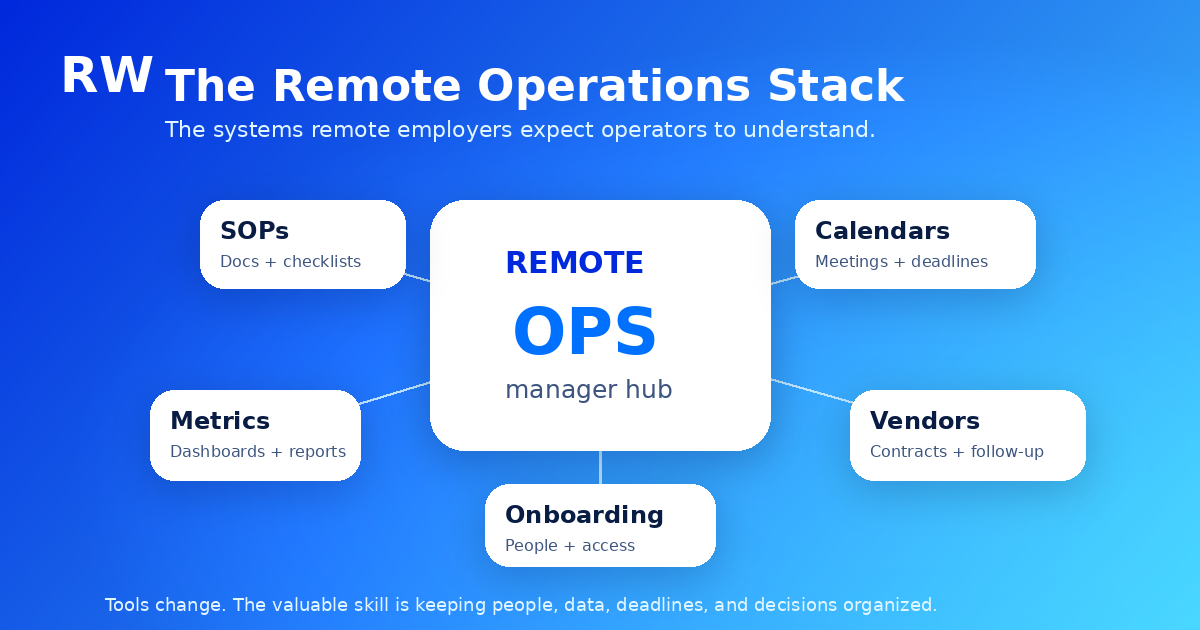
Operations and office management are practical jobs built around details, deadlines, people, systems, and judgment. In a remote company, the same skill set shows up differently. Instead of walking across the office, you might work through Slack, email, Notion, Airtable, Google Workspace, ClickUp, Asana, Monday.com, or another cloud-based system. The work is still coordination. The tools are just different.
That is why operations managers and office managers should not limit themselves to job titles that sound exactly like their old role. Your best remote job may use different language. Search for the function, not just the title. You are looking for roles that involve coordination, documentation, scheduling, reporting, workflow improvement, vendor communication, internal support, customer handoffs, hiring logistics, or process management.
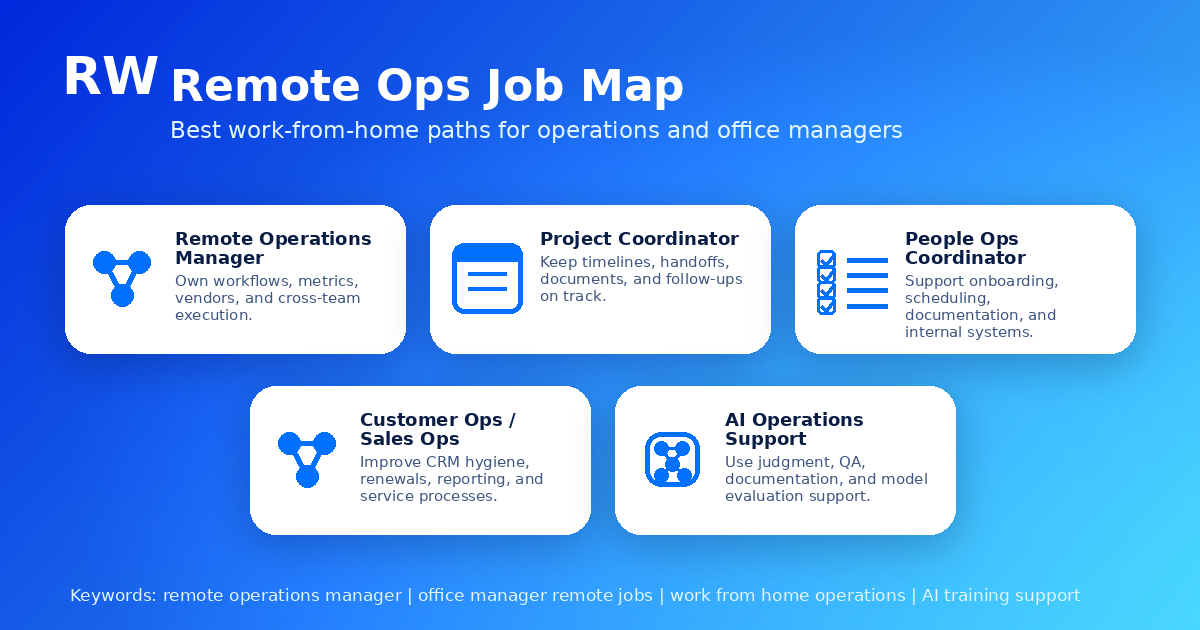
1. Remote Operations Manager
A remote operations manager helps the company run more smoothly. This can include workflows, reporting, hiring processes, customer operations, internal systems, vendors, documentation, and cross-functional coordination. This is one of the closest matches for someone who has already managed an office, department, location, team, or business process.
A remote operations manager may be responsible for creating and improving standard operating procedures, tracking team goals and deadlines, coordinating work between departments, managing vendor or contractor communication, improving onboarding workflows, and finding bottlenecks before they become bigger problems. The strongest remote operations candidates do not just say they are organized — they prove they can make a messy system cleaner.
2. Remote Operations Coordinator
Operations coordinator roles are often more accessible than operations manager roles. A remote operations coordinator usually supports the daily execution of business processes. The role may involve scheduling, data entry, project tracking, documentation, task routing, internal communication, vendor follow-up, or team support.
This can be a good starting point for people coming from office management, administrative assistant work, executive assistant work, retail management, real estate office coordination, medical office administration, education administration, logistics coordination, or small business operations. Search terms include remote operations coordinator, business operations coordinator remote, startup operations coordinator, and remote workflow coordinator.
3. Virtual Office Manager
Some companies still use the title "office manager" even when the work is remote. In other cases, the role may be called virtual office manager, remote office manager, administrative manager, or business administrator. A virtual office manager may support leadership, coordinate contractors, manage subscriptions, organize files, prepare reports, handle basic bookkeeping support, schedule meetings, and keep communication organized.
This is a strong fit if you have been responsible for keeping a small business or office running without needing daily instruction. One important note: some "office manager" roles are still hybrid because they involve facilities or in-person workplace support. Read the listing carefully before applying.
4. Remote Project Coordinator
Project coordinator jobs are a natural fit for operations and office managers because the work is built around timelines, details, follow-up, and communication. You do not always need to be a certified project manager to qualify. Many companies need someone who can keep tasks organized, update project boards, send reminders, prepare status reports, collect information, and make sure nothing gets lost between teams.
Search terms include remote project coordinator, project coordinator work from home, program coordinator remote, implementation coordinator remote, and project assistant remote.
5. Executive Operations Assistant
Executive assistant work has changed. Many companies now want executive support that is more operational than clerical. A remote executive operations assistant might manage calendars, inboxes, travel planning, meeting prep, internal documents, research, follow-ups, vendor communication, and special projects. In a smaller company, this person may function like a remote office manager, project coordinator, and chief-of-staff assistant at the same time.
Search terms include remote executive assistant, executive operations assistant remote, chief of staff assistant remote, remote administrative business partner, and founder assistant remote.
6. People Operations Coordinator
People operations is the remote-friendly version of many HR-adjacent office management tasks. If you have helped with onboarding, employee questions, scheduling interviews, collecting paperwork, coordinating training, or maintaining employee records, this may be a strong fit. A remote people operations coordinator may support new hire onboarding, interview scheduling, employee documentation, training logistics, benefits administration support, and contractor coordination.
This is especially relevant for office managers who were already the unofficial point person for employee questions. Search terms include people operations coordinator remote, remote HR coordinator, talent operations coordinator remote, and onboarding coordinator remote.
7. Customer Operations Manager
Customer operations is not the same as phone-based customer service. It is usually more about systems, workflows, reporting, handoffs, renewals, support processes, and improving the customer experience behind the scenes. A remote customer operations role may involve updating customer records, improving support workflows, tracking customer success metrics, coordinating renewals, and working with support, sales, and product teams.
This is a strong option for operations managers who want remote work but do not want to spend all day on live phone calls. Search terms include customer operations manager remote, customer success operations remote, client operations coordinator remote, and support operations remote.
Ready to find remote operations and AI training roles that match your coordination background?
See Roles Hiring Now →8. Sales Operations Coordinator
Sales operations is a good remote path for detail-oriented office managers who are comfortable with spreadsheets, CRM tools, reports, and process cleanup. Sales teams create a lot of operational mess: leads, contacts, account records, follow-ups, proposals, renewals, commission questions, pipeline updates, and handoffs to customer success. Sales operations helps keep that system accurate.
A remote sales operations role may involve maintaining CRM data, preparing sales reports, cleaning up pipeline records, supporting account handoffs, and helping sales leadership understand activity and performance. Search terms include sales operations coordinator remote, revenue operations coordinator remote, RevOps coordinator remote, and CRM coordinator remote.
9. Vendor Operations and Procurement Coordinator
Office managers often have vendor experience without thinking of it as a separate skill. If you have ordered supplies, managed invoices, compared vendors, handled service providers, tracked contracts, or solved purchasing issues, you may qualify for vendor operations or procurement coordination. In remote companies, vendor work still exists — software tools, contractors, agencies, payroll providers, compliance vendors, data providers, and recruiting vendors all need management.
Search terms include vendor operations coordinator remote, procurement coordinator remote, purchasing coordinator remote, and vendor management specialist remote.
10. AI Operations Coordinator and AI Training Support
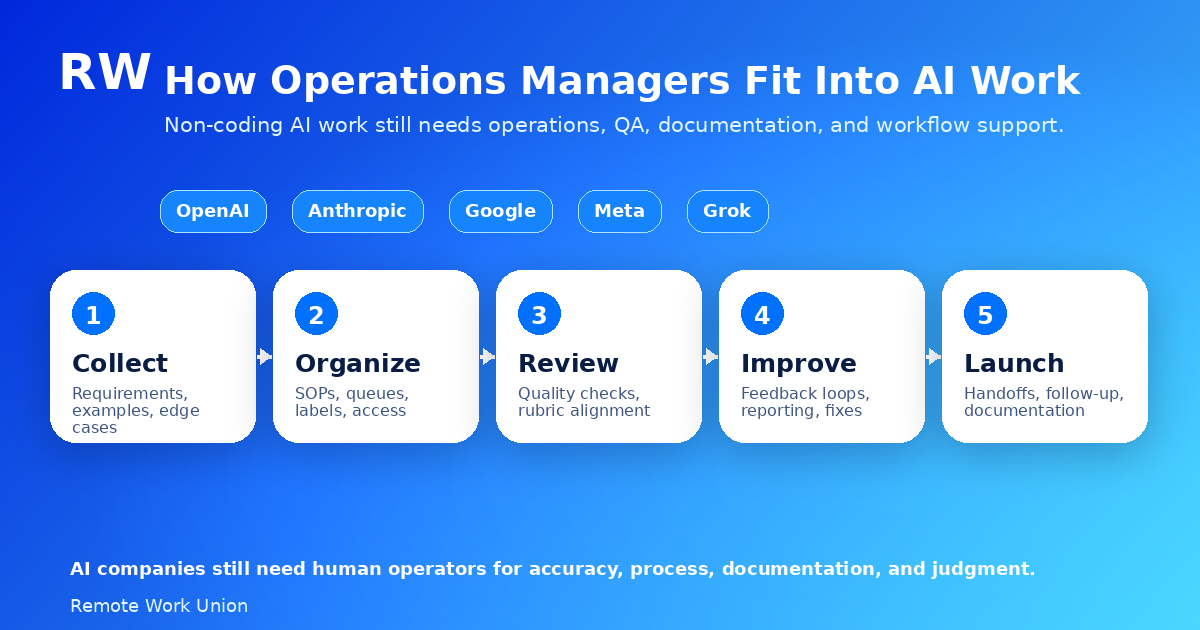
AI has created a new category of remote work that can be a fit for operations-minded people. Not every AI job requires coding. Some AI-related work depends on organization, quality control, documentation, research, judgment, and clear writing. Major AI companies and AI teams around OpenAI, Anthropic, Google, Meta, Grok, and related platforms need people around model evaluation, data quality, workflow management, annotation, prompt testing, policy review, and human feedback.
Key insight: Operations and office managers may be especially useful in AI work because they are used to following procedures, spotting gaps, creating repeatable systems, coordinating tasks, and making judgment calls. Those skills matter when a company is trying to collect, review, organize, and improve AI outputs.
Examples of remote AI-related roles to search: AI operations coordinator, AI data operations specialist, AI training coordinator, model evaluation specialist, AI content quality analyst, data quality coordinator remote, and human feedback reviewer.
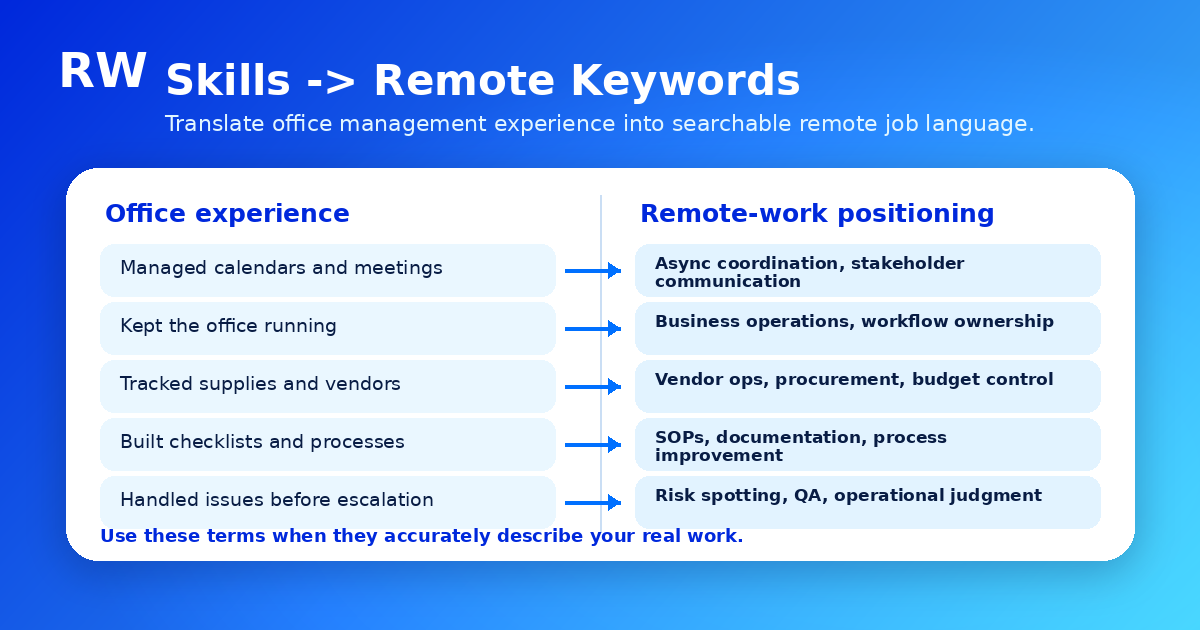
How to Position Your Office Management Experience for Remote Work
The biggest mistake office managers make is describing their experience too narrowly. Instead of only saying "Managed office operations," say something like: "Managed daily business operations, vendor coordination, scheduling, internal documentation, and cross-functional follow-up for a fast-moving team." Instead of only saying "Handled calendars and meetings," say: "Coordinated executive calendars, recurring meetings, agendas, notes, and follow-up items across internal and external stakeholders."
Remote employers often search for words like operations, process, workflow, documentation, reporting, systems, coordination, stakeholders, onboarding, vendor management, project management, CRM, SOPs, QA, and cross-functional communication. Use those words when they accurately describe what you have done.
Frequently Asked Questions
Can office managers find fully remote jobs?
Yes. Office management experience translates directly to remote work because the core skills — coordination, documentation, scheduling, process improvement, and vendor management — are all digital. Remote companies need people who can keep workflows organized, communicate clearly in writing, and make decisions without constant supervision.
What are the best remote job titles for operations and office managers?
Strong remote job titles to search include remote operations coordinator, remote operations manager, virtual office manager, remote project coordinator, executive operations assistant, people operations coordinator, customer operations specialist, sales operations coordinator, vendor operations coordinator, and AI operations coordinator.
How do operations and office management skills translate to AI training jobs?
Operations managers bring skills in process following, quality control, documentation, research, and judgment — exactly what AI training and model evaluation roles need. AI companies need coordinators who can organize annotation workflows, evaluate outputs consistently, write clear feedback, and follow detailed guidelines.
What tools should remote operations candidates know?
Common remote operations tools include Google Workspace, Microsoft 365, Slack, Notion, Asana, ClickUp, Monday.com, Airtable, HubSpot, Salesforce, Zendesk, Deel, Rippling, and Loom. You do not need to know every tool, but familiarity with the categories of tools remote companies use will strengthen your application.