Virtual assistant work is one of the most practical entry points into remote work because it is built around skills many people already use: organizing information, managing communication, scheduling, researching, writing updates, and keeping projects moving. It is also one of the broadest work from home categories. A virtual assistant can support a founder, a small business owner, an online creator, a real estate team, an agency, an e-commerce shop, a recruiter, a consultant, or a busy executive.
The mistake many applicants make is treating every virtual assistant job as the same job. The market is more specific than that. Some roles are basic administrative support. Some are closer to remote operations. Some require strong writing. Some are customer-facing. Some are research-heavy. Some are built around inbox and calendar control. Some now require comfort with AI tools like ChatGPT, Claude, Gemini, and other systems connected to the broader AI ecosystem around OpenAI, Anthropic, Google, Meta, and Grok.
The best work from home jobs for virtual assistants are not just the easiest roles to find. They are the roles where your reliability, judgment, communication, and tool fluency make you more valuable over time. If you want flexible remote work that can grow into a real income stream, the goal is not only to get hired as a VA. The goal is to become the kind of assistant a client or company trusts with important work.
What a Virtual Assistant Actually Does
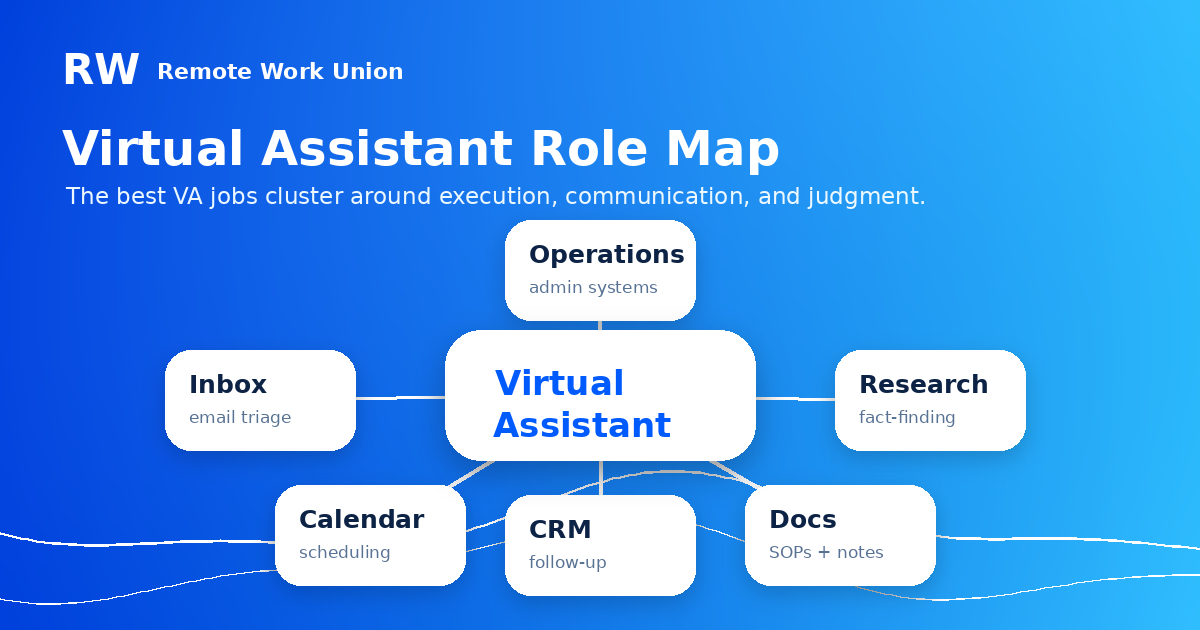
A virtual assistant helps a person or business stay organized and execute faster. That can mean answering emails, managing a calendar, preparing documents, updating spreadsheets, booking travel, organizing files, researching vendors, posting content, responding to customers, preparing meeting notes, tracking invoices, updating a CRM, or following up with leads.
The work is remote, but the value is not just availability. The strongest VAs reduce confusion. They turn messy information into clear next steps. They notice what is missing. They remind people before deadlines are missed. They create simple systems. They protect the client from low-value distractions and keep important work visible.
That is why virtual assistant jobs overlap with administrative assistant jobs, executive assistant jobs, project coordinator jobs, customer support jobs, operations assistant jobs, and AI workflow support roles. The job title may say virtual assistant, but the actual work depends on the client, industry, and level of responsibility.
1. Executive Virtual Assistant
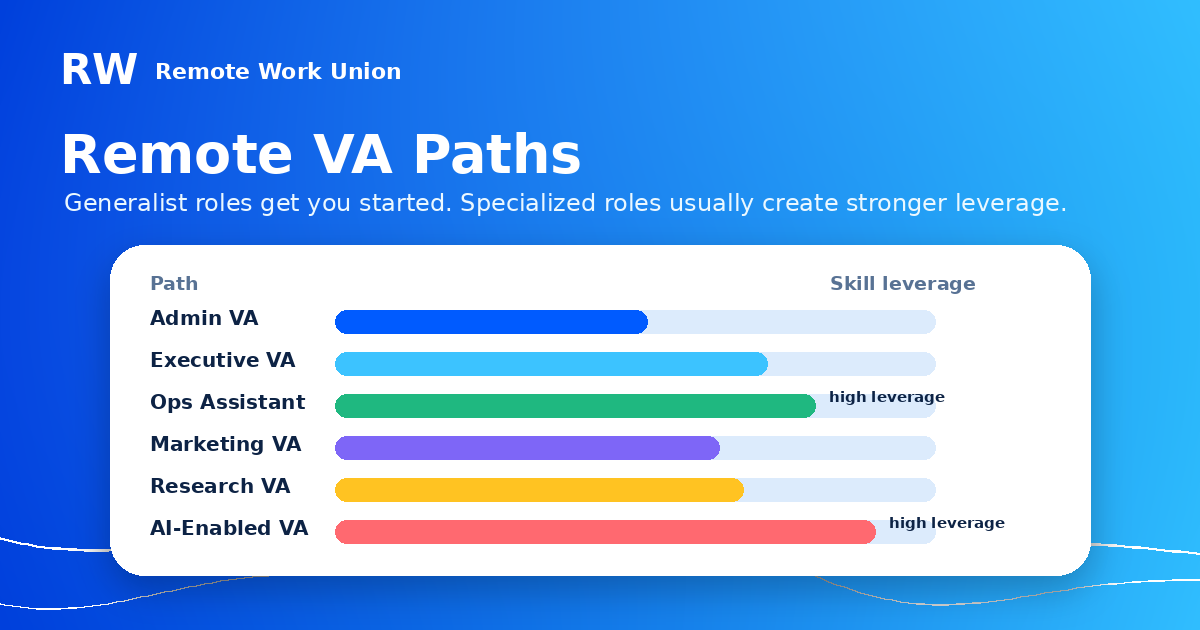
An executive virtual assistant supports a founder, executive, consultant, agency owner, or high-output professional. This is often one of the best work from home VA paths because it can become more valuable than basic task support. Instead of only completing assignments, you help protect the executive's time.
Typical responsibilities include calendar management, inbox triage, meeting preparation, travel planning, follow-up reminders, document preparation, vendor communication, and recurring personal admin. Strong executive VAs are discreet, organized, calm under pressure, and good at deciding what needs attention now versus later.
This path is best for people who are comfortable with responsibility. You may be asked to manage sensitive information, coordinate with multiple stakeholders, and make judgment calls. If you are highly organized and can write concise updates, executive VA work can be a strong remote career lane.
2. Administrative Virtual Assistant
Administrative VA jobs are the classic starting point. These roles usually include email support, file organization, data entry, appointment scheduling, spreadsheet updates, document formatting, form completion, and basic internal coordination.
This is a good work from home job for beginners because the tasks are easier to understand and the tools are common. You may use Google Workspace, Microsoft Office, Slack, Notion, Airtable, Trello, Asana, ClickUp, or a company-specific dashboard. You do not need to be a coder. You do need to be accurate, responsive, and consistent.
The downside is that general admin roles can attract a lot of applicants. To stand out, do not only say you are organized. Show it. Mention specific systems you can manage, examples of documents you can create, and the kinds of workflows you can support.
3. Inbox and Calendar Manager
Inbox and calendar management is a specialized VA role that can be more valuable than it sounds. Many founders and executives lose hours every week to email clutter, scattered meeting requests, and unclear follow-up. A remote inbox and calendar assistant helps convert that chaos into an organized system.
The work can include sorting messages, flagging urgent items, drafting replies, labeling emails, unsubscribing from noise, scheduling meetings, confirming attendees, preparing agendas, and reminding the client about commitments. The best assistants learn the client's preferences and communication style so the system gets smoother over time.
This role is a strong fit if you are detail-oriented and can handle repetitive work without becoming careless. It also rewards good written judgment. You need to know when to draft, when to archive, when to ask a clarifying question, and when something needs the client's direct attention.
4. Operations Assistant
Operations assistant roles are some of the best work from home jobs for virtual assistants who want to move beyond basic admin. Operations work is about keeping the business machine running. You may help maintain SOPs, update internal databases, track project status, organize team documents, create checklists, monitor recurring tasks, or coordinate between departments.
This work is common in agencies, online businesses, startups, recruiting firms, coaching businesses, real estate teams, and e-commerce brands. The title might be operations assistant, remote operations coordinator, admin coordinator, or virtual assistant. The underlying skill is the same: turning messy work into repeatable systems.
Key insight: AI tools can help here, but they do not replace the human value. A tool can summarize a process or draft a checklist. A good operations assistant knows whether the checklist actually matches how the business works.
5. Customer Support Virtual Assistant
Customer support VA jobs are ideal for people who are patient, clear writers, and comfortable helping customers solve problems. These roles can include answering support tickets, replying to live chat, managing refunds, updating order information, sending onboarding messages, and escalating complicated issues.
The best version of this role is not endless phone work. Many remote customer support roles are email, chat, or ticket-based. That makes them a better fit for people looking for work from home jobs with fewer calls. However, you still need strong communication skills and a calm tone.
Customer support can also lead to better remote roles over time. If you understand common customer problems, you can help improve help docs, create templates, document bugs, summarize feedback, and support customer success teams. That makes you more than a person answering tickets.
6. Marketing and Content Virtual Assistant
Marketing VA roles are a good fit for people who like writing, social media, research, and organization. The work can include scheduling posts, formatting blog content, preparing newsletters, organizing content calendars, pulling basic analytics, researching topics, creating briefs, or repurposing long content into short posts.
This does not mean you need to be a full marketing strategist. Many companies and creators need someone who can keep the content process moving. That includes making sure drafts are organized, assets are named correctly, posts are scheduled, links work, and the publishing calendar does not fall apart.
AI tools have changed this role. A marketing VA who knows how to use ChatGPT or Claude for first drafts, outlines, summaries, and repurposing can be useful. But the final value still depends on taste, accuracy, brand voice, and avoiding generic content.
7. Research Virtual Assistant
Research assistant jobs are underrated remote roles for virtual assistants. A research VA may find leads, compare vendors, gather contact information, summarize articles, prepare market notes, organize competitor research, or collect sources for a report.
This path is strong for people who are curious, careful, and good at checking information. In 2026, this also connects naturally to AI-adjacent work. Companies using AI systems still need humans who can verify facts, judge source quality, and turn information into useful summaries. That is why research skill matters in remote AI jobs, model evaluation, content review, and data annotation work as well.
The key is to avoid presenting research as random browsing. Good research is structured. You define the question, collect relevant information, cite or save sources internally, summarize what matters, and explain what you still do not know.
8. E-commerce Virtual Assistant
E-commerce VA jobs support online stores and product-based businesses. Tasks can include product listing updates, order tracking, customer messages, returns, inventory spreadsheets, supplier communication, review monitoring, and promotion calendars.
This role can be a good remote path because e-commerce businesses often have recurring operational work. They need reliable help every week, not only one-time tasks. If you learn Shopify, Amazon Seller Central, Etsy, WooCommerce, or common help desk tools, you can become more useful quickly.
E-commerce work rewards precision. A small mistake in a product listing, shipping update, or refund message can create customer issues. If you are detail-oriented and comfortable with repetitive systems, this can be a stable VA lane.
9. Recruiting and HR Virtual Assistant
Recruiting coordinators and HR assistants often do work that overlaps with virtual assistant roles. They may schedule interviews, update applicant tracking systems, send candidate messages, organize resumes, prepare onboarding documents, and follow up with hiring managers.
This is a good fit for people who like communication and process. You need to be professional, accurate with names and dates, and comfortable using templates without sounding robotic. You also need to protect privacy because candidate information can be sensitive.
Remote recruiting support can be especially useful for staffing firms, startups, remote-first companies, and agencies that handle a high volume of applicants. It can also help you build experience in hiring operations, which can lead to better remote HR or talent roles later.
10. AI-Enabled Virtual Assistant
AI-enabled virtual assistant work is not a separate magic job category. It is a practical upgrade to normal assistant work. You still manage information, communication, and follow-through. The difference is that you use AI tools to move faster without lowering quality.
An AI-enabled VA might use AI to summarize long meeting notes, draft email responses, turn a messy transcript into action items, create a first version of an SOP, compare research notes, rewrite a client update, organize a content calendar, or prepare a checklist from scattered instructions.
The important keyword is enabled, not replaced. Clients do not only need someone who can paste text into a tool. They need someone who understands the business context, checks the output, removes errors, and decides what is useful. As AI becomes more common across OpenAI, Anthropic, Google, Meta, Grok, and the broader software market, remote workers who combine tool fluency with judgment will have more options.
Ready to find remote VA and AI training roles? Remote Work Union connects you with legitimate work-from-home opportunities.
Find Roles Hiring Now →11. Project Coordinator Assistant
Project coordinator assistant roles are a strong next step for virtual assistants. These jobs involve helping teams keep projects on schedule. You may update task boards, send reminders, collect status updates, prepare meeting notes, maintain timelines, and make sure next steps are clear.
This role is valuable because remote teams can become disorganized quickly. When people are spread across cities, countries, and time zones, someone needs to keep the system visible. A project coordinator assistant helps prevent work from disappearing into Slack threads and unfinished documents.
This is a good fit if you are organized, direct, and comfortable asking for updates. You do not need to be a full project manager to start. You do need to be dependable and clear.
12. Document and Data Entry Assistant
Document and data entry assistant roles can be a practical remote starting point, especially for beginners. The work may include entering information into spreadsheets, cleaning up records, formatting documents, converting notes into templates, updating databases, or checking entries for mistakes.
These jobs are often easier to qualify for, but they can be repetitive and competitive. The way to make them better is to connect them to a business process. Instead of only saying data entry, explain that you can maintain clean records, organize client files, check information for accuracy, and support reporting workflows.
Accuracy matters more than speed alone. A fast assistant who makes mistakes creates more work. A careful assistant who can maintain clean systems becomes more trusted over time.
Skills That Help Virtual Assistants Get Better Remote Jobs
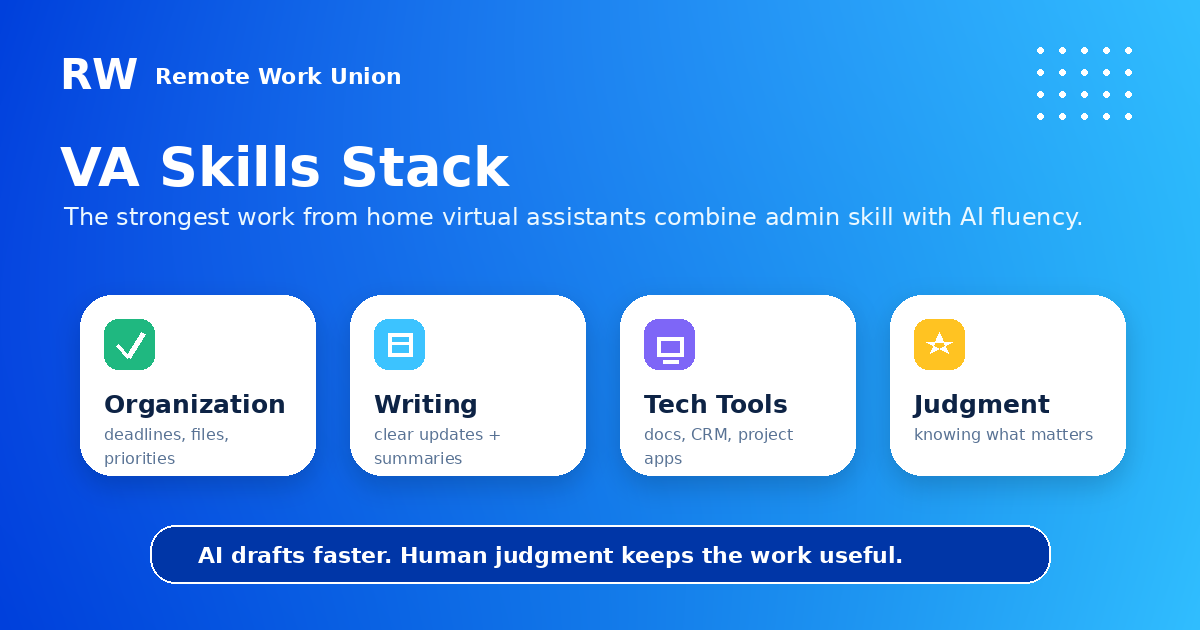
The strongest virtual assistant profiles usually show a mix of organization, writing, tool fluency, and follow-through. You do not need every skill before you apply, but you should be honest about the work you can do reliably.
Important VA skills include calendar management, inbox management, customer communication, spreadsheet cleanup, document formatting, CRM updates, travel planning, research, content scheduling, meeting notes, task tracking, and basic project coordination. For AI-enabled roles, add prompt writing, summarization, quality checking, research verification, and the ability to use AI outputs without blindly trusting them.
Soft skills matter because remote work gives managers less visibility. They need to trust that you will communicate early, ask clear questions, meet deadlines, and document your work. A VA who disappears is a risk. A VA who gives clear updates becomes easier to keep.
Tools Worth Learning
Most virtual assistant jobs do not require advanced technical knowledge. They do require comfort with common remote work tools. Start with Google Workspace or Microsoft Office, then add one project management tool such as Asana, Trello, ClickUp, or Notion. Learn one communication tool such as Slack. Learn basic spreadsheet functions. Learn how to organize files cleanly.
For customer support roles, look at tools like Zendesk, Intercom, Help Scout, or Freshdesk. For sales and recruiting support, learn the logic of CRM and applicant tracking systems. For content roles, learn how content calendars, newsletters, and scheduling tools work. For AI-enabled assistant roles, learn how to draft, summarize, compare, and check outputs from tools like ChatGPT, Claude, Gemini, and similar assistants.
How to Stand Out When Applying
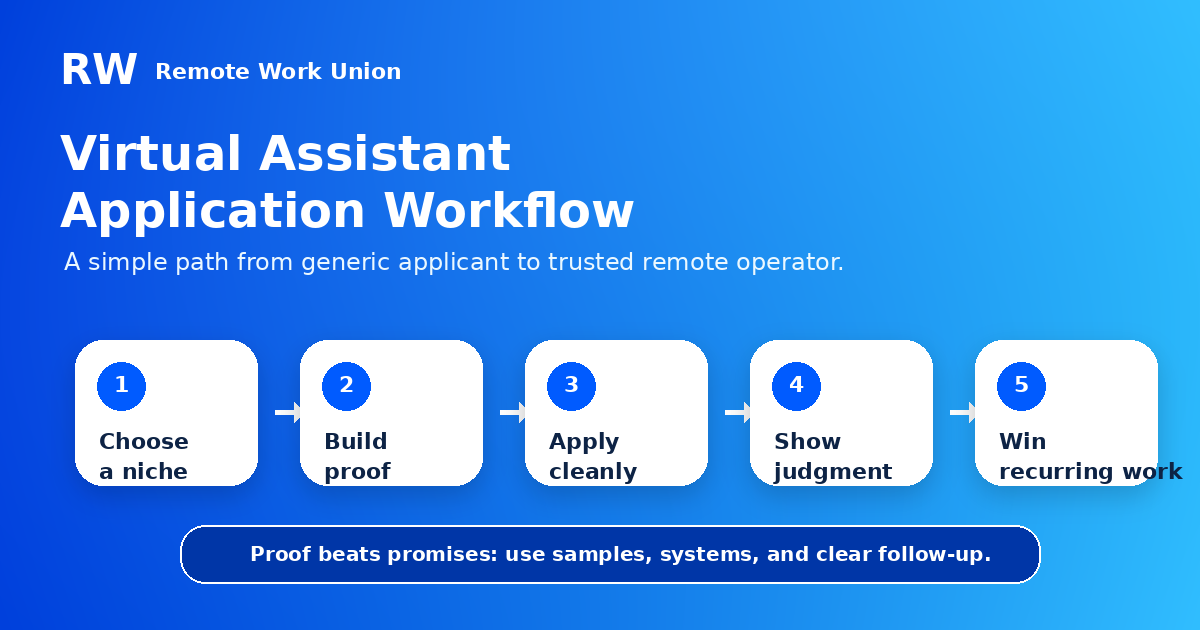
Most VA applicants say the same things: organized, reliable, detail-oriented, fast learner. Those are good traits, but they are not enough. To stand out, translate those traits into proof.
Create two or three simple samples. One could be a weekly calendar planning template. One could be an inbox triage system. One could be a meeting notes template with action items. One could be a sample SOP for onboarding a new client. One could be a spreadsheet tracker for leads, invoices, or content tasks.
When you apply, connect your proof to the role. If the job mentions inbox management, say how you would label, prioritize, draft, and escalate messages. If it mentions operations, mention SOPs, recurring tasks, and status tracking. If it mentions research, mention source checking and concise summaries. Specificity beats vague confidence.
Where to Find Work From Home Virtual Assistant Jobs
You can find VA roles on remote job boards, general job sites, freelance platforms, staffing agencies, niche communities, and direct outreach. Search for more than one title. Use terms like virtual assistant, remote assistant, executive assistant, administrative assistant, operations assistant, project coordinator, customer support assistant, content assistant, research assistant, recruiting coordinator, and remote admin.
Direct outreach can also work well. Many small businesses need help but have not written a job post. A short message offering a specific service can perform better than a generic pitch. For example: inbox cleanup for consultants, content calendar support for creators, scheduling and CRM cleanup for sales teams, or customer support templates for e-commerce brands.
Remote Work Union can also help because it focuses on remote roles and application paths instead of forcing you to search alone across the entire internet. The goal is to find real work from home jobs faster and avoid low-quality listings.
Avoid scams: Real remote work platforms and legitimate employers do not require you to pay a fee to start working. Be cautious of jobs that ask you to buy equipment through a specific vendor, send money, cash checks, move funds, or communicate only through strange channels.
Frequently Asked Questions
What is the best virtual assistant job for beginners?
Administrative VA, document and data entry assistant, and basic customer support VA roles are the most beginner-friendly. These roles have clear tasks, common tools, and manageable expectations. The key is to build proof — sample workflows, organized templates, or short writing samples — before applying, since many beginner applicants send generic resumes with no supporting evidence.
Can virtual assistants earn $50 or more per hour?
Yes, but typically at more senior or specialized levels. Executive VAs, operations assistants, and AI-enabled VAs who take on significant responsibility can reach higher hourly rates. For AI training and model evaluation roles available through platforms like micro1, Mercor, and Handshake AI, expert reviewers can earn $50–$200/hr depending on the project type and skill area.
Do virtual assistants need certifications?
No certification is required for most VA jobs. What matters most is demonstrated ability: clean writing, organized samples, tool familiarity, and a profile that clearly shows what tasks you can handle. Some specialized roles may prefer relevant background, but certifications are generally optional.
What tools do virtual assistants need to know?
Most VA jobs require Google Workspace or Microsoft Office, one communication tool like Slack, one project management tool like Asana or Notion, and email management. Specialized roles may add CRM tools, e-commerce dashboards, help desk software, scheduling apps, or AI tools like ChatGPT or Claude. Focus on the tools mentioned in the job posting.
What is an AI-enabled virtual assistant?
An AI-enabled VA uses AI tools like ChatGPT, Claude, or Gemini to complete administrative tasks faster: summarizing meeting notes, drafting email replies, turning transcripts into action items, organizing research notes, or creating first drafts of SOPs. The value is not just using the tool — it is knowing how to check the output, remove errors, and make the result useful for the client.