The Handshake AI Fellowship is one of the remote AI work options that many students, graduates, professionals, and subject matter experts are searching for as the AI job market keeps expanding. It sits in the broader category of AI training jobs, AI model evaluation work, and remote project-based roles where human reviewers help improve large language models.
This type of work is different from a traditional full-time job. Applicants are usually not being hired to manage a team, build a corporate department, or sit in meetings all day. The core value is human judgment. Remote AI evaluators review answers, compare model outputs, annotate examples, check reasoning, edit writing, and give feedback that helps AI systems become more useful, accurate, and aligned with real-world expectations.
For people who search for roles connected to OpenAI, Anthropic, Google, Meta, Microsoft, Claude, Gemini, ChatGPT, and other AI tools, the key idea is simple: modern AI systems still need skilled human review. The strongest applicants are not always coders. Many are strong writers, detail-oriented researchers, students, analysts, educators, legal professionals, healthcare workers, finance specialists, or generalists who can explain their thinking clearly.
What the Handshake AI Fellowship Is
Handshake describes its AI program as flexible, project-based work where fellows use human judgment and expertise to improve large language models. In practical terms, that can mean reviewing AI-generated content, editing outputs, annotating data, suggesting improvements, or helping evaluate how a model performs in realistic tasks.
That matters because AI models do not improve only from code. They improve from examples, feedback, ratings, comparisons, corrections, and expert review. A model might generate two answers to the same prompt. A human evaluator may need to decide which answer is more helpful, which one is more accurate, which one follows instructions better, and which one should be avoided. The evaluator may also need to explain the decision in a short written note.
The Handshake AI Fellowship should be understood as a remote AI training opportunity, not a guaranteed full-time career path by itself. Project availability can change. Task volume can rise or fall. Specialty requirements can shift. Rates can vary by project, field, and demand. Treat it as a serious remote work channel, but do not build your entire income plan around one platform.
Who the Fellowship Fits Best
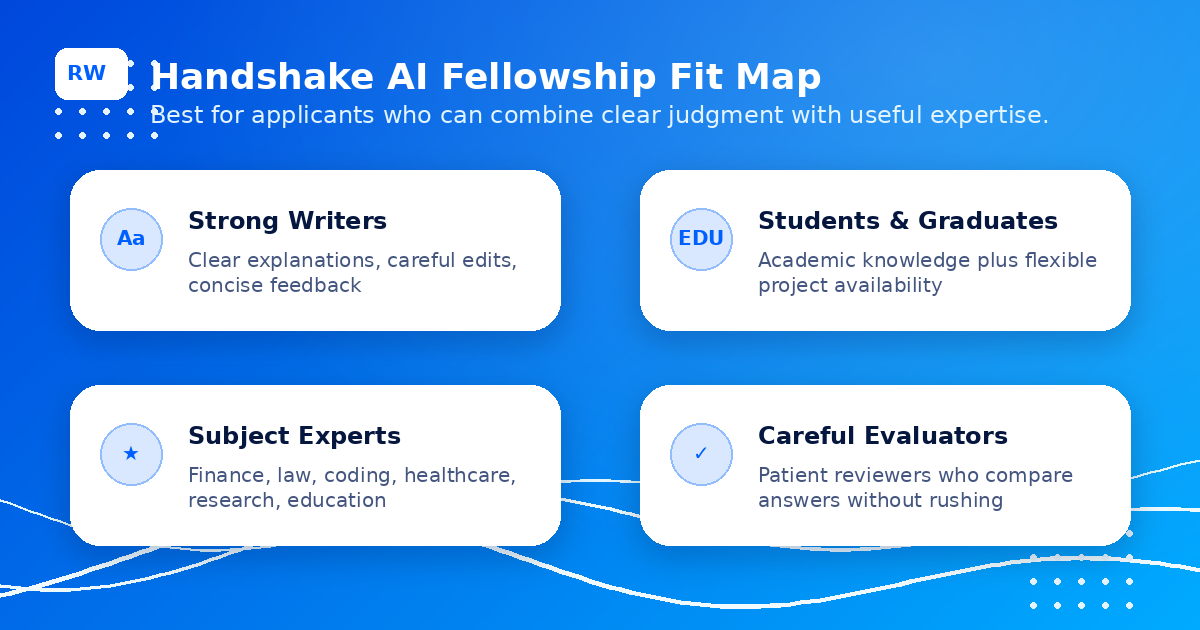
The best fit is someone who can read carefully, write clearly, follow instructions, and make consistent judgments. AI evaluation work can look easy from the outside, but the quality bar is usually tied to accuracy and explanation. A rushed answer, vague rating, or careless correction can hurt your profile.
Strong writers are a natural fit because many model evaluation tasks require short explanations. You may need to describe why one answer is better than another, point out a hallucination, rewrite a confusing passage, or identify whether a response actually answered the prompt. People with editing, journalism, copywriting, academic writing, tutoring, or research experience should highlight that directly.
Students and recent graduates can also be good fits because fellowship-style programs often value academic skills, current coursework, and flexible schedules. A student in computer science, economics, biology, English, psychology, political science, math, engineering, education, or public health may have useful subject knowledge even without years of full-time work experience.
Subject matter experts may have the highest upside when their expertise matches project demand. Lawyers, paralegals, finance analysts, accountants, nurses, medical writers, software engineers, teachers, professors, consultants, data analysts, and researchers can all be valuable in specialized AI training work. The more technical or domain-specific the task, the more important your background becomes.
The fellowship is usually not ideal for someone who wants passive income, guaranteed hours, or a completely hands-off side hustle. Remote AI work is still work. You have to read instructions, pass assessments, maintain quality, and adapt when tasks change.
What Kind of Work Applicants Should Expect
Handshake AI work can fall into several broad buckets. The exact project names may change, but the underlying skills are stable across many remote AI training platforms.
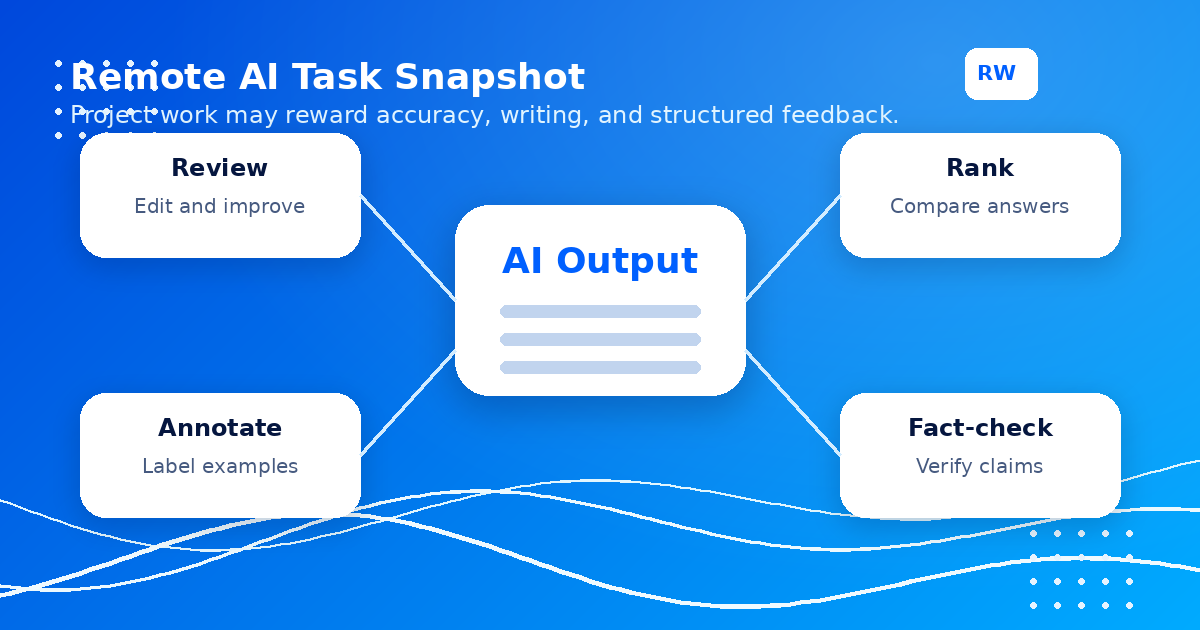
One common task is response evaluation. You might compare two AI answers and choose the stronger one based on helpfulness, accuracy, clarity, safety, and instruction-following. A good evaluator does not simply pick the answer that sounds better. They check whether the answer is actually correct and whether it satisfies the user's request.
Another common task is writing feedback. After ranking or rating model responses, you may need to explain your decision. The best feedback is short, specific, and evidence-based. Instead of writing, "Answer A is better," write why: "Answer A follows the requested format, includes the missing caveat, and avoids the unsupported claim in Answer B."
Some projects involve data annotation. That can mean labeling examples, categorizing prompts, identifying errors, tagging topics, or marking whether an answer meets a requirement. Annotation work rewards consistency and attention to rules.
Other projects may involve fact-checking, research, rewriting, coding review, math reasoning, legal analysis, medical review, business analysis, or education-focused feedback. These projects are often more selective because the platform needs confidence that the reviewer understands the subject area.
Tip: Before your first task, re-read the project rubric from start to finish. Most errors in AI evaluation come from rushing the instructions, not from lacking intelligence. Rubric-following is itself a scored skill on many platforms.
How to Prepare Your Resume and Profile
Your profile should make your strongest AI-relevant skills obvious. Do not assume the reader will infer them from a general resume. Spell them out in plain language.
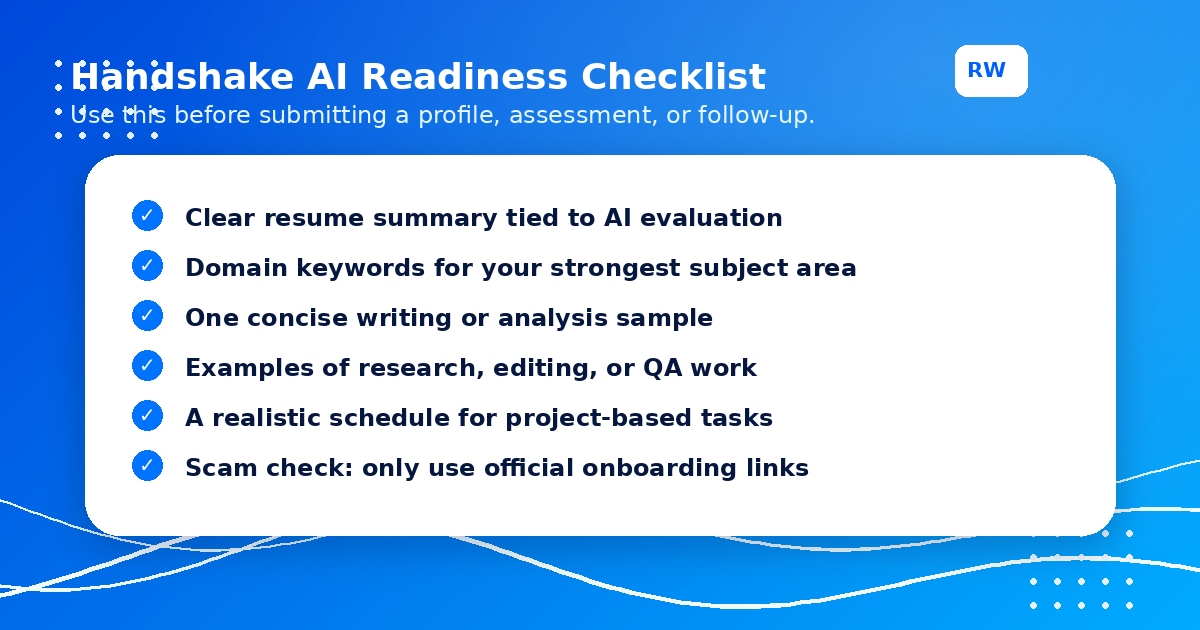
Use a short summary that connects your background to AI evaluation work. For example: "Finance graduate with experience in research, Excel analysis, and written evaluation. Strong fit for AI model evaluation, business reasoning, spreadsheet review, and structured feedback tasks." A teacher might write: "Education professional with experience assessing student writing, explaining errors, and creating clear learning materials. Strong fit for AI response evaluation, tutoring-style feedback, and prompt quality review."
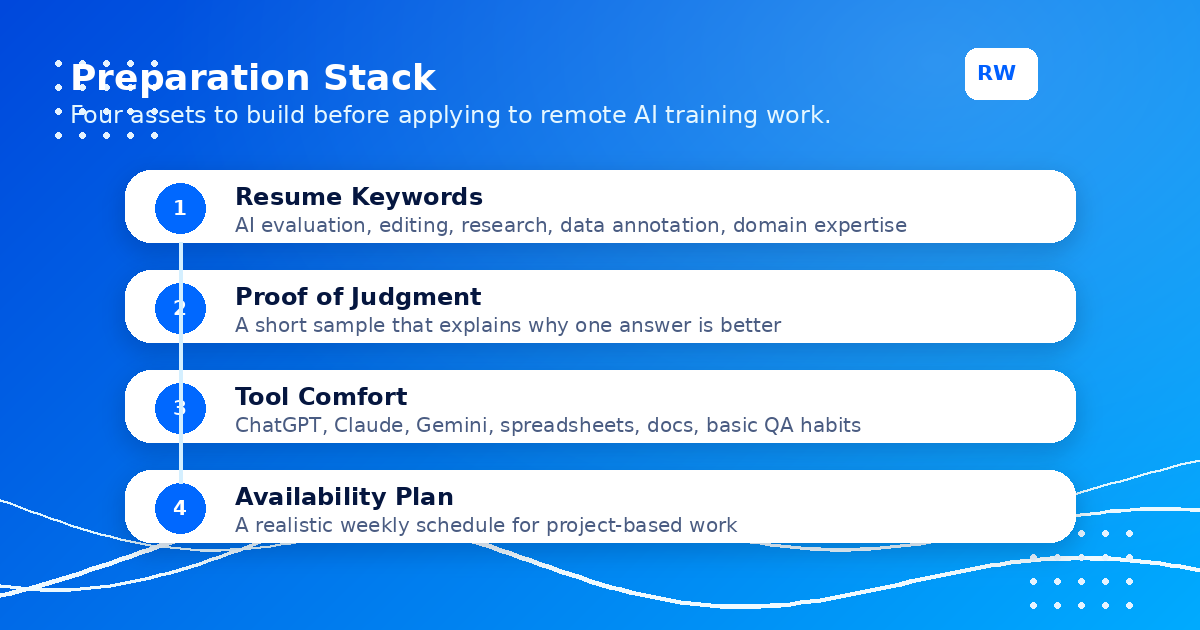
Add a skills section that includes both general remote work tools and AI evaluation terms. Useful keywords may include AI model evaluation, data annotation, prompt evaluation, response ranking, fact-checking, editing, research, QA, spreadsheet analysis, technical writing, legal research, medical writing, business analysis, ChatGPT, Claude, Gemini, Google Workspace, Microsoft Excel, and clear written feedback.
Then back up the keywords with proof. If you say you are good at research, mention the kind of research. If you say you are a strong writer, include writing samples or examples. If you have domain expertise, list the industries, tools, credentials, coursework, certifications, or projects that support it.
The mistake to avoid is submitting a generic resume that only says "hard worker" or "fast learner." AI training platforms are looking for evidence that you can do the task. Show the exact type of judgment you bring.
Remote Work Union connects you to legitimate remote AI training and evaluation roles, including fellowship-style opportunities. Apply for free.
Find Roles Hiring Now →How to Prepare for Assessments
Many remote AI platforms use assessments because they need to screen for quality before assigning paid work. The assessment may test writing, reasoning, editing, fact-checking, coding, math, domain knowledge, or the ability to follow instructions.
Before you take any assessment, slow down and read the rubric. Most mistakes come from rushing. If the instructions say to prioritize factual accuracy, do not choose the more polished answer if it contains a false claim. If the instructions say to evaluate instruction-following, do not reward an answer that ignores the requested format. If the instructions ask for a concise explanation, do not write a long essay.
Practice comparing two answers to the same prompt. Ask yourself five questions: Which answer follows the prompt more closely? Which answer is more accurate? Which answer is more complete without adding fluff? Which answer is safer or less misleading? Which answer would be more useful to the user?
Also practice writing short justifications. A strong justification usually names the deciding factor. It might mention a factual error, a missing requirement, an unsupported claim, a better structure, or a clearer explanation. Avoid vague language like "better quality" unless you define what made it better.
For specialized projects, review the basics of your field. A finance task may test accounting logic, valuation concepts, Excel reasoning, or business judgment. A legal task may test issue spotting and careful language. A coding task may test whether you can read code, identify bugs, and explain tradeoffs. A healthcare task may test safe, evidence-aware reasoning and the ability to avoid overclaiming.
How to Position Yourself If You Are a Beginner
A beginner can still be a strong applicant if they are honest about their background and precise about their strengths. You do not need to pretend to be an AI engineer. In fact, many AI training projects need generalists who can write, research, compare, and follow detailed instructions.
If you do not have a technical background, focus on clarity, reliability, and judgment. Highlight experience that required careful reading and written decisions: grading papers, customer support documentation, editing, compliance work, research assignments, QA testing, operations work, administrative review, tutoring, policy analysis, or content moderation.
Build a simple sample before applying. Write a one-page example where you compare two AI answers and explain which is better. Keep it clean and professional. This gives you a concrete asset to use when an application asks for writing ability, analytical work, or examples of past projects.
Beginners should also apply to multiple legitimate platforms instead of relying on one fellowship. Handshake AI, Outlier, Mercor-style expert projects, data annotation platforms, AI content editor roles, and LinkedIn remote AI evaluator listings can all be part of a broader search. The goal is to build options.
How to Position Yourself If You Are an Expert
Experts should not bury their expertise under a generic remote work resume. If you are a lawyer, lead with legal research, drafting, contract review, compliance, or litigation support. If you are a nurse or medical writer, lead with clinical knowledge, patient education, documentation, safety, and healthcare writing. If you are a software engineer, lead with languages, code review, debugging, architecture, testing, and technical explanation. If you are a finance professional, lead with modeling, accounting, valuation, FP&A, investing, Excel, or business analysis.
Expert AI training work often depends on matching the right reviewer to the right project. Your profile should make that match obvious. Include searchable keywords for your specialty. Include specific tools. Include credentials. Include sample project types. A platform cannot match you to a high-skill project if your profile only says "business professional" or "experienced writer."
Experts should also be realistic. A strong background can improve your odds, but it does not guarantee immediate work. Project demand determines which specialties are needed at a given time. A narrow specialty may pay well when demand is high and have limited tasks when demand is low.
Common Mistakes to Avoid
The first mistake is treating the fellowship like passive income. Remote AI work rewards accuracy and consistency. If you rush through tasks or ignore instructions, your work can be limited or removed.
The second mistake is using AI to complete assessments without understanding the answers. AI tools can help you think, but platforms are usually evaluating your judgment. If your submission sounds generic, misses the rubric, or repeats unsupported claims, it may weaken your application.
The third mistake is applying with a broad resume that does not mention AI evaluation, writing, research, annotation, or domain expertise. A traditional resume may be fine for a corporate role, but AI training applications often need a more direct keyword strategy.
The fourth mistake is expecting constant work from a project-based platform. Remote AI projects can be inconsistent. Build a pipeline across several platforms and job boards so that one slowdown does not stop your entire income stream.
The fifth mistake is ignoring safety. Use official application pages and official onboarding tools. Be careful with anyone who asks for money, asks you to move to an unrelated messaging app, sends suspicious payment links, or promises guaranteed income without assessment or verification.
Tip: Save every application answer, writing sample, and proof document in a dedicated folder. The strongest materials from a Handshake AI application often double as strong materials for Outlier, Mercor, or other remote AI evaluation platforms.
Final Take
The Handshake AI Fellowship can be a strong fit for applicants who want flexible, remote, project-based AI work and have the patience to evaluate model outputs carefully. It is especially relevant for strong writers, students, graduates, researchers, subject matter experts, and professionals who can explain their reasoning.
The best preparation is not complicated: build a targeted resume, highlight your strongest domain keywords, prepare a clean writing or analysis sample, practice comparing AI answers, and apply with realistic expectations. The applicants who stand out are usually the ones who can combine clear communication with careful judgment.
Frequently Asked Questions
Is the Handshake AI Fellowship open to beginners?
Yes, beginners can apply to the Handshake AI Fellowship, especially if they have strong writing, research, or analytical skills. You do not need years of work experience or a technical background for many evaluation-focused tasks. Beginners who can read carefully, follow instructions, and explain their reasoning are often competitive applicants for generalist AI evaluation projects.
What kind of work does the Handshake AI Fellowship involve?
Handshake AI Fellowship work typically involves reviewing AI-generated content, comparing model outputs, annotating data, writing feedback, fact-checking, editing, or applying domain knowledge to evaluate specialized answers. Common tasks include choosing which of two AI responses is more accurate or helpful, then writing a short explanation of your decision.
Do I need a STEM background to apply to the Handshake AI Fellowship?
No. Many Handshake AI Fellowship tasks are built around judgment, communication, and domain knowledge rather than coding or technical skills. Writers, educators, legal professionals, healthcare workers, finance analysts, and researchers can all be strong candidates. STEM backgrounds can help on technical projects, but they are not required for most evaluation and human feedback roles.
How do I make my application stand out for the Handshake AI Fellowship?
Focus your application on evidence rather than vague claims. Include a short, targeted summary that connects your background to AI evaluation tasks. Add a skills section with relevant keywords. Prepare a writing or analysis sample that shows you can compare AI outputs and explain your reasoning. Follow all application instructions carefully and proofread your submission before sending.
Can I use Handshake AI alongside Mercor or Outlier?
Yes. Most remote AI training platforms operate independently, and applicants are generally free to apply to multiple platforms at the same time. Using Handshake AI alongside Mercor, Outlier, micro1, or other AI evaluation platforms is a common strategy for building income stability, since project availability can fluctuate on any single platform.