The phrase "work online and get paid" has been used so broadly — on social media, in ads, in email blasts — that many people no longer trust it. That mistrust is earned. The "work from home" space includes a genuinely large amount of predatory content designed to extract money, personal information, or wasted time from people looking for real work.
But real online work does exist. AI training, model evaluation, expert review, writing evaluation, data annotation, and freelance professional work are legitimate categories that have produced real, consistent income for real people. The challenge is sorting the signal from the noise quickly enough that you do not waste weeks chasing fake opportunities.
This article gives you a clear framework for telling them apart.
What Real Online Work Actually Looks Like
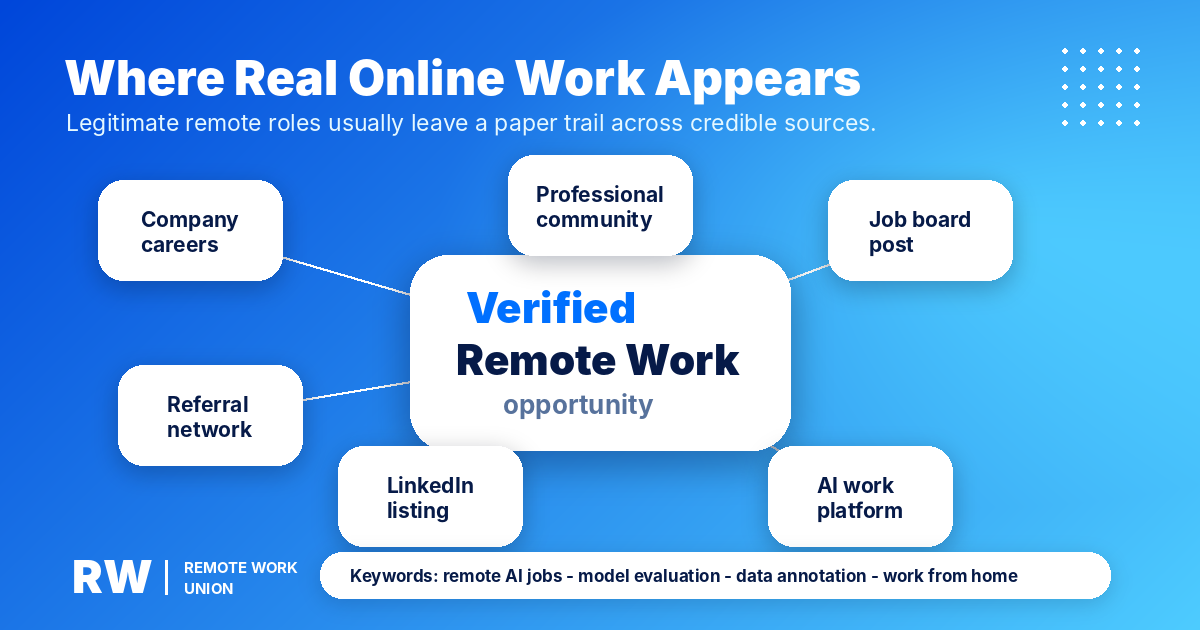
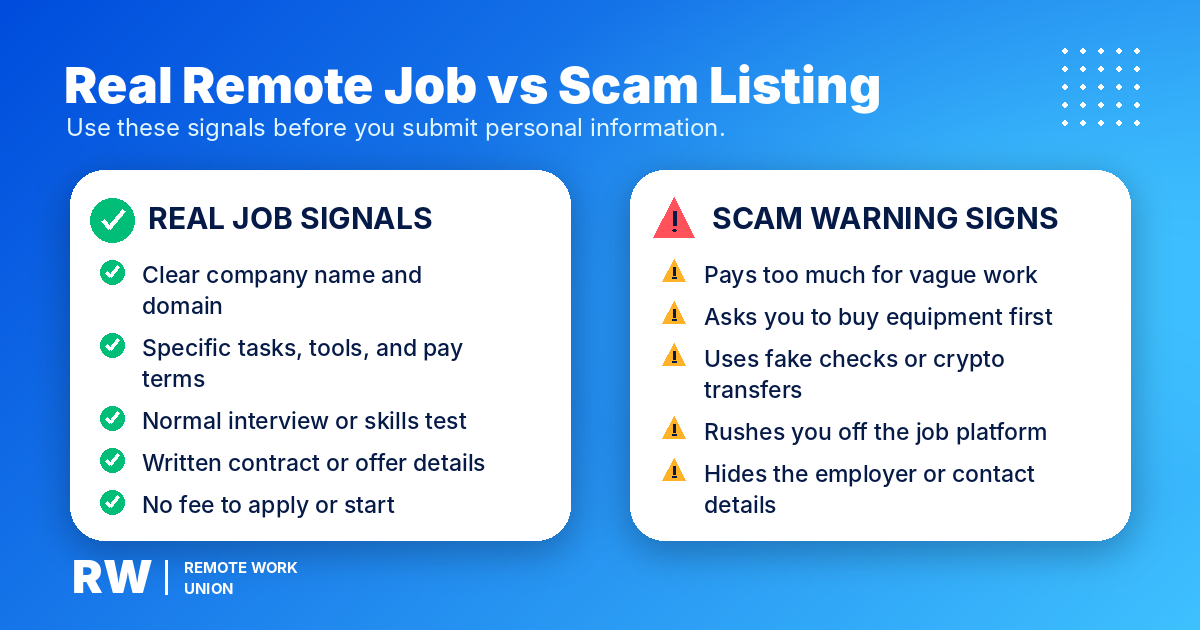
Legitimate online work has a few consistent characteristics. The company is verifiable: you can find it on LinkedIn, it has a real website with contact information, and it has reviews on credible third-party sites. The application is free: real employers do not charge fees to consider your application or access the work platform. The pay structure is transparent: you know roughly what you will earn before you start working. Payment is delivered through established channels: direct bank transfer, PayPal, platforms with documented payout systems. And the work is real: the tasks are clearly described, and the output is used for something verifiable.
Real online work categories for 2026 include AI model evaluation, writing evaluation, expert review, data annotation, RLHF rating, search quality rating, legal and finance research, software testing, virtual assistance, and freelance professional services. These all have legitimate players, verifiable companies, and established payment systems.
The Main Scam Patterns to Recognize
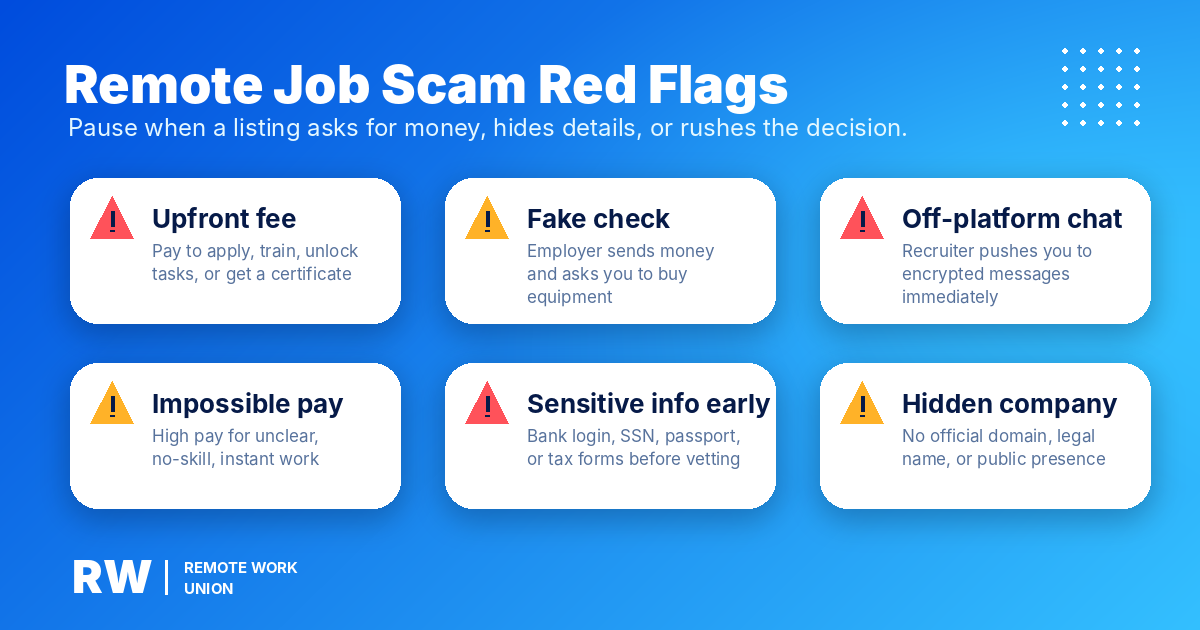
Pay-to-play: Asking you to pay for training, certification, software, or "starter kits" before you can access work. Real employers absorb those costs. If you need to pay to start earning, it is not a job.
Guaranteed income promises: Any opportunity that promises you will earn a specific income amount without evaluating your work first is lying to you. Real online work pays based on hours, tasks completed, or quality — none of which can be guaranteed before seeing you work.
Suspiciously high pay for simple tasks: "$500 per day for typing" or "earn $2,000 this week for clicking links" do not exist as real jobs. The amount is designed to be compelling enough to override skepticism. It works, and then it takes something from you.
Unsolicited contact: If someone on Instagram, WhatsApp, Telegram, or a text message reached out to you with a job opportunity, treat it as a scam until proven otherwise. Legitimate employers are found through official job boards or platform websites, not through cold messages on social media.
No verifiable company: If you cannot find the company independently — no LinkedIn page, no Google results, no Better Business Bureau or Trustpilot listing — that is a significant warning sign.
Remote Work Union connects you to verified remote AI training and evaluation roles. Applications are always free.
Find Roles Hiring Now →The Red Flag Checklist
Before applying to any online job, go through these questions:
- Does the opportunity require any payment from you? If yes, stop.
- Does it promise guaranteed income before seeing your work? If yes, stop.
- Is the pay wildly disproportionate to the skill level required? If yes, be very skeptical.
- Can you find the company independently on LinkedIn, Google, or a credible third-party review site? If no, verify further before sharing any personal information.
- Did this opportunity reach you through an unsolicited message on social media, messaging apps, or text? If yes, verify through the company website directly — do not use the link in the message.
- Is the company asking for bank information or Social Security/national ID before you have received and cashed a single payment? If yes, stop.
A Safe Application Flow
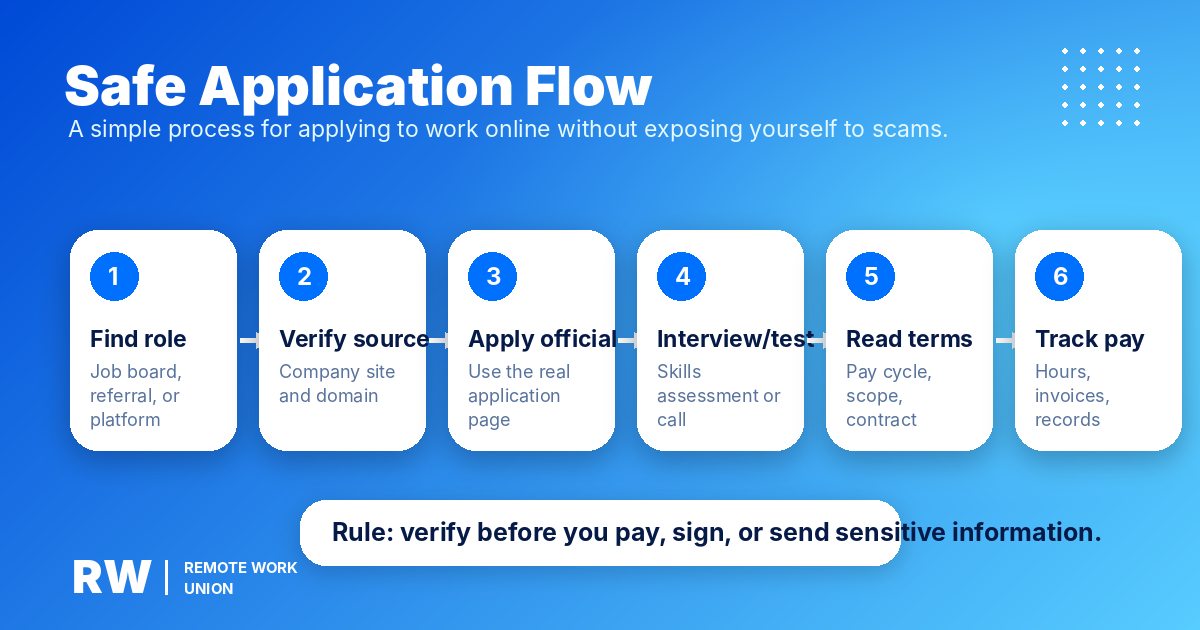
The safest way to apply for online work is to start from a known-good list of verified platforms. Find the platform's official website directly through search or a trusted directory. Apply through that official website only — never through a link in an unsolicited message. Verify the company through independent channels (LinkedIn, Trustpilot, Glassdoor) before sharing any personal identifying information. Complete any paid assessment using a legitimate evaluation platform hosted by the company. And receive at least one successful payment before sharing additional personal information.
For AI training and model evaluation work specifically, the verified platforms to start with include Outlier AI, Mercor, Handshake AI, and micro1. All four have free applications, documented pay structures, and established reputations in the remote AI work space.
Are AI Training Jobs Legitimate?
Yes — from the right platforms. AI training jobs are a real category of remote work in which contractors help technology companies improve AI models by evaluating responses, comparing outputs, fact-checking answers, rating helpfulness, and providing domain expertise. The demand is genuine because AI companies need large volumes of human feedback to train and evaluate their systems.
The category also attracts some predatory listings that misuse popular keywords like "AI training job" or "OpenAI hiring" to attract clicks. The difference is simple: real AI training platforms have documented pay, free applications, verifiable company information, and do not ask for upfront fees. Fake ones do the opposite.
Tip: When in doubt, a ten-minute independent research check can save you hours of wasted applications and protect personal information. Search the company name + "reviews," check LinkedIn for real employees, and look for independent coverage. If it checks out, proceed. If it does not, move on.
Frequently Asked Questions
How do I know if an online job opportunity is real?
Legitimate online jobs have verifiable companies with real websites and contact information, free applications with no upfront fees, clear descriptions of the work and pay structure, and pay through established methods. Scams typically promise fast or guaranteed income, ask for payment to get started, and operate through vague or unverifiable companies.
What are the biggest red flags for remote job scams?
The most reliable red flags are: upfront payment requirements (real employers do not ask you to pay to start), guaranteed income promises (no legitimate job guarantees a specific amount without seeing your work), unusually high pay for simple tasks, requests for personal financial information before starting, and contact primarily through messaging apps rather than official company channels.
Are AI training jobs real or a scam?
AI training jobs from legitimate platforms like Outlier AI, Mercor, Handshake AI, and micro1 are real. These platforms contract with major AI companies to collect training data, evaluate model outputs, and improve AI systems. Applications are free, pay is disclosed upfront, and work is delivered through verified platforms. The AI training category does include some predatory listings, so verify the platform before applying.
What is the safest way to find real online work?
Apply to platforms you can verify independently: check that the company has a real website, a LinkedIn presence, verifiable reviews, and a free application process. Never pay to start working. Apply through the platform's official website, not a link from an unsolicited message. Start with platforms that have established reputations in the AI training or remote work space.