Remote AI training jobs have become one of the most interesting work-from-home categories because they reward skills that many professionals already have. The problem is that not every opportunity in the space is worth your time. Some listings are vague. Some platforms are low-ceiling. Some applications go nowhere because the applicant is using a generic strategy.
The best way to approach this category is to think like a filter, not just an applicant. Instead of clicking every remote listing you see, build a process that helps you find better opportunities, apply more intelligently, and avoid the platforms that waste your time.
Why Generic Applications Underperform
A lot of applicants treat AI training jobs like any other work-from-home listing. They send the same resume everywhere, answer questions vaguely, and hope volume will compensate for weak positioning. Usually it does not. In this category, the work often depends on writing quality, reasoning, judgment, and subject knowledge. If your application does not signal those strengths clearly, you blend into the crowd.
That is why a smarter application strategy matters. The goal is not just to apply. The goal is to apply in a way that makes your fit obvious.
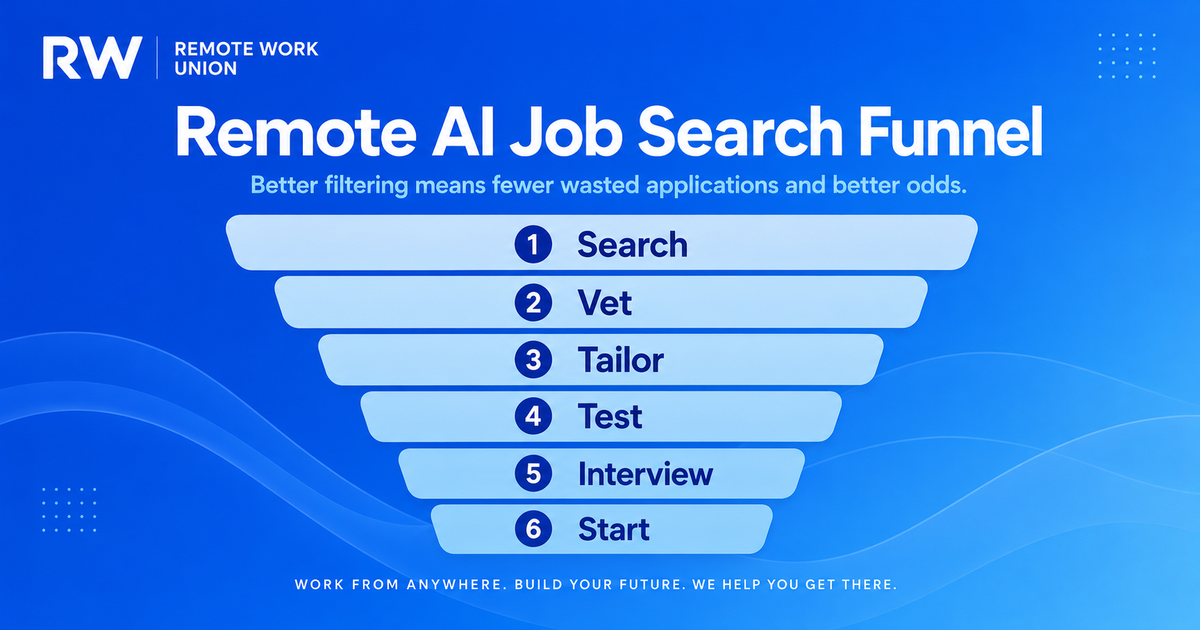
The Six-Step Application Funnel
A useful remote AI job funnel has six stages: search, vet, tailor, test, interview, and start. Search means finding the right categories of opportunity. Vet means deciding which ones are legitimate and worth effort. Tailor means adjusting your resume and positioning to the role. Test means preparing for assessments or skill checks. Interview means speaking clearly about how your background fits the work. Start means entering the workflow with realistic expectations and professionalism.
This structure helps you avoid chaos. It also keeps you from wasting your best effort on weak listings.
How to Search More Effectively
Search by task language as much as by title. Terms like AI training, model evaluation, response reviewer, content evaluator, research support, expert reviewer, prompt quality, or domain-based assessment can all surface useful opportunities. You should also search by your expertise. If you have a legal background, look for roles that mention legal reasoning or policy review. If you come from finance, look for business analysis or numerical evaluation. If you are a writer, look for quality review or language tasks.
Better search terms lead to better targets.
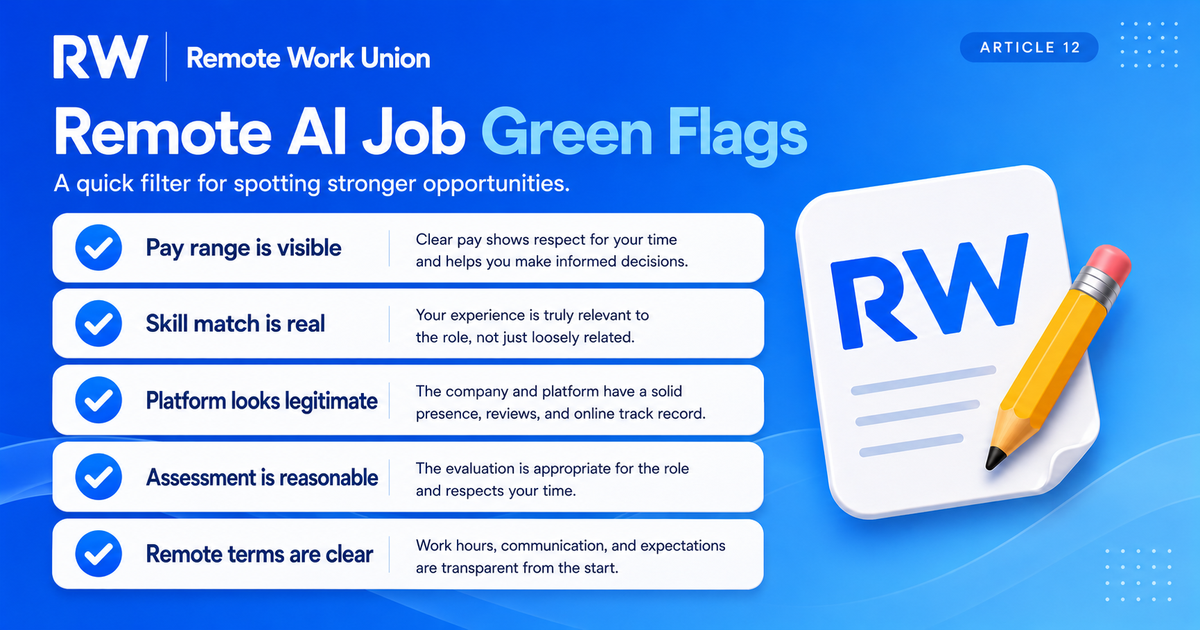
How to Vet a Role Before Investing Time
Before you spend time on an application, ask a few basic questions. Is the pay range visible? Does the role actually match your skill set? Does the platform or company look legitimate? Is the assessment reasonable? Are the remote terms clear? These are simple green flags, but they matter.
If the listing is fuzzy, the company is hard to verify, or the work feels disconnected from real output, be cautious. Remote workers often lose time by chasing roles that never had enough substance in the first place.
How to Tailor Your Application
Tailoring does not mean rewriting your entire resume every time. It means adjusting the signal. Emphasize the parts of your background that map to AI training work: clear writing, careful review, research support, quality evaluation, technical reasoning, subject expertise, or structured analysis. Use application answers to explain the overlap directly.
A strong answer sounds like someone who understands the task. A weak answer sounds like someone who only wants remote work in general.
How to Handle Tests and Assessments
Many better remote AI job opportunities include assessments. That is usually a good sign, because it means the platform cares about quality. The best preparation is to practice reading carefully, writing clearly, following instructions, and explaining your reasoning. If the role is domain-specific, prepare examples from your professional background that show how you analyze information.
Do not treat assessments as random obstacles. They are often the clearest chance to show how you think.
How to Avoid Low-Paying Platforms
Low-paying platforms often share a few traits. They are vague about compensation, overloaded with generic users, built around repetitive microtasks, or designed so that quality is not rewarded much more than speed. That does not mean every smaller opportunity is bad, but it does mean you should watch for signs that there is no real upside.
A better target is usually a role or platform where quality standards are visible, the work has a real purpose, and your expertise can influence your value.
Why Filtering Beats Pure Volume
A lot of people think the answer is more applications. Usually the answer is better filtering. When you filter well, you save time, reduce frustration, and increase the percentage of roles where your background genuinely fits. That makes each application more powerful.
This is especially important in remote AI work, where thoughtful roles and low-quality roles can appear side by side.
Key insight: Assessments at quality platforms are a feature, not a bug. They screen out generic applicants — which means if you prepare well, you face less competition from people who treat it casually.
Conclusion
Applying for remote AI training jobs successfully is mostly about using a better system. Search with better terms, vet roles before investing time, tailor your application around clear signal, and avoid platforms that do not reward quality. That is how you move from random remote searching to a much smarter remote work strategy.