People search for Microsoft AI training jobs because Microsoft is one of the most visible companies in artificial intelligence. The search makes sense, but the best opportunities are not always labeled with the exact phrase "Microsoft AI training job." Remote AI evaluation work can sit under many names: AI evaluator, model response reviewer, prompt evaluator, data annotation specialist, search quality rater, content quality analyst, coding evaluator, technical writer, or subject matter expert reviewer. The goal is not to find one perfect keyword. The goal is to understand the category well enough to recognize the right roles when they appear.
What "Microsoft AI Training Jobs" Usually Means
In practical job-search language, this phrase usually refers to human feedback work connected to AI systems, AI-powered search, productivity tools, language models, coding assistants, enterprise copilots, content moderation workflows, and model quality testing. Some roles may be at large technology companies. Others may be at vendors, contractors, staffing firms, AI data companies, or remote platforms that support model training and evaluation projects. A job seeker should search broadly while still filtering carefully for legitimacy, pay structure, skills required, and whether the role is actually remote.
The Most Common Role Types
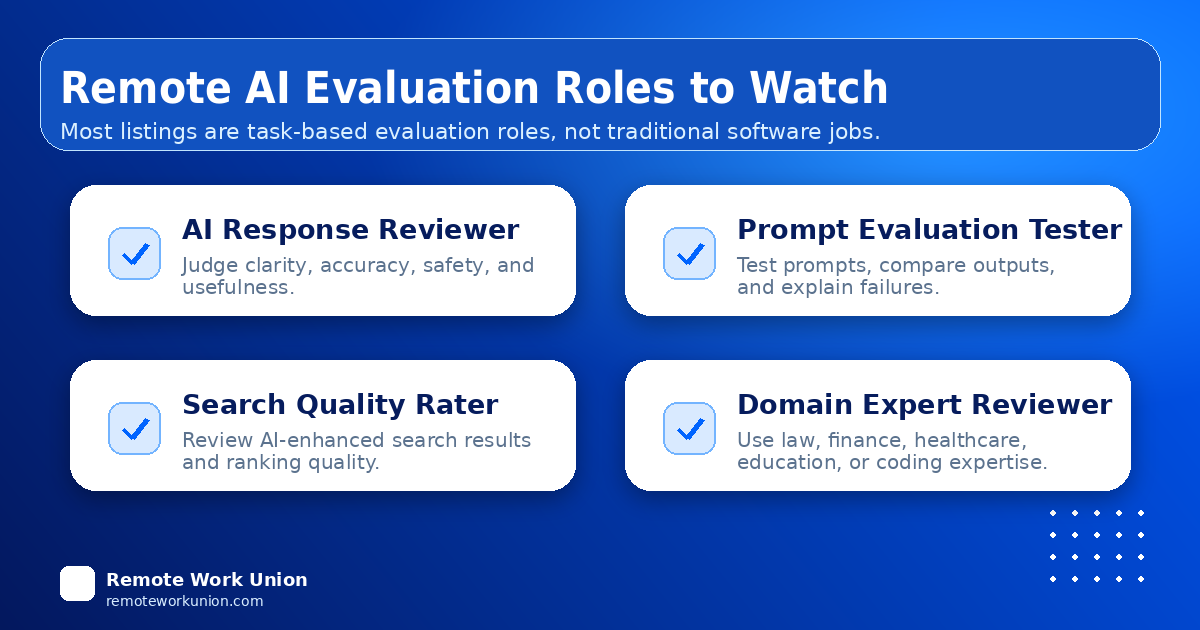
Remote AI evaluation roles often fall into five buckets. General AI evaluators compare two AI answers and decide which one is more helpful, accurate, safe, or complete. Prompt evaluators test whether an AI system follows instructions. Data annotation workers label examples so models can learn from structured human judgment. Expert reviewers use domain knowledge in law, finance, medicine, education, writing, sales, design, or coding to judge specialized answers. Search and ads quality raters evaluate whether results match user intent. A Microsoft-related search can surface any of these categories, but the job title may never mention Microsoft in the headline.
Best Keywords to Use
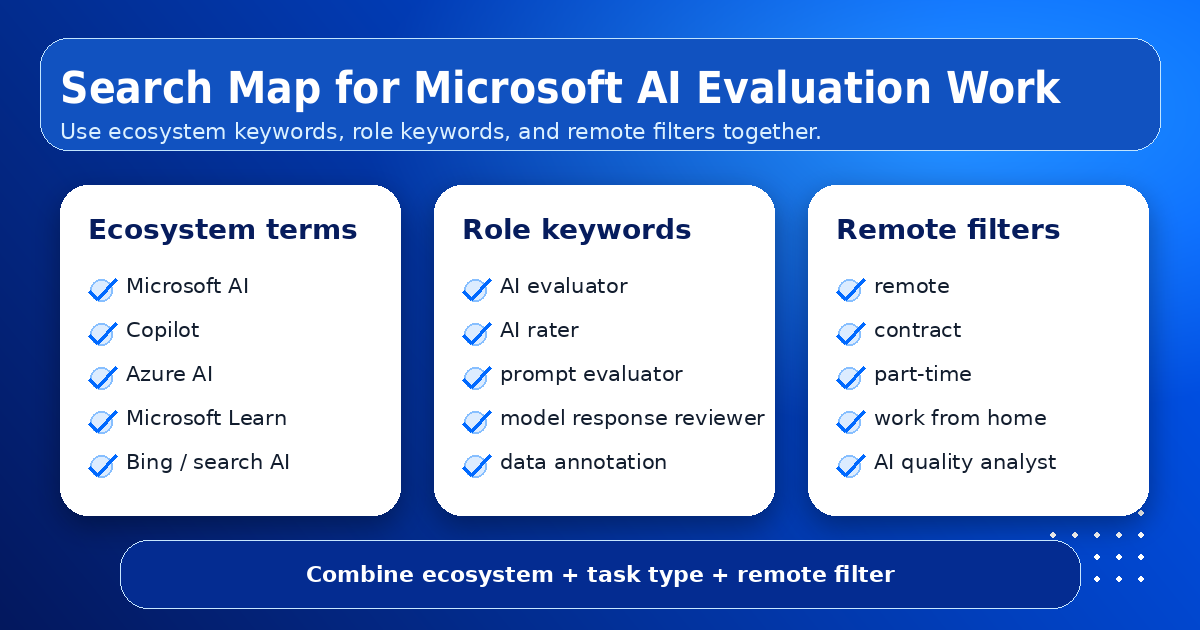
Use a keyword stack instead of one phrase. Start with broad terms such as remote AI evaluator jobs, AI training jobs, AI model trainer jobs, AI response reviewer, chatbot evaluator, prompt evaluation jobs, AI rater jobs, RLHF jobs, human feedback jobs, search quality rater, and data annotation jobs from home. Then add skill modifiers: writing, coding, legal, finance, healthcare, education, bilingual, research, fact-checking, or technical review. Finally add platform and ecosystem terms such as Microsoft AI, Copilot, Bing, Azure AI, enterprise AI, productivity AI, search AI, and assistant evaluation. This gives you a better chance of finding relevant listings without depending on a single exact-match title.
Remote Work Union connects you to legitimate Microsoft ecosystem and AI training evaluation roles. Apply for free.
Find Roles Hiring Now →How to Search Without Getting Misled
Do not assume every listing using the words Microsoft, AI, remote, or training is a direct corporate role. Some legitimate work is contract-based. Some is part-time. Some is project-based and can end without much notice. Some postings are vague because the client is not named publicly. Read the listing for the actual work: judging answers, writing feedback, rating search results, labeling data, testing prompts, reviewing model outputs, or evaluating safety. If the listing spends more time promising fast money than explaining the task, treat it as a weak lead.
Resume Positioning
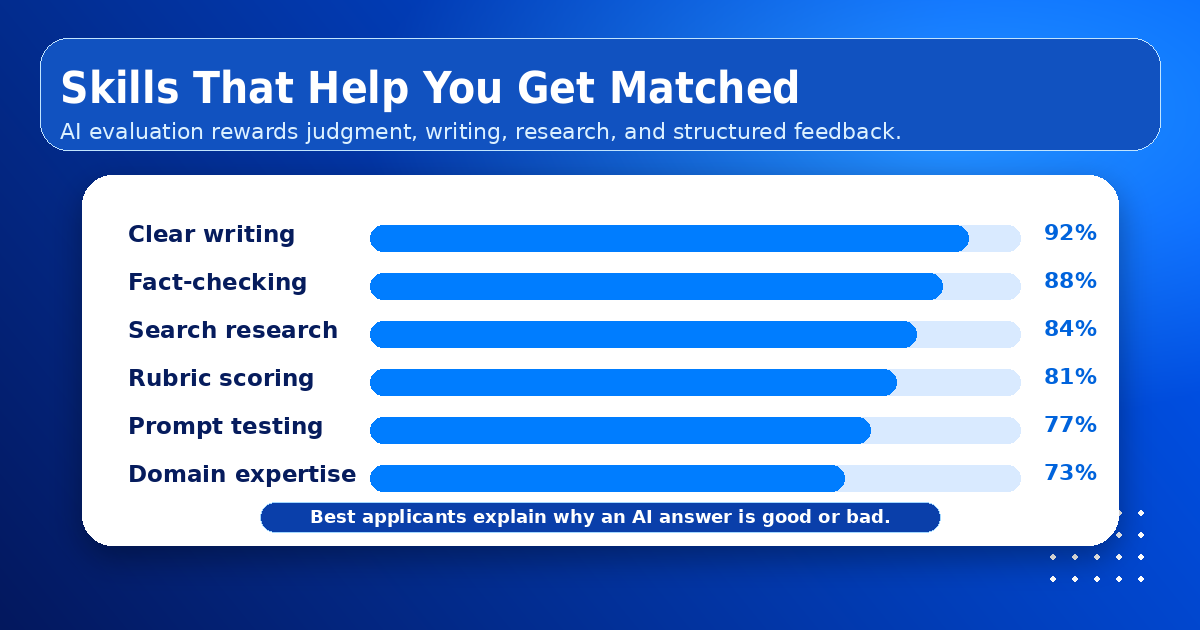
A strong resume for this category should show judgment, accuracy, writing clarity, research ability, and comfort with structured guidelines. Useful resume keywords include AI evaluation, model response review, rubric-based scoring, prompt testing, annotation, comparative ranking, fact-checking, content quality, search intent, error analysis, hallucination detection, option selection, and feedback writing. For Microsoft ecosystem searches, also include relevant software experience such as Excel, Word, Teams, PowerPoint, SharePoint, Azure basics, GitHub, Copilot-style workflows, technical documentation, or productivity tools if you genuinely have that experience.
What Applicants Are Tested On
Many AI evaluation applications include a skills test. These tests usually measure whether you can follow a detailed rubric, compare two imperfect answers, explain your decision, identify unsupported claims, notice instruction failures, and write concise feedback. Coding projects may ask you to review code quality, debug logic, or evaluate explanations. Writing projects may ask you to improve tone, accuracy, structure, or clarity. Expert projects may test whether you can detect subtle domain errors. The best preparation is to practice evaluating outputs against explicit criteria rather than simply saying which answer you personally prefer.
Direct Roles vs Adjacent Roles
There is a difference between a direct AI role at a major company, a vendor role supporting a major company, and a remote AI platform project not tied to one public brand. All three can be useful. Direct corporate roles may offer more stability but can be harder to get. Vendor and contract roles may move faster but require careful review of pay terms. Independent AI platforms can be flexible, but project availability can fluctuate. Job seekers should keep a pipeline across all three categories instead of waiting for one brand-name opening.
Red Flags
Avoid listings that ask for payment to apply, promise guaranteed income, request sensitive identity documents before a clear hiring process, use copied brand names without a professional domain, or avoid explaining the actual task. Be cautious with roles that say "AI training" but are really unpaid courses, lead-generation funnels, or generic business-opportunity pages. A real remote AI evaluation role should explain the work, the skill requirements, the application process, the pay model, and the expected commitment.
Practical Search Workflow
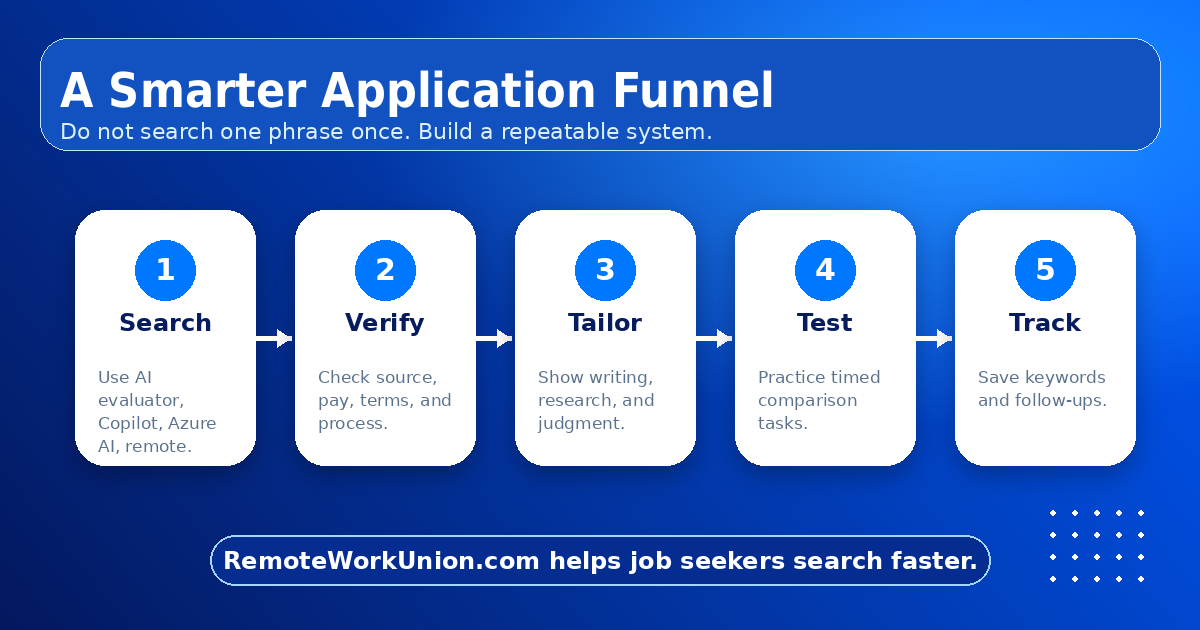
Set up saved searches on major job boards using several keyword groups. Search once for Microsoft AI training jobs, but do not stop there. Search for remote AI evaluator, Copilot evaluator, AI model trainer, prompt evaluator, AI response reviewer, data annotation, search quality rater, and human feedback. Run separate searches for your strongest domain expertise. Keep a simple tracker with company, role title, pay, location rules, contract type, application status, test status, and follow-up date. The tracker matters because many AI evaluation roles look similar until you compare the details side by side.
Frequently Asked Questions
What do Microsoft AI training jobs usually mean?
In practical job-search language, this phrase usually refers to human feedback work connected to AI systems, AI-powered search, productivity tools, language models, coding assistants, enterprise copilots, content moderation workflows, and model quality testing. Some roles may be at large technology companies. Others may be at vendors, contractors, staffing firms, AI data companies, or remote platforms that support model training and evaluation projects.
What is the best keyword strategy for finding Microsoft AI training jobs?
Use a keyword stack instead of one phrase. Start with broad terms such as remote AI evaluator jobs, AI training jobs, AI model trainer jobs, AI response reviewer, chatbot evaluator, prompt evaluation jobs, AI rater jobs, RLHF jobs, human feedback jobs, search quality rater, and data annotation jobs from home. Then add skill modifiers and platform/ecosystem terms such as Microsoft AI, Copilot, Bing, Azure AI, enterprise AI, productivity AI, search AI, and assistant evaluation.
What are applicants tested on for Microsoft AI training roles?
Many AI evaluation applications include a skills test that measures whether you can follow a detailed rubric, compare two imperfect answers, explain your decision, identify unsupported claims, notice instruction failures, and write concise feedback. Coding projects may ask you to review code quality or debug logic. The best preparation is to practice evaluating outputs against explicit criteria rather than simply saying which answer you personally prefer.
What is the difference between a direct Microsoft role and an adjacent AI training role?
A direct corporate role at Microsoft offers more stability but may be harder to get. Vendor and contract roles may move faster but require careful review of pay terms. Independent AI platforms can be flexible, but project availability can fluctuate. Job seekers should keep a pipeline across all three categories instead of waiting for one brand-name opening.