"Remote jobs near me" is one of the most searched phrases in job hunting, and it reveals something important about how people think about remote work: many still associate it with location even when the work is done entirely online. The phrase is not wrong — it is just worth understanding what it actually finds versus what truly location-independent work looks like and how to search for it.
Understanding the difference between location-constrained remote work and genuinely work-from-anywhere roles can save you hours of searching and help you find the right category of opportunity for your situation.
What Location Intent Means in Remote Job Searches
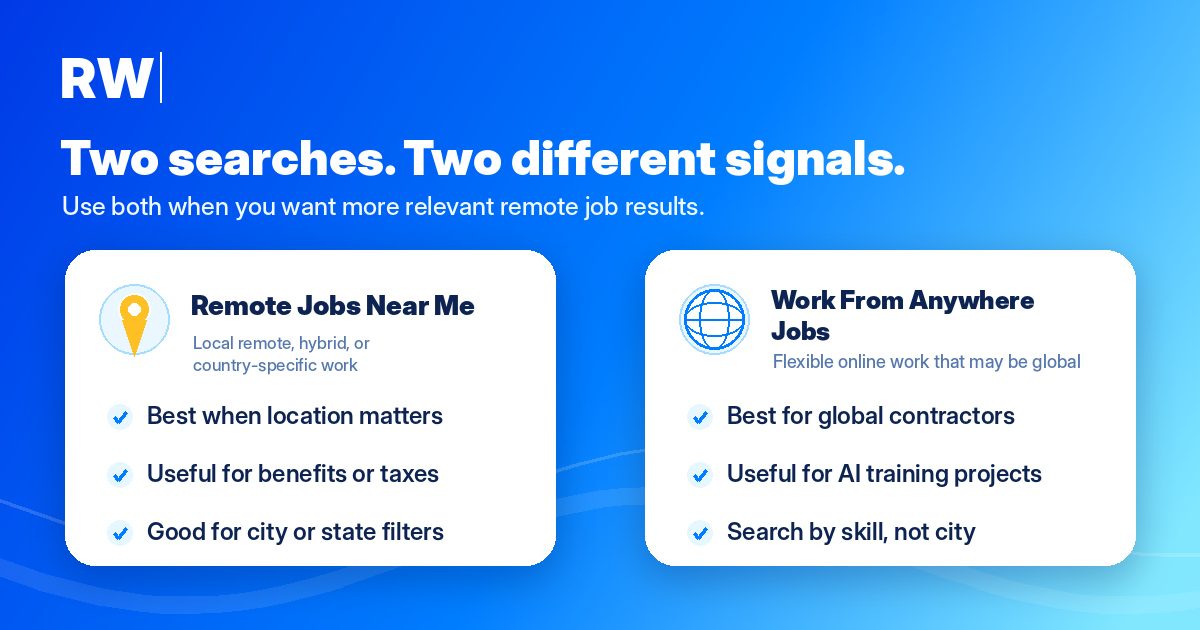
When someone searches "remote jobs near me," they are usually looking for one of three things: remote jobs from a company that has a physical office nearby (useful for potential hybrid work), remote jobs that require US or specific-country residency, or simply any work-from-home option they can start quickly. The search engine interprets "near me" using your IP address or device location to add geographic filters — often surfacing jobs posted by local employers even if the work itself is remote.
This works well if you want local companies with name recognition, or if your country or state requires that you work for a locally registered employer. It works less well if what you actually want is a contract-based AI training job that does not care what city you are in.
Why Location Still Matters for Some Remote Jobs
Even fully remote jobs often have location requirements. The most common reasons:
- Employment law compliance: Companies need to register and pay taxes in every jurisdiction where they have employees. A company that does not operate in your country cannot legally hire you as an employee.
- Time zone requirements: Some remote roles require overlap with a specific office time zone for meetings, standups, or client communication.
- Language or cultural requirements: AI evaluation projects for English-language content often require native English speakers or strong English proficiency. Some projects require cultural familiarity with a specific country.
- Data security regulations: Certain industries (government, healthcare, finance) have data residency requirements that prevent data from leaving specific countries.
Contractor-based AI training work avoids most of these constraints. Platforms like Outlier AI, Mercor, Handshake AI, and micro1 use independent contractor agreements rather than employment contracts, which allows them to work with people in many countries without the overhead of local employment registration.
Remote Work Union connects you to flexible AI training roles that accept global applicants. Apply for free to find roles hiring now.
Find Roles Hiring Now →The Keyword Ladder: From Near Me to Anywhere
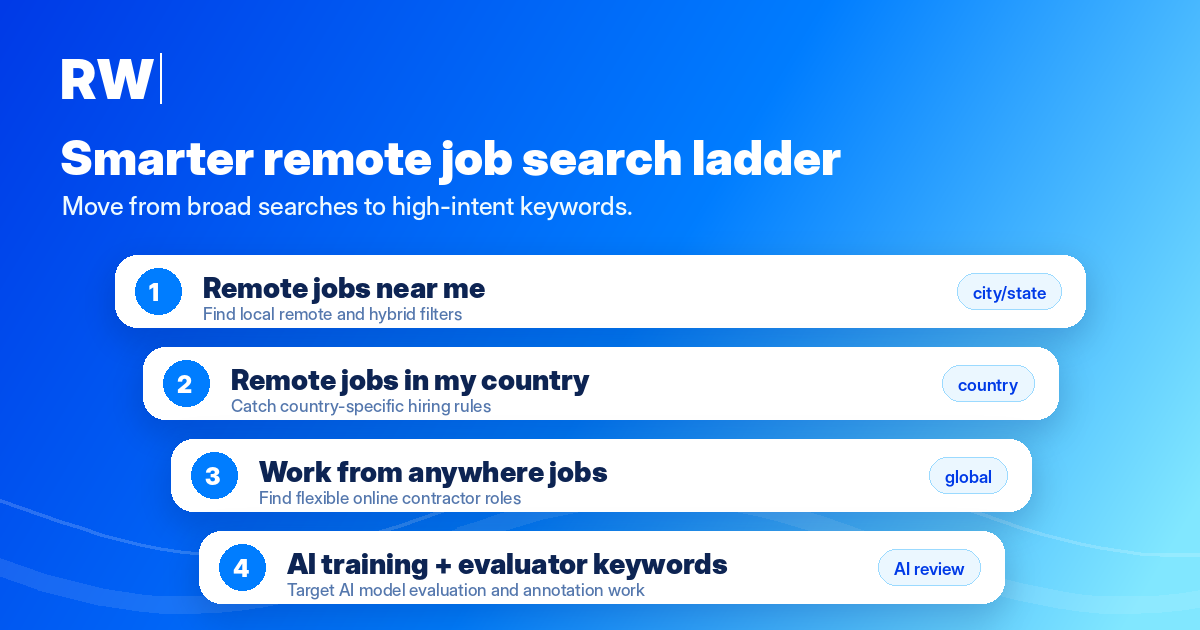
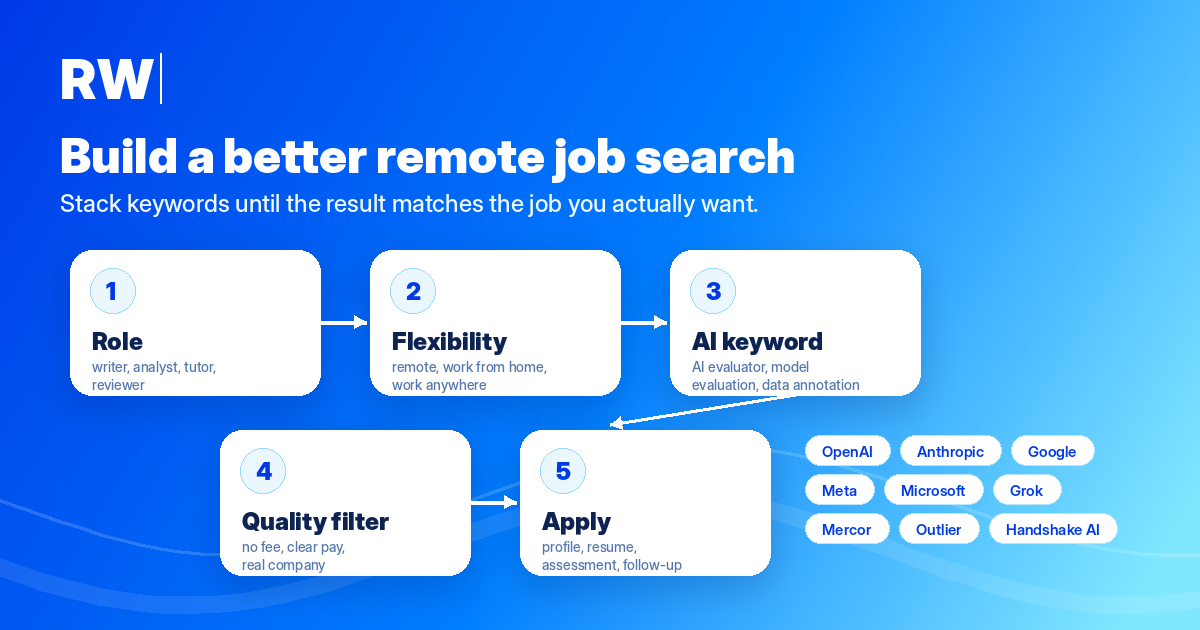
Remote job search keywords exist on a spectrum from highly location-specific to fully location-independent. Moving up the ladder opens up more opportunities:
- Most location-specific: "remote jobs near me", "work from home jobs [city]", "remote jobs [state/country]"
- Moderately flexible: "remote jobs US", "remote jobs for US residents", "remote jobs Canada", "remote jobs UK"
- Broadly flexible: "fully remote jobs", "remote contractor worldwide", "work from home contract jobs"
- Truly location-independent: "work from anywhere jobs", "remote AI training", "AI evaluator contractor", "RLHF jobs remote", "AI model evaluation worldwide"
AI training and model evaluation work is mostly in the bottom two categories. Applying directly through platform websites bypasses job board location filters entirely.
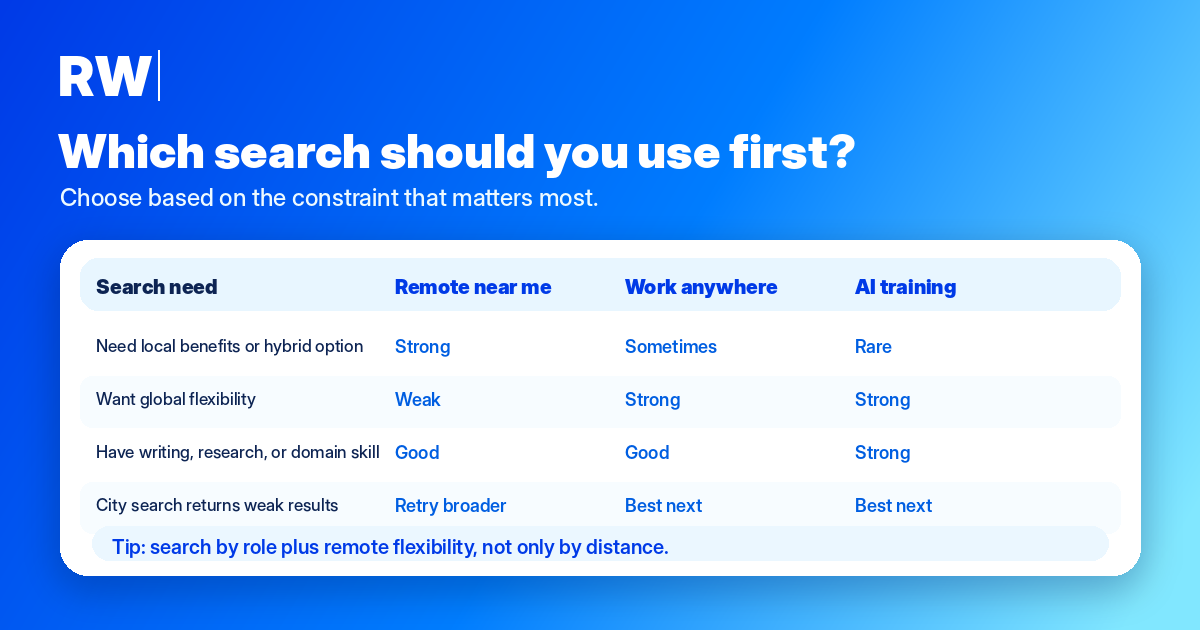
How to Decide Which Search Type Fits Your Situation
Use location-constrained searches when: you want employee benefits like health insurance or paid leave, you need legal employment status in your country, you prefer a company with a local office, or your work visa status requires a locally registered employer.
Use work-from-anywhere searches when: you want flexibility over schedule and location, you are comfortable with contractor status and independent tax filing, you want to work with global AI companies without regard to their local presence, or you are in a country where local employer options are limited.
The Layered Search Strategy
The most effective approach combines both types. Start with platform-direct applications for AI training and evaluation work (bypassing job board filters completely), layer in job board searches using work-from-anywhere keywords, add LinkedIn searches with "remote" and relevant skill keywords, and supplement with targeted searches on specialist boards like We Work Remotely or Remote.co. This combination covers both location-constrained opportunities and truly global roles simultaneously.
AI Training Jobs and Location
AI training work through platforms like Outlier AI, Mercor, Handshake AI, and micro1 is available to applicants in a broad range of countries — far more geographic flexibility than most traditional remote jobs. Some projects have English-language requirements or US/UK/Canada/Australia geographic filters, but many projects accept qualified applicants globally, especially for multilingual tasks or expert-tier specialized review. The best way to know if a project is open in your location is to apply directly and check during the application or assessment process.
Tip: If you want to work with global AI companies but live outside the major English-speaking markets, focus your applications on multilingual AI training projects and expert review projects in your professional domain. These categories tend to have the least restrictive location requirements.
Frequently Asked Questions
What is the difference between remote jobs near me and work from anywhere jobs?
Remote jobs near me typically refers to roles that are remote but still require you to live in a specific area — often for tax, legal, or timezone reasons. Work from anywhere jobs are truly location-independent — you can complete them from any country or city. Most AI training and model evaluation jobs fall into the work-from-anywhere category, though some require you to be in an English-speaking country or a specific region.
Why do some remote jobs require location even if the work is done online?
Employers require location for several reasons: employment law compliance (they need to be registered to employ workers in your country), tax withholding obligations, data privacy regulations, time zone alignment for team communication, and language or cultural requirements for certain content roles. AI training platforms often use contractor agreements rather than employment, which allows more geographic flexibility than traditional remote jobs.
Which AI training jobs are available worldwide?
Outlier AI, Mercor, Handshake AI, and micro1 all accept applications from a wide range of countries, though specific projects may have language or location requirements. English-language projects are available to applicants in many countries. Expert-tier specialized projects may have narrower requirements. Checking each platform directly is the most reliable way to confirm eligibility.
How should I change my search if I want location-independent remote work?
Replace location-specific terms with work-from-anywhere keywords: remote contract work, fully remote worldwide, contractor anywhere, remote AI training, work from home AI evaluator, global remote jobs. Applying directly through AI training platform websites bypasses job board location filters entirely, which can surface more globally available roles.