Following up after applying for AI training jobs is a balancing act. You want to show that you are organized, serious, and easy to work with. You do not want to sound impatient, entitled, or confused about how remote contractor platforms operate.
This matters because AI training work often moves differently from traditional hiring. A company may need human reviewers for model evaluation, data annotation, AI writing review, coding assessment, search quality rating, RLHF feedback, legal review, healthcare review, finance review, or fact-checking projects. Sometimes the platform needs workers immediately. Other times, your profile sits in a pool until a project matches your skills, country, language, availability, and assessment score.
A smart follow-up will not magically turn every application into paid work. It can, however, help you avoid disappearing in the process, correct missing information, show professionalism, and keep your own search organized.
Why AI Training Job Follow-Ups Are Different
Remote AI jobs are not always managed like full-time jobs. Many roles are contract-based, project-based, or platform-based. You may apply through an AI training platform, a staffing partner, a public job board, a company careers page, or a recruiter. The work may involve evaluating chatbot answers, ranking AI responses, writing prompts, checking facts, reviewing safety issues, annotating data, or testing how models respond to specialized questions.
That means a lack of response does not always mean rejection. It may mean the project is paused, the platform has too many applicants, your assessment has not been reviewed, the matching algorithm has not placed you yet, or the company only needs applicants in certain locations. This is common across the broader remote AI work market, including searches around AI evaluator jobs, model training jobs, AI rater work, and data annotation jobs.
Your follow-up should fit that reality. The goal is not to pressure a company. The goal is to make it easy for a real person to understand who you are, what you applied for, and whether any missing step is blocking your application.
When to Follow Up After Applying
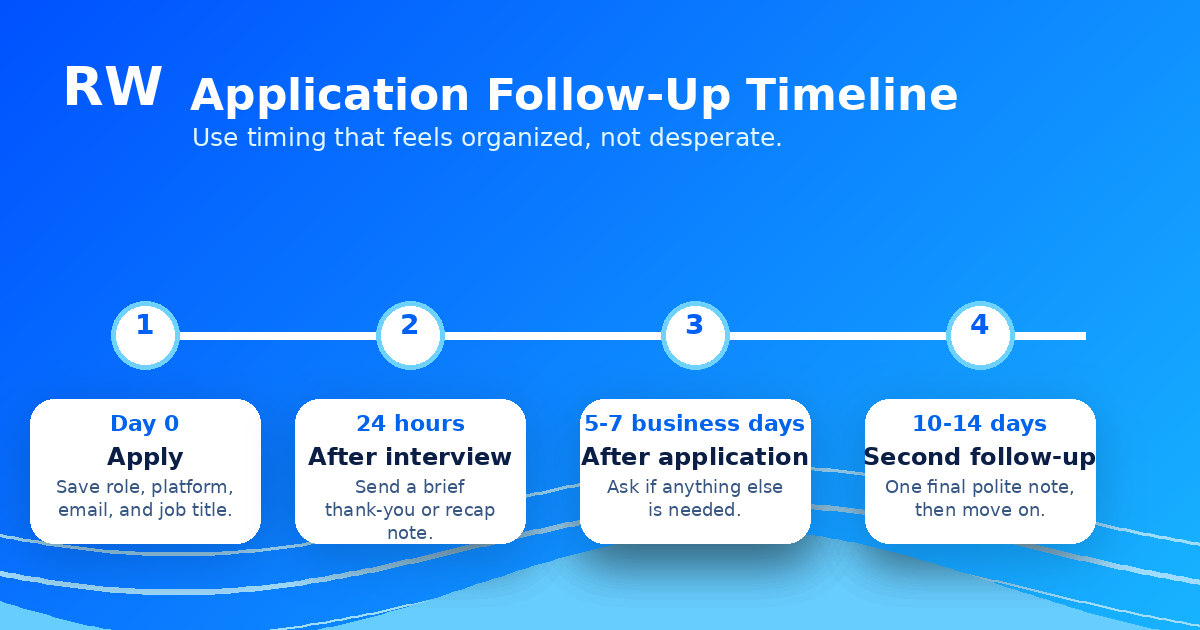
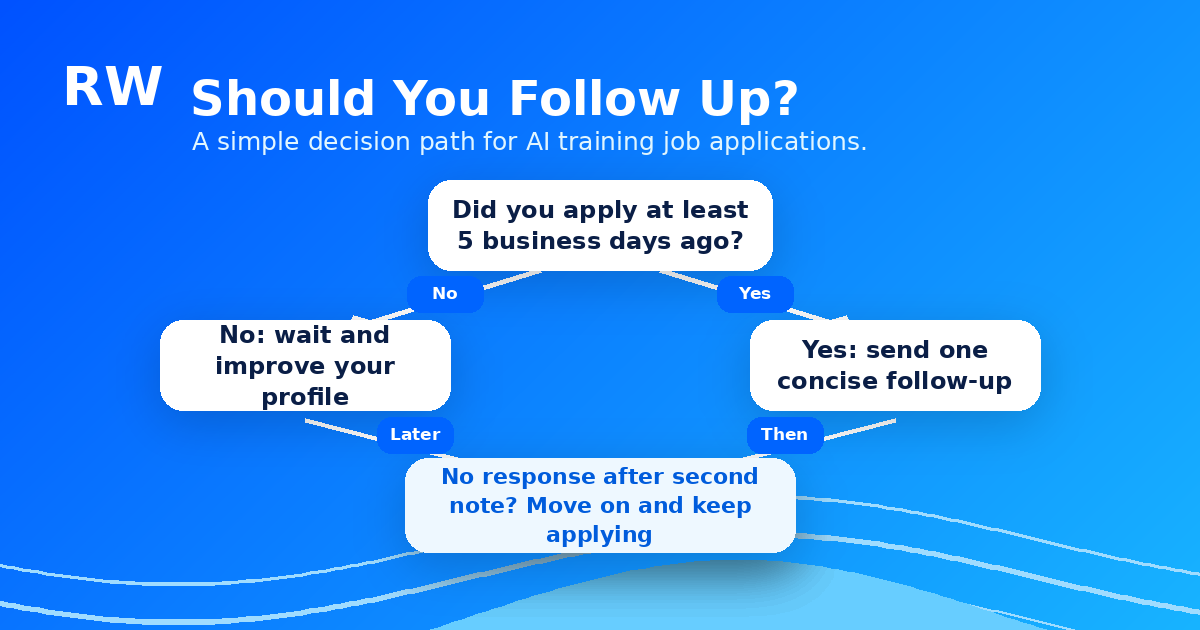
For most AI training applications, wait 5 to 7 business days before sending a general follow-up. That is long enough to avoid looking impatient, but short enough to keep the opportunity active.
If you completed an assessment, trial task, AI interview, writing test, coding test, or domain expertise test, wait around 3 to 5 business days after submission before checking in. If the platform clearly says review may take longer, follow the stated timeline first.
If you had a live interview with a recruiter, project lead, or hiring manager, send a short thank-you note within 24 hours. That note is not a pressure message. It should simply thank them, restate your interest, and briefly connect your skills to the work.
If you already followed up once and still have no response, wait another 7 to 10 days before sending one final message. After that, move on and keep applying. In remote AI contractor work, momentum matters. You should not stop your search because one platform has not responded.
Where to Follow Up
Start with the official channel. If the platform has an application dashboard, use that first. If there is a support email or applicant email listed in the application flow, use that. If a recruiter contacted you directly, reply in that same email thread so the context is preserved.
LinkedIn can be useful only when you have a clear connection to the role. A polite message to the recruiter who posted the job is reasonable. Sending repeated messages to random employees at major AI companies is not. OpenAI, Anthropic, Google, Meta, and other AI roles attract huge interest, so random outreach usually performs poorly unless it is highly relevant and respectful.
Do not send the same message through five channels. That creates noise. One official follow-up is better than multiple scattered messages.
Remote Work Union connects you to legitimate remote AI training and evaluation roles across multiple platforms. Apply for free.
Find Roles Hiring Now →What a Good Follow-Up Should Include
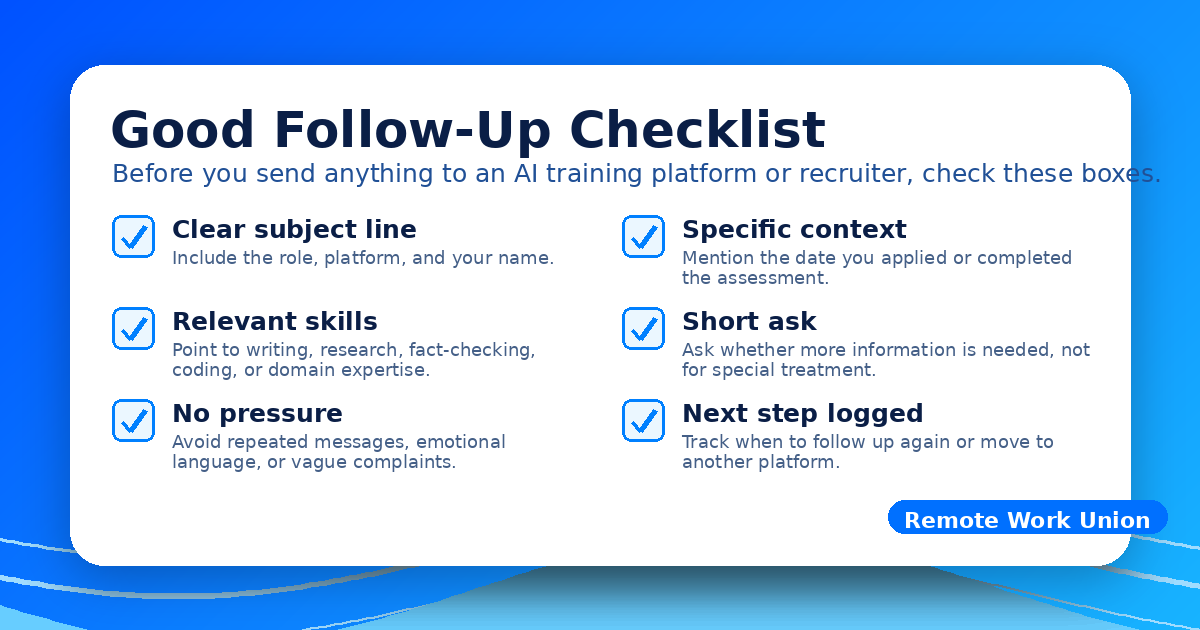
A good follow-up is short, specific, and easy to answer. Include your name, the role or project name, the platform or company, the date you applied or completed the assessment, and one sentence about why you are a fit.
For AI training jobs, your fit might include strong writing, research ability, attention to detail, fact-checking, prompt writing, coding skill, domain expertise, tutoring experience, legal knowledge, medical knowledge, finance experience, editing experience, or experience comparing AI responses. Use the skill that actually matches the role.
End with a simple question: ask whether they need anything else from you, whether your application is still under review, or whether there is an expected next step. Avoid asking for guaranteed work, faster review, special access, or a personal explanation of every delay.
Follow-Up Email Templates
Template 1: After Applying
Template 2: After an Assessment or Trial Task
Template 3: When You Were Approved but Have No Tasks
What Not to Say
Do not write a long complaint. Do not accuse the platform of ignoring you. Do not say you need money immediately. Do not send multiple messages in one day. Do not exaggerate your experience with AI tools, coding, legal work, healthcare, finance, or research. AI training platforms often test your accuracy and consistency, so inflated claims can hurt you later.
Also avoid vague messages like: "Any update?" A recruiter or support team cannot do much with that. A better message includes the role, date, and specific context. The easier your message is to process, the more professional you look.
What to Do While You Wait
The best follow-up strategy is not just messaging. It is improving your application while continuing to apply elsewhere.
Update your resume so it clearly matches AI training work. Use keywords like AI evaluator, model evaluation, prompt writing, response ranking, fact-checking, data annotation, search quality rating, RLHF feedback, content review, technical review, editing, research, and domain expertise when they are accurate. If you have specialized knowledge in law, healthcare, finance, coding, education, science, or business, make that obvious.
Create a simple application tracker with columns for platform, role, application date, assessment date, status, follow-up date, and next step. This prevents two common mistakes: forgetting to follow up on strong opportunities and repeatedly following up on opportunities that have already gone cold.
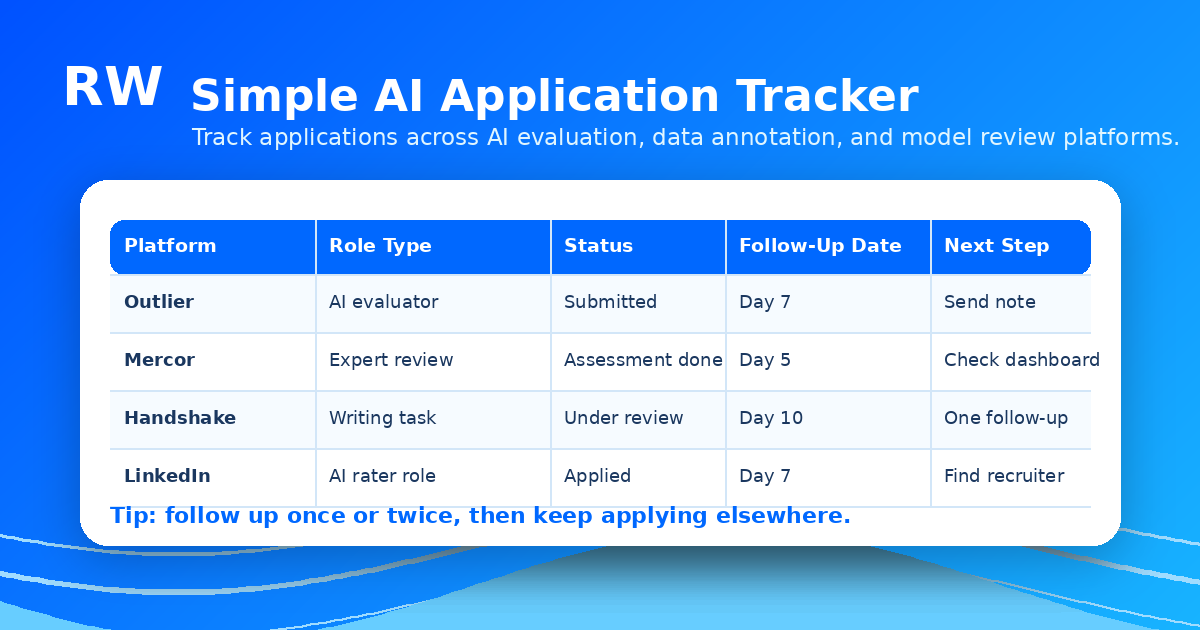
Keep applying to multiple platforms. AI training income can be inconsistent, and platforms may slow down without warning. Applying to Mercor, Outlier, Handshake AI, micro1, Surge AI, Stellar AI, LinkedIn listings, staffing partners, and company job boards can help you avoid relying on one source of work.
How Many Times Should You Follow Up?
For most applications, two follow-ups are enough. Send one after the first reasonable waiting period. Send one final follow-up after another week or two. If there is still no response, move on.
This is especially important for remote AI jobs because the opportunity cost is real. Spending too much time chasing one silent application can prevent you from finding another platform that is actively onboarding reviewers. A quiet application should stay in your tracker, not dominate your calendar.
If the company later replies, you can re-engage. If not, your time is better spent improving your profile, taking relevant assessments, applying to better-matched projects, and building a wider pipeline.
The Best Follow-Up Makes You Look Easy to Hire
The strongest applicants do not just ask for updates. They make the decision easier. They communicate clearly. They follow instructions. They keep messages short. They show relevant skills. They do not create extra work for the person reviewing the application.
That is exactly the kind of behavior AI training work rewards. Model evaluation jobs require careful reading, precise feedback, consistency, and judgment. A clean follow-up message demonstrates those traits before you ever start a paid task.
Tip: Follow up professionally, track every application, apply broadly, and keep improving your profile. That is the practical way to handle AI training applications without wasting time or sounding desperate.
Frequently Asked Questions
Should you follow up after applying for an AI training job?
Yes, once and professionally after a reasonable waiting period. A short, specific follow-up can help you confirm your application was received, correct any missing information, and show that you are organized and serious about the opportunity.
How long should you wait before following up on an AI training application?
Give platforms 1-2 weeks before following up on a general application. If you completed an assessment, wait 3-5 business days. If you had a live interview, send a thank-you within 24 hours. Always follow the stated timeline if the platform provides one.
What should a follow-up message for an AI training job include?
Your name, application date, strongest qualification, and a brief question about next steps. Keep it short: one short paragraph with your role, the date you applied or completed an assessment, your most relevant skill, and a single clear question about where things stand.
How do you follow up without seeming desperate?
Keep it short, factual, and send it only once. Focus on confirming your application was received and asking if any additional information is needed. Do not mention urgency, personal financial needs, or repeated asks. A single professional message sent once is enough.