Remote AI training contractors quickly learn that relying on a single platform is fragile. Projects end. Task queues slow. Platforms rebalance their contractor pools. The answer — working across multiple platforms — is clearly the right strategy. But doing it badly leads to a different problem: spreading yourself too thin, watching quality scores drop across all your platforms simultaneously, and burning out on work that was supposed to improve your income.
Platform stacking is not the same as platform hoarding. Done well, it creates resilience and a rising income floor. Done badly, it creates chaos. This article explains the practical system that keeps experienced AI training contractors stable and productive across multiple platforms without burning out.
The Anchor-Backup-Experiment System
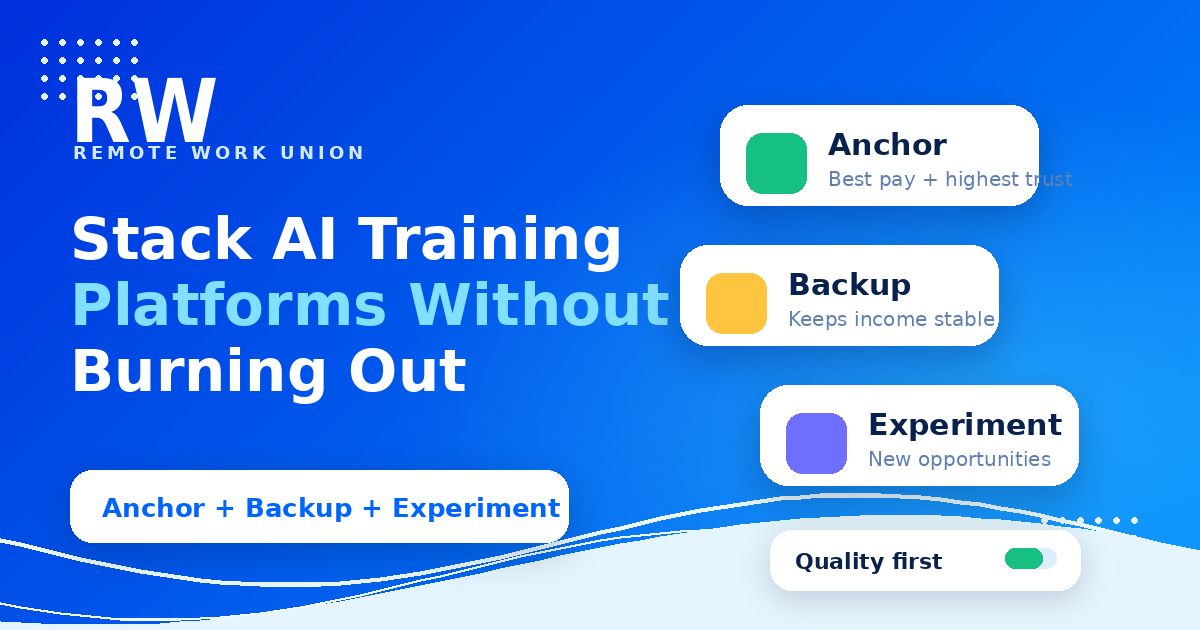
The most practical framework for multi-platform AI training is the anchor-backup-experiment model. It assigns every platform in your stack a role, which prevents you from treating them all as equal and draining yourself trying to optimize everything simultaneously.
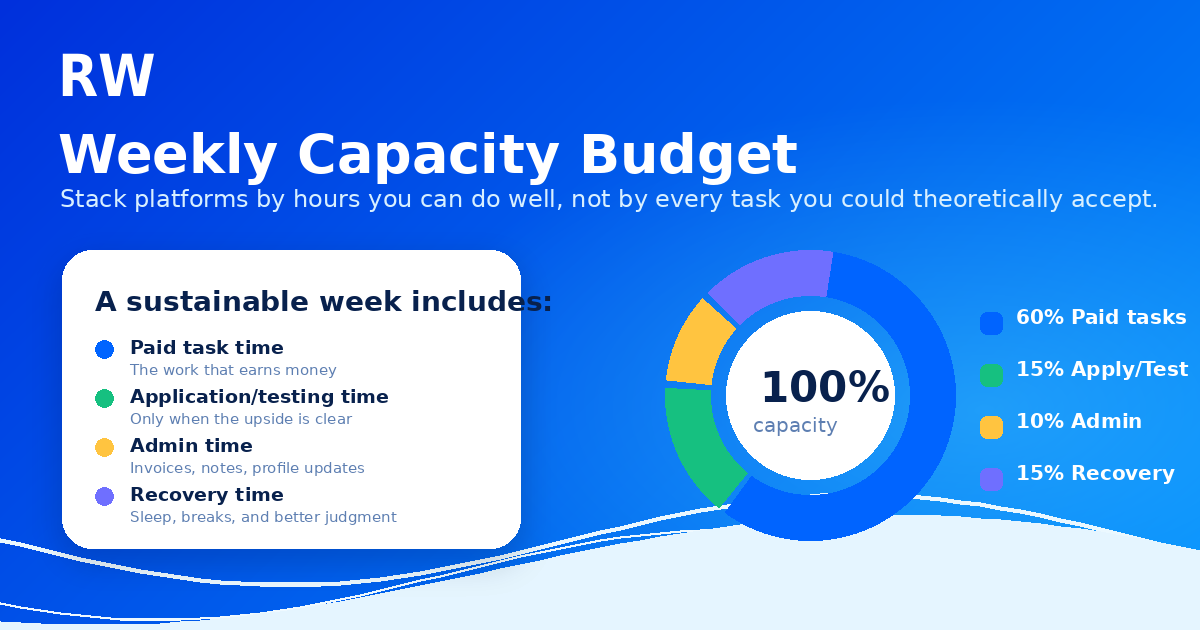
Anchor: This is your primary platform. It gets most of your weekly focus and best working hours. It should be the platform with your highest pay rate, most consistent task availability, or best quality score. For many contractors, this is the platform where they first established a track record. Guard this platform's quality score carefully — it is your primary income source and losing good standing here would hurt most.
Backup: Your backup platform fills the gaps. When the anchor is slow, the backup absorbs some of your available hours. It should also be a legitimate, qualified platform — not just a placeholder. The backup protects you against any single-platform slowdown. If the anchor goes quiet for two weeks, the backup is what keeps income flowing.
Experiment: Your experimental platform is one you are still evaluating. Maybe you just passed the assessment, or you are working through your first few tasks. You do not commit meaningful hours here yet. The goal is to qualify it as a future backup or even a future anchor without distracting from your current anchor performance.
The Weekly Capacity Budget
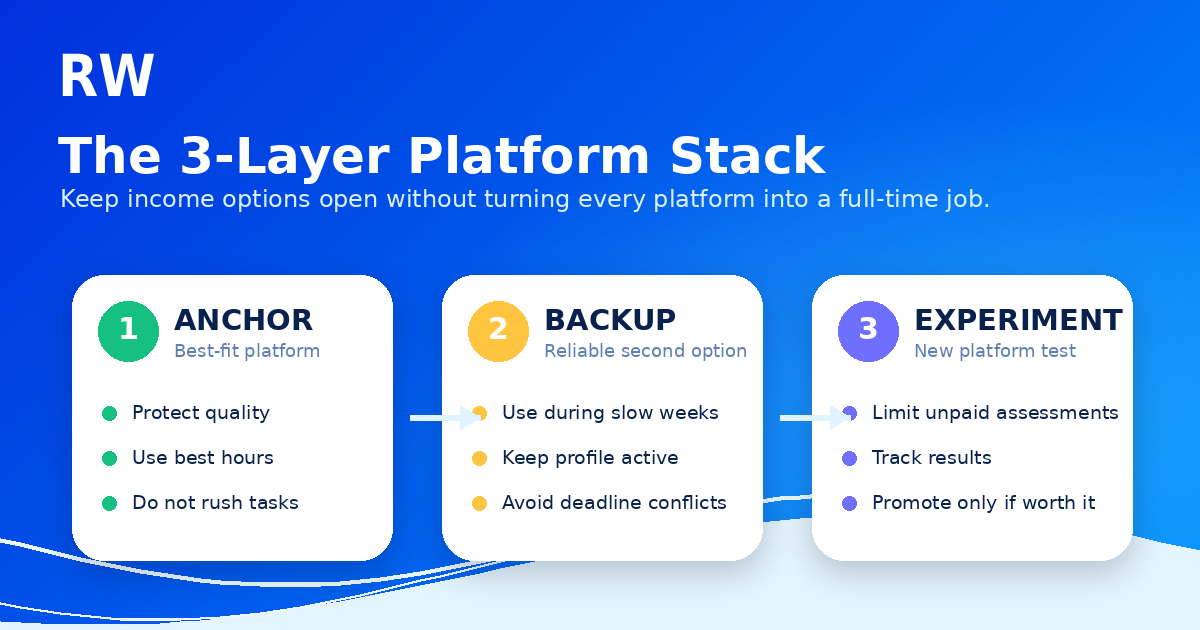
A capacity budget is the most important tool for avoiding burnout in multi-platform AI training work. Most contractors who burn out do so because they say yes to every task available across every platform without tracking total hours. The result is a sprint week followed by a crash week, and the crash week damages quality scores on all platforms at once.
A realistic capacity budget starts with your sustainable weekly capacity — the total hours you can maintain at quality for four or more consecutive weeks without significant fatigue. This is not your maximum possible hours. It is your floor-quality hours. For most contractors, that number is somewhere between 10 and 25 hours per week depending on lifestyle, other obligations, and the type of AI work (evaluation is more cognitively demanding than rating).
Once you know your sustainable capacity, allocate it: roughly 60-70% to your anchor platform, 20-30% to your backup, and keep 10% or less for your experimental platform. When your anchor is very slow, shift more to backup. But do not exceed your total budget by more than 20% for more than two weeks in a row.
Remote Work Union connects you to legitimate remote AI training platforms. Apply for free to find roles hiring now.
Find Roles Hiring Now →How to Prioritize Platforms
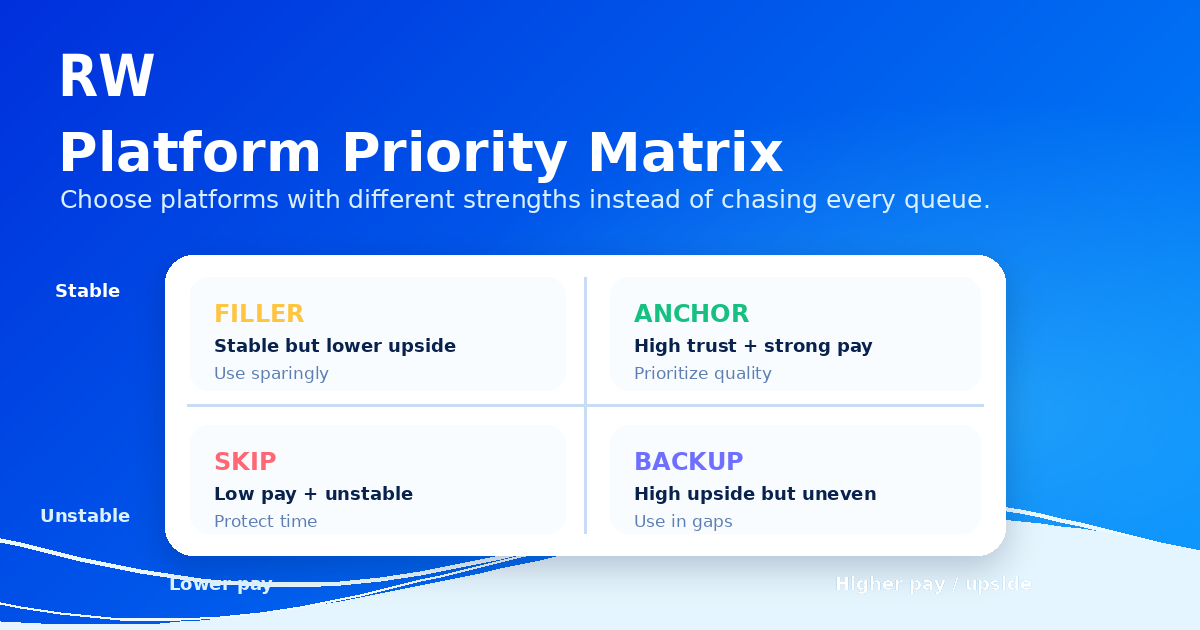
When everything is asking for your attention at once — new tasks on the anchor, a new project on backup, and an assessment on the experiment — you need a clear priority order. A simple priority matrix helps:
- Quality-sensitive anchor tasks first. If your anchor platform has tasks that affect your quality score, complete these before anything else. A quality score drop on your anchor is the most expensive mistake you can make.
- Time-sensitive backup tasks second. Some platforms assign tasks with expiration windows. If backup tasks expire, do them before anchor tasks that are not time-sensitive.
- Everything else third. Experimental platform tasks, optional assessments, and general applications come last when your priority platforms are active.
Burnout Warning Signals
AI evaluation burnout often arrives quietly. The first signal is not exhaustion — it is usually a subtle drop in feedback quality. You start writing shorter, less specific notes. You do not check your evidence as carefully. You accept a task and then feel an unusual level of reluctance to start it. These are early signals that you are approaching your limit.
Later signals are more visible: your quality scores start declining, you find yourself making errors you did not used to make, sessions that used to feel manageable now feel exhausting, and you start skipping platform check-ins entirely. By this point, burnout has already damaged your standing.
The healthiest response to early signals is to deliberately reduce hours for one to two weeks. Do not push through. AI evaluation requires genuine mental focus. Working while exhausted produces lower quality, which hurts your scores, which shrinks your access to tasks, which reduces income — the opposite of what you wanted by pushing through.
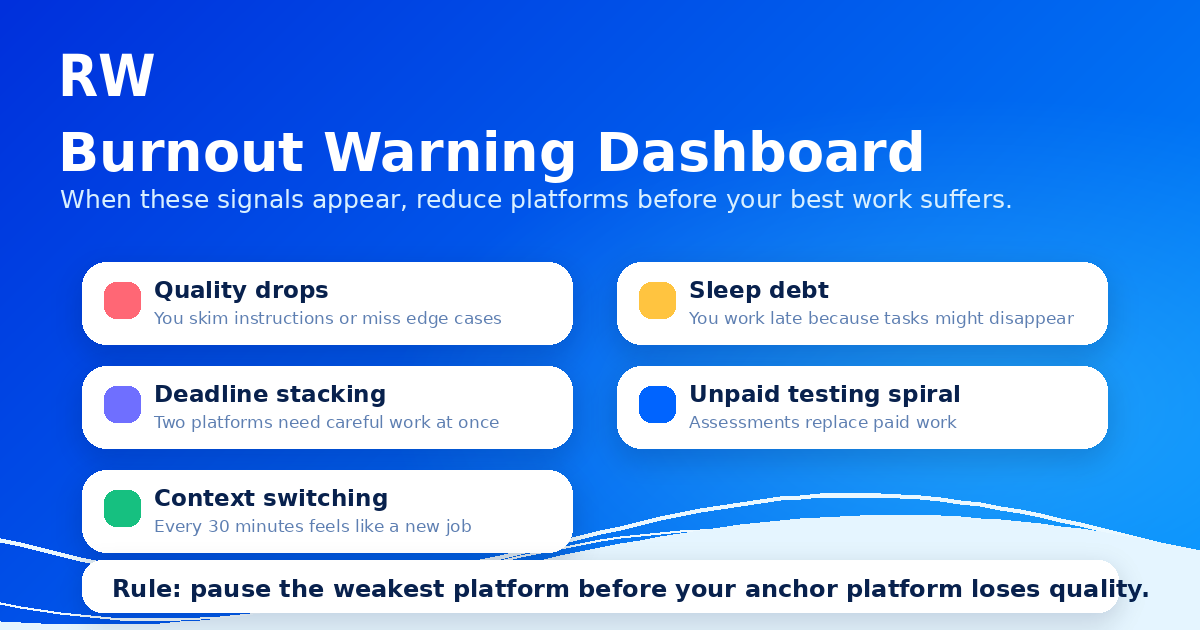
Tip: Track how your weekly quality score changes alongside your weekly hours. If quality drops when hours increase, you have found your personal sustainable ceiling. Stay below it as your default, and only exceed it briefly when tasks are time-sensitive.
The Income Floor Concept
The goal of platform stacking is not to maximize peak income — it is to raise your income floor. Your floor is the minimum you can expect in a slow month when your anchor platform is quiet and your backup fills part of the gap. A contractor working only one platform might have a floor of near zero during a project pause. A contractor with two active platforms and a strong track record has a floor that reflects at least one platform's consistent minimum output.
A healthy income floor strategy means: your combined floor from all platforms should cover your essential monthly expenses. Peak months cover the rest. The floor is your safety net. If your floor does not yet cover essentials, keep your current income source active while you continue building.
When to Add a New Platform
The right time to add a new platform to your stack is when you have been consistently maintaining your anchor and backup platforms for at least four to six weeks at quality. Do not add a third platform during a slow period out of desperation — the experimental platform will inherit rushed applications and lower-quality early work that can hurt your standing before you establish a track record.
Strong candidates for the next platform in your stack include Mercor for its skill-matched expert projects, Outlier AI for its broad project variety, Handshake AI for its fellowship and expert-tier opportunities, and micro1 for specialized AI training roles that reward deep expertise at $50–$200/hr pay rates.
Frequently Asked Questions
How many AI training platforms should I work on at once?
Two to three active platforms is the practical sweet spot for most contractors. One anchor platform provides your primary income and priority attention. One backup platform covers slow periods. An optional third experimental platform is tested without pressure. More than three active platforms tends to increase cognitive load faster than it increases income.
What is the anchor-backup-experiment model for AI training platforms?
The anchor is your highest-paying or most consistent platform — you give it most of your weekly capacity. The backup is a second platform you work on when the anchor is slow, or on days when anchor tasks are unavailable. The experiment is a third platform you are testing without committing full hours, usually to evaluate fit or build a new qualification.
How do I know if I am burning out on AI training work?
Common early warning signs of AI evaluator burnout include: your feedback quality is dropping even though you are spending more time on each task, you feel irritable or exhausted after short sessions that used to feel manageable, you are cutting corners on research or skipping steps, and your quality scores are declining despite increased effort. These are signals to reduce hours, not push through.
What is an income floor in AI training work?
Your income floor is the minimum you can reasonably expect from your combined platform stack in a slow month. It is the sum of what each platform reliably provides even when task availability is below average. A healthy floor covers your essential expenses so that slow periods do not create financial emergencies.